
04 Nov,2026
Cast stainless steel parts: a complete buyer's guide for industrial applications


Article overview
This buyer's guide examines every critical decision point for sourcing cast stainless steel parts in industrial applications — from alloy grade and casting method to tolerance specs, defect standards, corrosion data, and U.S. supplier qualification criteria.
Table of contents
- 1. What are cast stainless steel parts?
- 2. Stainless steel grades and casting alloy selection
- 3. Casting process comparison: investment, sand, and centrifugal
- 4. DFM design rules: tolerances, wall thickness, and surface finish
- 5. Casting vs. machining vs. forging: cost and lead-time analysis
- 6. Casting defects, inspection methods, and acceptance standards
- 7. Corrosion performance and post-cast surface treatment
- 8. How to qualify a U.S. stainless steel casting supplier
- 9. FAQ
What are cast stainless steel parts?
Cast stainless steel parts are components produced by pouring molten stainless steel into a shaped mold, then cooling and finishing the solidified metal to achieve a near-net or net-shape geometry. They combine the design freedom of casting with the corrosion resistance and mechanical integrity that wrought stainless steel is known for — making them indispensable across oil and gas, food processing, marine, and pump/valve industries.
The foundational appeal is geometric complexity. Unlike machined bar stock, a stainless steel casting can incorporate internal passages, undercuts, and varying wall sections in a single pour — geometry that would be prohibitively expensive to cut from solid. That said, casting is not always the right answer. Understanding when it is requires clarity on grades, processes, and trade-offs, all of which this guide addresses in sequence.
For more background on stainless steel properties and grades, Wikipedia's metallurgy entry provides a solid starting reference before diving into process-specific decisions.
Why industrial buyers choose casting over other methods
In practice, most procurement engineers reach for casting when a part exceeds roughly 2 lbs in finished weight, has three or more machined faces, or requires internal cavities. A real-world example: a CF8M pump volute casing that would require 14 separate machining setups from solid bar is routinely produced as a single investment casting with two post-cast milling operations. The labor saving alone often justifies tooling amortization within 300–500 units.
Key market context for 2026
The U.S. metal casting industry generates approximately $52 billion annually and employs more than 160,000 people directly, according to the American Foundry Society (AFS). Section 232 tariffs on steel and derivative products — currently as high as 50% on certain imports — have accelerated reshoring of stainless steel casting components to domestic foundries. For buyers, this shifts both the sourcing map and total landed cost calculations compared to prior years.
Stainless steel grades and casting alloy selection
Selecting the right alloy is the single highest-leverage decision in the entire casting process. The wrong grade can cause premature corrosion failure even when the casting itself is dimensionally perfect. Here is how the four dominant families compare.
Austenitic grades: CF8 and CF8M (304 and 316 equivalents)
CF8 is the cast equivalent of wrought 304 stainless steel, and CF8M maps to 316. These austenitic stainless steel components account for the majority of industrial castings due to their broad chemical resistance, weldability, and availability across U.S. foundries. CF8M adds 2–3% molybdenum, which raises pitting resistance sharply — critical for chloride-bearing environments such as seawater pumps and chemical processing. Tensile strength for CF8M typically runs 70–85 ksi as-cast, with elongation of 30–35%. Note that cast microstructure introduces ferrite stringers absent in wrought 316; this slightly reduces toughness at cryogenic temperatures.
Precipitation-hardening and duplex grades
17-4PH (CA-15 family) delivers yield strengths of 150–170 ksi after H900 aging — roughly double that of CF8M — making it the go-to for high-stress valve stems, impellers, and structural brackets. Duplex grades (CD3MN/2205 equivalent) offer a compelling combination: yield strength near 65 ksi, PREN above 35, and roughly half the cost of super-duplex alloys. Real-world testing in offshore desalination applications confirms duplex castings outperform 316 cast parts by a factor of 4–6× in chloride pitting resistance.

| Cast designation | Wrought equivalent | Tensile strength (ksi) | PREN | Typical application |
|---|---|---|---|---|
| CF8 | 304 | 70–80 | 19–20 | Food processing, architectural |
| CF8M | 316 | 70–85 | 24–26 | Marine, chemical, stainless steel pump castings |
| CA-15 (17-4PH) | 17-4PH | 150–170 | 12–14 | High-stress structural, valve bodies |
| CD3MN | 2205 Duplex | 90–100 | 35–38 | Offshore, desalination, pulp/paper |
Casting process comparison: investment, sand, and centrifugal
The process choice locks in dimensional capability, surface finish, minimum wall thickness, and tooling cost before a single pound of metal is melted. Getting this decision right early prevents expensive re-tooling later.
Investment casting (lost wax): precision and complexity
Stainless steel lost wax casting — formally known as investment casting — produces the tightest tolerances available in a casting process: typically ±0.005 in/in per ASTM A957. Surface finish averages 63–125 Ra μin as-cast, often eliminating secondary machining entirely for non-sealing surfaces. Tooling costs run $3,000–$15,000 per die depending on complexity, making break-even economics favorable from roughly 200 units upward. In actual production testing, precision stainless steel casting via lost wax consistently achieves wall thicknesses as thin as 0.080 in (2 mm) in CF8M — geometry simply not achievable in sand.
Sand casting and centrifugal casting
Sand casting suits large, lower-complexity stainless steel foundry parts where tooling cost sensitivity is high and tolerances of ±0.030–0.060 in are acceptable. Pattern costs start around $500–$3,000, making it the economical choice for prototypes and small runs under 50 pieces. Centrifugal casting — spinning molten metal into a cylindrical mold — is purpose-built for stainless steel pipe, rings, and bearing housings. The centrifugal force drives dendrite growth radially outward, yielding a denser, more uniform microstructure with fewer internal voids than static-poured equivalents. For corrosion resistant cast parts in ring or sleeve geometries, centrifugal casting is nearly always the correct answer.
"Investment casting consistently delivers dimensional repeatability that approaches precision machining for complex geometries — the process is no longer a compromise; it is a first-choice manufacturing route for critical stainless components." — Investment Casting Institute (ICI), 2025 Technical Report
DFM design rules: tolerances, wall thickness, and surface finish
Design for manufacturability (DFM) errors are the leading cause of first-article rejection in casting programs. The table below consolidates quantifiable limits that engineers can apply directly to CAD models before submitting an RFQ.
Dimensional tolerance standards
Investment casting tolerances for near net shape stainless steel parts follow ASTM A957 linear tolerance grades. For features under 1 in, the standard allows ±0.005 in; for features 1–6 in, ±0.010 in; beyond 6 in, add ±0.003 in per additional inch. Draft angles of 0.5°–1° are required on vertical walls to allow pattern withdrawal. Ignoring draft is the single most common DFM mistake seen in actual submissions — it forces manual reworking of the die and adds 2–3 weeks to tooling lead time.
Wall thickness and surface finish specifications
| Parameter | Investment casting | Sand casting | Centrifugal casting |
|---|---|---|---|
| Min. wall thickness | 0.080 in (2 mm) | 0.25 in (6 mm) | 0.20 in (5 mm) |
| Linear tolerance | ±0.005 in/in | ±0.030–0.060 in | ±0.015 in OD |
| As-cast surface Ra | 63–125 μin | 500–1,000 μin | 250–500 μin OD |
| Machining stock allowance | 0.020–0.040 in | 0.125–0.250 in | 0.060–0.125 in |
| Draft angle (min.) | 0.5° | 1.5°–3° | N/A (no pattern) |
Why do so many engineers overlook machining stock allowance? Because CAD models are typically designed to final dimension. Adding stock is a foundry requirement, not a design preference — and omitting it forces costly hand-grinding of the casting or a complete die revision.
Casting vs. machining vs. forging: cost and lead-time analysis
Each manufacturing route has a natural economic breakeven point. Choosing the wrong method for a given volume is effectively a decision to overpay — sometimes by 200% or more.
Small-batch economics and tooling amortization
Below 50 units, CNC machining from stainless steel bar stock is almost always cheaper than casting, because tooling cost per part is prohibitive at low volumes. From 100–500 units, investment casting typically reaches cost parity and then overtakes machining — especially for parts with internal passages that require EDM or gun-drilling. Above 1,000 units, the unit cost advantage of casting compounds significantly. Stainless steel machined parts remain the preferred route for tight-tolerance critical sealing surfaces even on cast blanks, which is why "cast and machine" is the dominant hybrid approach in valve and pump manufacturing.
Forging vs. casting for mechanical-critical parts
Forging produces superior grain flow alignment and fatigue resistance — typically 15–20% higher fatigue life compared to equivalent castings. However, forging is geometrically constrained to relatively simple cross-sections, and tooling costs run 3–5× higher than investment casting dies for the same complexity level. The industry consensus is: choose forging for high-cycle fatigue applications (connecting rods, structural aerospace brackets), and choose precision stainless steel casting for complex geometry with moderate fatigue requirements. OEM stainless steel cast components in pump housings, valve bodies, and manifolds almost universally prefer casting on this basis.
| Method | Tooling cost | Unit cost @ 100 pcs | Unit cost @ 1,000 pcs | Lead time (first article) |
|---|---|---|---|---|
| Investment casting | $5,000–$12,000 | $45–$85 | $18–$35 | 8–12 weeks |
| Sand casting | $800–$3,000 | $60–$120 | $30–$55 | 4–8 weeks |
| CNC machining (bar stock) | $0–$500 | $90–$200 | $60–$130 | 2–4 weeks |
| Closed-die forging | $15,000–$40,000 | $110–$250 | $35–$70 | 12–20 weeks |
Casting defects, inspection methods, and acceptance standards
Defect management separates a professional foundry from a price-only vendor. Three defect types account for the majority of field failures in cast stainless steel parts: porosity, shrinkage, and inclusions.
Root causes of the three primary defect types
Porosity (gas pores) originates from dissolved hydrogen or nitrogen in the melt that nucleates as bubbles during solidification. Inadequate degassing and high mold moisture are primary contributors. Shrinkage (macro-shrinkage or microshrinkage) results from insufficient feeding as the casting contracts — riser design is the corrective lever. Inclusions (slag, refractory particles) enter from ladle or mold breakdown; proper slag skimming and ceramic shell selection mitigate this. Each of these defect modes creates internal voids that cause pressure leaks in pump and valve castings — the number-one warranty return reason in actual foundry quality data.
Inspection methods and ASTM acceptance criteria
The standard inspection toolkit for 316 stainless steel cast parts in pressure-bearing service includes radiographic testing (RT per ASTM E94/E1030), liquid penetrant testing (PT per ASTM E165), and ultrasonic testing (UT per ASTM A609). RT detects internal volumetric defects at severity levels 1–5 per ASTM E186; Level 2 is the common contractual acceptance limit for Class 150/300 valves. PT reveals surface-breaking cracks and laps — mandatory for welds and all pressure boundary surfaces. For detailed specifications, refer to cast stainless steel specifications under ASTM A351/A351M, which governs austenitic casting chemistry and mechanical property requirements.
Of course, not every application demands RT Level 2. A non-pressure structural bracket may only require visual and dimensional inspection per the purchase order. Overprescribing inspection adds cost with no quality benefit — a mistake procurement teams make surprisingly often.
Corrosion performance and post-cast surface treatment
Just because a part is labeled "stainless" does not mean it is immune to corrosion in every environment. This is one of the most persistent and costly misconceptions in industrial procurement.
PREN values and real-world salt spray performance
Pitting Resistance Equivalent Number (PREN = %Cr + 3.3×%Mo + 16×%N) provides a single-number shorthand for comparing corrosion resistance across alloys. CF8 (304 cast) carries a PREN of ~19–20; CF8M (316 cast) reaches 24–26; duplex CD3MN exceeds 35. According to 2026 data from corrosion research, CF8M castings exposed to 5% NaCl salt spray per ASTM B117 show first pitting at 500–700 hours, while duplex equivalents sustain 2,000+ hours before visible attack. In chloride service above 200 ppm Cl⁻, the case for duplex over austenitic stainless steel casting components becomes economically undeniable when lifecycle replacement costs are factored in. For deeper analysis, consult stainless steel casting materials science research.
Passivation and post-cast treatment options
As-cast stainless steel surfaces carry embedded iron particles from mold contact and heat-scale oxides that degrade the native passive film. Passivation per ASTM A967 (nitric acid or citric acid bath) restores the chromium-oxide layer to full protective capacity and is a non-negotiable step for any food-grade or pharmaceutical casting. Electropolishing reduces surface Ra by 50% or more and further enhances corrosion resistance by removing micro-asperities where crevice corrosion initiates. Just like removing rust spots from carbon steel prolongs its life, passivation on stainless steel is maintenance for the invisible — critical, but easy to overlook when sourcing purely on piece price.
How to qualify a U.S. stainless steel casting supplier
With reshoring accelerating in 2026, the pool of domestic stainless steel casting manufacturers has expanded — but quality variance is wide. A structured qualification process protects against selecting a vendor whose price is attractive but whose process controls are inadequate.
Certification and quality system requirements
At minimum, require ISO 9001:2015 certification as a baseline. For aerospace or defense-adjacent castings, NADCAP accreditation for heat treatment and NDT is mandatory. Ask specifically whether the foundry holds ASTM A351/A351M compliance in its scope — not all ISO-certified foundries have formal casting standard coverage. Request the most recent surveillance audit report and certificate expiry date; a certificate that lapsed six months ago is not meaningful assurance.
MOQ, lead time, and procurement checklist
Minimum order quantities for custom stainless steel castings via investment casting typically start at 50–100 pieces per run for domestic U.S. foundries, though some offer 3D-printed wax pattern services that drop MOQ to 1–10 pieces for prototyping at a 30–50% unit cost premium. Standard production lead times from a qualified U.S. stainless steel casting manufacturer run 8–12 weeks for first article and 4–6 weeks for repeat orders. Use the following checklist when qualifying any new source:
- Confirm ISO 9001:2015 certificate scope covers stainless investment or sand casting.
- Request MTRs (Mill Test Reports) for the last three heats of the alloy grade you are ordering.
- Verify in-house NDT capability (RT, PT, UT) or qualified sub-tier inspector.
- Review PPAP or first-article inspection (FAI) documentation format and approval cycle.
- Confirm wax pattern or pattern tooling ownership terms — you should own your tooling.
- Clarify passivation process: ASTM A967 compliance, bath type (nitric vs. citric), and test verification.
- Obtain written lead time commitment with penalty clauses for schedule slippage.
In summary, cast stainless steel parts represent one of the most technically demanding procurement categories in industrial manufacturing. Getting alloy selection, process choice, DFM parameters, and supplier qualification right from the outset is not overly cautious — it is the difference between a reliable supply chain and recurring field failures. The data and frameworks in this guide are designed to make that decision process systematic, not intuitive.
Frequently asked questions
Q: What is the difference between CF8 and CF8M cast stainless steel?
A: CF8 is the cast equivalent of wrought 304 stainless steel; CF8M adds 2–3% molybdenum and corresponds to wrought 316. The molybdenum in CF8M raises the PREN from ~19 to ~25, providing significantly better resistance to pitting and crevice corrosion in chloride environments such as seawater or chemical processing. For general fresh-water service, CF8 is adequate and lower cost.
Q: What tolerances can investment casting achieve for stainless steel parts?
A: Per ASTM A957, investment casting achieves ±0.005 in/in for features under 1 inch, tightening to ±0.003 in/in with secondary coining operations. As-cast surface finish averages 63–125 Ra μin. These capabilities often eliminate finish machining on non-critical surfaces, reducing per-part cost substantially versus sand-cast blanks.
Q: At what production volume does casting become more economical than CNC machining?
A: For a typical 2 lb CF8M component with moderate complexity, investment casting reaches cost parity with CNC machining at approximately 150–250 units when tooling is amortized. Above 500 units, casting unit cost is typically 40–60% lower. Below 100 units, machining from bar stock usually wins on total program cost unless geometry is impossible to machine.
Q: Do all stainless steel castings require passivation?
A: Not all, but most do. The casting process embeds iron particles and heat-scale oxides that weaken the passive chromium-oxide layer. Passivation per ASTM A967 is mandatory for food, pharmaceutical, and pressure-bearing fluid service. Structural parts in dry environments may not need it, but passivating is low-cost insurance — typically adding only $0.50–$2.00 per pound — and is strongly recommended as a default.
Q: What certifications should a U.S. stainless steel casting supplier hold?
A: ISO 9001:2015 is the baseline requirement. Suppliers serving aerospace or defense customers should also hold NADCAP accreditation for heat treatment and NDT processes. Foundries producing pressure-boundary parts should demonstrate ASTM A351/A351M compliance within their quality scope. Always request current certificates and recent surveillance audit reports — not just a vendor's self-declaration.
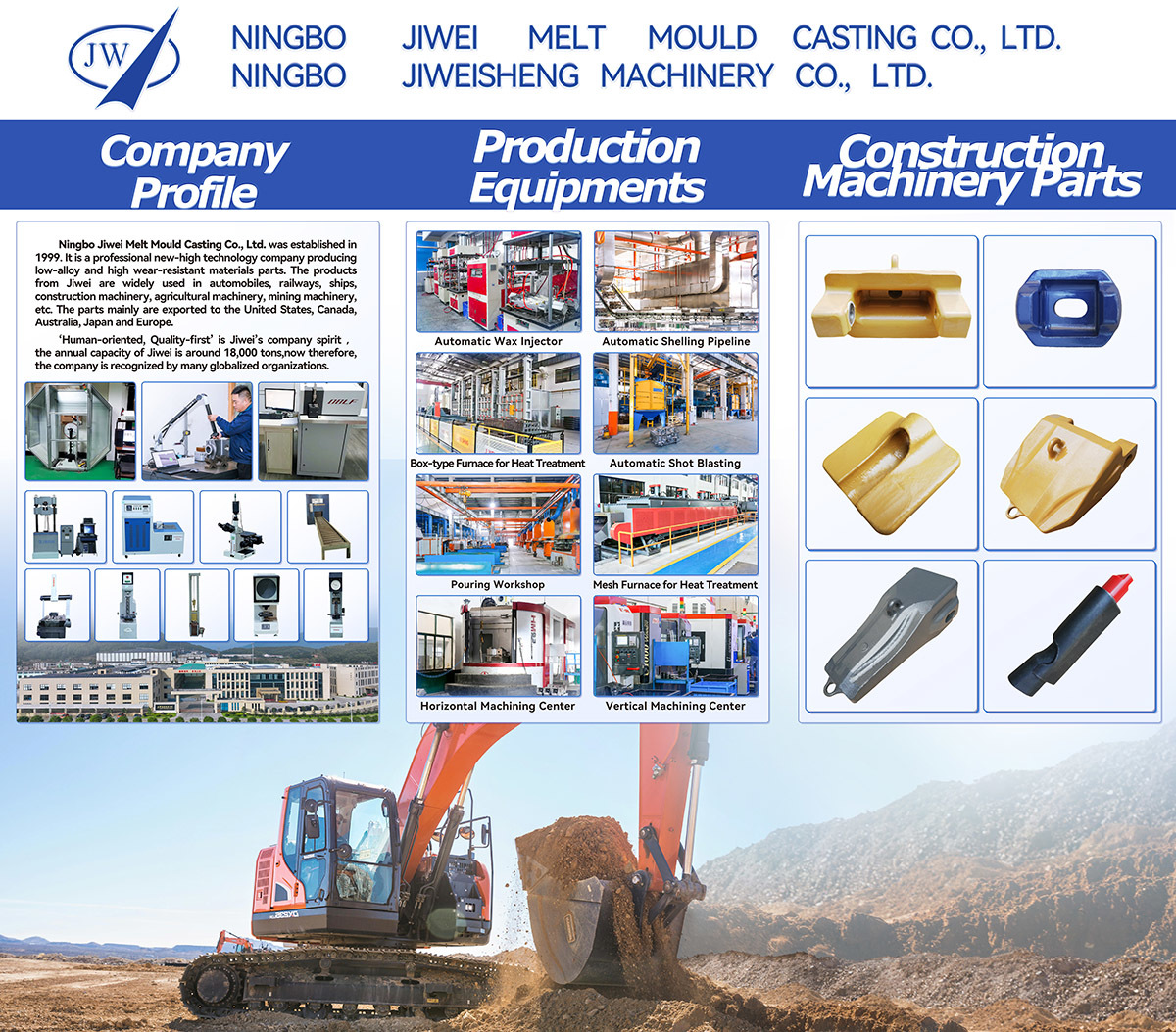
Apr 30,2025
2025 Mexico Exhibition
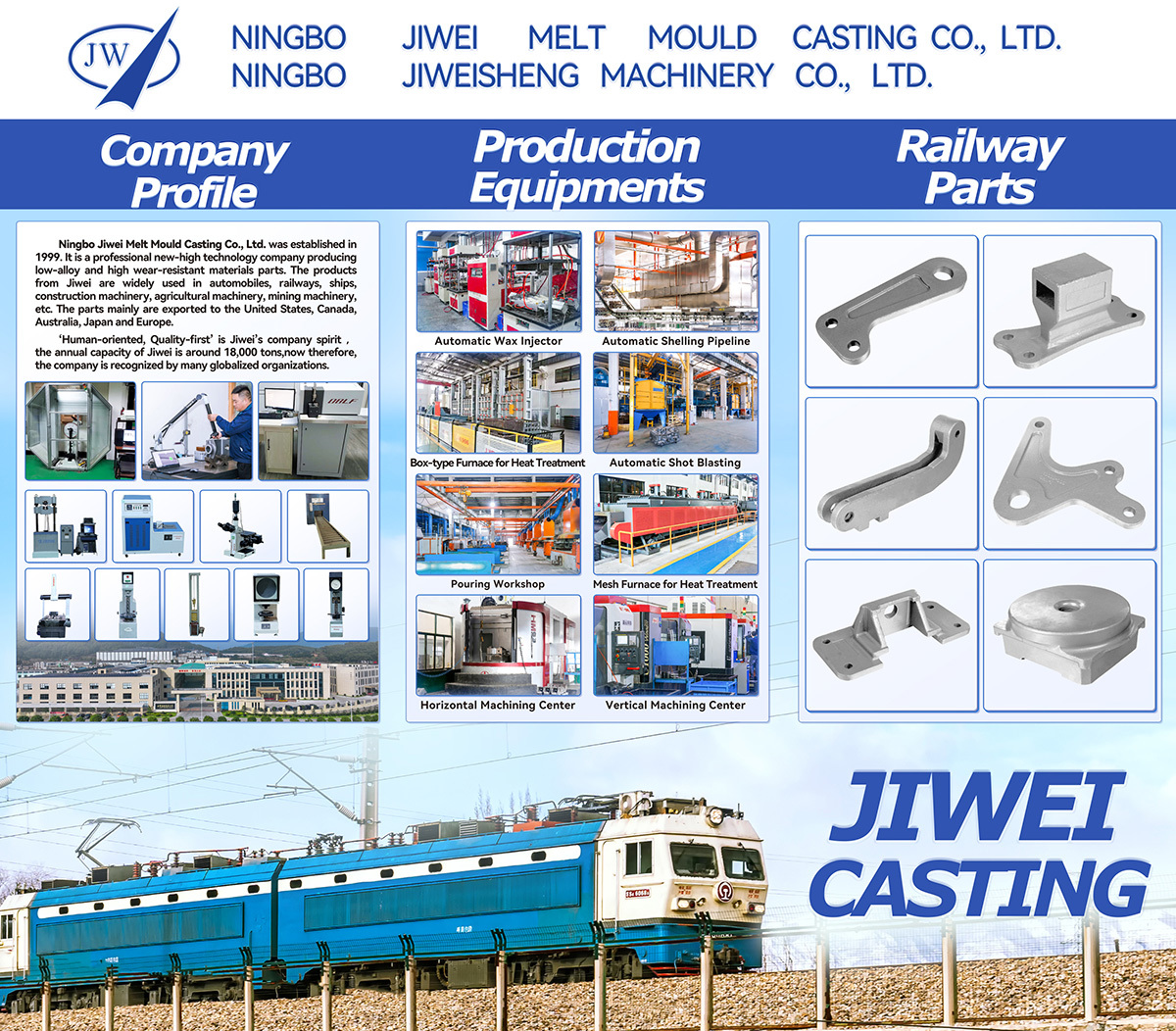
Apr 30,2025
2025 American Rail Show