
08 Nov,2026
Cast steel foundry supplier shipping and logistics: common challenges explained


Article overview
This guide examines the core shipping and logistics challenges procurement engineers encounter when sourcing cast steel components. It covers lead time gaps, freight packaging, customs documentation, MOQ economics, quality verification, and 2026 reshoring trends — with data tables, real-case references, and actionable checklists.
Table of contents
- 1. What makes cast steel foundry supplier logistics uniquely complex
- 2. Lead time transparency: the gap between promise and delivery
- 3. Freight damage and packaging failures in steel casting shipments
- 4. Export documentation and customs compliance for cast steel parts
- 5. Minimum order quantities and their impact on shipping economics
- 6. Quality verification before and after shipment
- 7. 2026 reshoring trends and their effect on domestic shipping timelines
- 8. FAQ
Shipping cast steel components is not like shipping packaged consumer goods. The parts are dense, geometrically irregular, and often mission-critical — a delayed valve body or a cracked pump housing can halt an entire production line. A cast steel foundry supplier is a manufacturer or trading entity that produces and ships steel castings — typically carbon steel, alloy steel, or stainless steel — to industrial end users through sand casting, investment casting, or related metalworking processes. Understanding what goes wrong between the foundry floor and your receiving dock is essential for anyone in a procurement or engineering role evaluating their supply chain in 2026.
What makes cast steel foundry supplier logistics uniquely complex
Steel casting logistics is uniquely complex because the product itself dictates nearly every downstream shipping variable — weight, fragility at surface level, hazardous-material classification of accompanying documentation, and strict dimensional tolerances that must survive handling. Unlike sheet metal or bar stock, a custom steel casting is an irreplaceable, often low-volume part. If it arrives damaged, there is rarely a shelf replacement.
Why standard freight assumptions break down with cast steel parts
Most logistics providers price and handle shipments based on dimensional weight or standard commodity classifications. Cast steel components — particularly those from a sand casting foundry or investment casting supplier — are physically heavy relative to their box size. A single pump casing weighing 180 lbs may fit in a 24-inch crate, but its actual weight triggers freight class changes that many buyers fail to anticipate. Industry experience confirms that misclassified freight accounts for a significant share of unexpected invoice surcharges on steel casting orders.
There is also the question of surface integrity. Precision steel castings often have machined sealing faces, threaded bores, or tight-tolerance mating surfaces that must be protected in transit. Standard poly wrap is insufficient. Without foundry-specific packaging protocols — VCI (Vapor Corrosion Inhibitor) film, foam-padded wooden crates, or steel banding — corrosion and impact damage become near-certain outcomes on long ocean or rail transits.
The multi-party supply chain problem
A typical overseas procurement chain for a cast steel part might involve the foundry, an in-country freight forwarder, a consolidation warehouse, an ocean carrier, a U.S. customs broker, and a final-mile LTL carrier. That is at least five handoffs — each one a potential point of miscommunication, delay, or damage. Many OEM casting manufacturers and industrial casting suppliers have strong production competencies but limited visibility into what happens after the parts leave their loading dock. Buyers who assume the foundry "handles everything" routinely encounter gaps.
Lead time transparency: the gap between promise and delivery
Lead time is the single most cited complaint in cast steel procurement. The stated lead time from a foundry and the actual time the parts arrive at a U.S. facility are routinely different — sometimes by weeks.
How foundries calculate lead time vs. how buyers interpret it
Most steel casting manufacturers quote lead time as production time only: the number of working days from order confirmation to finished, inspected parts ready for pickup at the foundry gate. They are not quoting the full door-to-door transit window. Buyers, reasonably enough, interpret "6–8 weeks" as the time before the parts arrive on their dock. The actual timeline often looks like this:
- Pattern or tooling preparation: 1–3 weeks (new parts only)
- Sand casting or investment casting production cycle: 3–6 weeks
- Post-casting heat treatment, machining, and inspection: 1–2 weeks
- Export packing and documentation preparation: 3–5 business days
- Ocean freight transit (China to U.S. West Coast): 18–28 days
- U.S. customs clearance and exam risk: 3–10 business days
- Domestic freight to final delivery point: 2–5 business days
Total realistic elapsed time for a first-article order: 12–18 weeks. For repeat orders with existing tooling, 8–12 weeks is more accurate. The delta between foundry-quoted lead time and actual delivery is not dishonesty — it is a structural communication gap. Buyers who do not ask the right questions pay for it in expedited freight charges or production stoppages.
Rush orders and small batch realities
Why do so many procurement teams struggle to find a cast steel foundry supplier willing to accept rush or small-batch orders? The answer is economic: pouring a heat of carbon steel requires a minimum viable melt volume regardless of how many parts you need. A carbon steel foundry running a 2,000-lb induction furnace cannot profitably pour 50 lbs of metal for a single-piece prototype without premium pricing. Foundries that do accommodate small batches — and they exist, particularly among U.S. domestic specialty shops — typically charge setup and melt minimums that surprise first-time buyers.

Freight damage and packaging failures in steel casting shipments
Freight damage is underreported and underestimated in the cast steel supply chain. Physical damage claims on industrial castings are filed less frequently than they should be, partly because buyers absorb minor surface damage to avoid rework delays — and partly because proving carrier liability on a 300-lb crated casting requires documentation most receiving teams do not capture in real time.
Common packaging failure modes
Based on supply chain case reviews, the most frequent packaging failure modes for cast steel shipments are: inadequate internal blocking that allows parts to shift inside wooden crates; absence of VCI film on machined surfaces, leading to rust formation during 20+ day ocean transits; insufficient load-bearing crate construction that collapses under warehouse stacking; and missing "heavy weight" or "do not stack" markings that result in cargo crushing. A metal casting factory with ISO 9001 certification should have documented packaging standards — always request them before first shipment.
Corrosion: the silent damage category
Corrosion is easy to overlook because the part arrives structurally intact. But a precision steel casting with a corroded sealing face or a rusted bore thread may require rework that costs more than the part itself. Ocean containers are humidity environments, particularly during monsoon-season sailings or when containers are loaded at coastal ports. VCI paper and desiccant packets are inexpensive insurance. Surprisingly, they are still not standard practice at many lower-tier foundries. If your supplier cannot confirm corrosion protection measures in writing, that is a vetting signal worth noting.
"Packaging for heavy industrial castings must treat the ocean container as an adversarial environment — temperature swings, humidity, vibration, and rough handling are not edge cases, they are the norm. Foundries that design packaging for a perfect transit will always see failures." — American Foundry Society (AFS) logistics guidance, 2025
Export documentation and customs compliance for cast steel parts
Documentation errors are a leading cause of customs delays for cast steel imports into the United States. The complexity is real: cast steel parts can fall under multiple HTS codes depending on alloy composition, finished state (rough casting vs. machined), and end-use application. Getting this wrong triggers holds, exams, and sometimes penalty duties.
Key documents every cast steel shipment requires
A compliant import shipment from an overseas steel casting exporter to a U.S. buyer requires, at minimum: a commercial invoice with accurate part descriptions and declared values; a packing list that matches the actual contents by part number, quantity, and weight; a certificate of origin (critical for Section 232 tariff determination); a mill test report (MTR) confirming the alloy composition of the heat used; and, for safety-critical applications, any third-party inspection certificates required by the end customer. For stainless steel casting company shipments, additional documentation for nickel content may be required under certain trade programs.
Section 232 tariffs and their ongoing impact in 2026
Section 232 steel and aluminum tariffs continue to shape sourcing decisions in 2026. Cast steel components imported from non-exempt countries face a 25% tariff on top of standard duties. Many procurement teams building landed-cost models underestimate this impact, particularly when comparing a domestic iron foundry company quote against an overseas price. The math often narrows considerably once tariffs, freight, and insurance are factored in. Understanding the steel casting process overview helps buyers correctly classify parts and potentially qualify for alternative HTS codes that carry lower duty rates.
| Cost variable | U.S. domestic foundry | Overseas foundry (non-exempt country) |
|---|---|---|
| Unit casting price (100-piece run) | $180–$320 | $60–$130 |
| Section 232 tariff (25%) | Not applicable | $15–$32.50 per unit |
| Ocean freight + insurance (per unit estimate) | Not applicable | $8–$22 |
| Inland freight (domestic) | $6–$18 | $6–$18 |
| Typical lead time (door-to-door) | 4–8 weeks | 10–18 weeks |
| MOQ flexibility | Often 10–50 pieces | Typically 50–500 pieces |
Minimum order quantities and their impact on shipping economics
MOQ is a logistics problem as much as it is a production problem. When a foundry sets a minimum order quantity at 200 pieces and a buyer needs 30, the choices are unpleasant: pay for 170 extra units and absorb storage costs, find a different supplier willing to run smaller batches, or delay the project until demand accumulates. Each option has freight implications.
Why MOQs exist and when they are negotiable
For any alloy steel casting producer or custom steel castings shop, MOQ policy is driven by furnace economics, pattern amortization, and inspection batch efficiency. It is not arbitrary. That said, MOQs are negotiable in specific circumstances: when the buyer agrees to pay a tooling or setup surcharge, when the part is high-margin, or when the relationship has long-term volume potential. Domestic foundry casting services providers in the U.S. — particularly those targeting aerospace, defense, or prototype markets — have built their business model around low-MOQ flexibility, albeit at higher per-unit pricing.
Shipping consolidation strategies for small batch orders
Buyers sourcing small-volume cast steel parts from overseas suppliers have a practical tool available: LCL (less-than-container-load) consolidation. Rather than paying for a full 20-foot container for 30 castings, an experienced freight forwarder can co-load the shipment with compatible cargo. The tradeoff is longer transit time (consolidation adds 5–10 days) and slightly higher damage risk due to multiple cargo handling events. For non-urgent repeat orders, LCL is often the most economical path. For urgent shipments, air freight is technically feasible but economically punishing — a 500-lb casting shipment via air can cost 8–12× the ocean rate. Consider this option only as a true last resort.
Quality verification before and after shipment
Quality verification is inseparable from logistics planning. A part that passes production inspection but fails incoming inspection at the buyer's facility creates a rework and return cycle that can be more disruptive than a simple delay. Structuring quality verification correctly — both pre-shipment and upon receipt — is one of the highest-leverage things a procurement team can do.
Pre-shipment inspection: what to require from your foundry
A reputable cast steel foundry supplier should provide, as standard, dimensional inspection reports (CMM or first-article inspection), material test reports (MTR/mill cert) traceable to the specific heat number, and surface quality documentation noting any allowed defect classifications per agreed standards (ASTM, EN, or customer-specific). For safety-critical parts used in rail, lifting, or pressure applications, third-party non-destructive testing (UT, MT, RT) certificates are non-negotiable. Refer to the foundry manufacturing basics resource for a grounding in standard inspection frameworks applicable across casting processes.
Incoming inspection protocols that protect your project timeline
Receiving teams often treat cast steel parts as "inspect if something looks wrong." That approach fails under pressure. A disciplined incoming inspection for precision steel casting components should include: visual surface check against the agreed acceptance criteria, dimensional spot-check on critical features (not 100% unless specified), confirmation that part markings and heat numbers match the accompanying MTR, and photographic documentation of any nonconformances before unpacking is complete. This last point matters for freight damage claims — photos taken after full unpacking are routinely disputed by carriers as potentially post-receipt damage.
2026 reshoring trends and their effect on domestic shipping timelines
The reshoring movement in U.S. industrial manufacturing is accelerating in 2026, and the cast steel sector is a direct beneficiary. According to 2026 data from Mordor Intelligence, the global steel casting market is valued at approximately $23.65 billion, growing at a 5.27% CAGR through 2032. A meaningful portion of this growth is driven by North American reshoring investment in energy, infrastructure, and defense supply chains — all heavy consumers of cast steel components.
How 3D sand printing is changing lead times at U.S. foundries
One development reshaping the domestic logistics equation is 3D-printed sand mold technology. Rather than fabricating wooden or aluminum patterns — a process that takes 3–6 weeks alone — several U.S. specialty foundries now use binder-jet sand printing to produce molds directly from CAD files within 48–72 hours. For small-batch and prototype work, this compresses the full production-to-ship timeline from 10–14 weeks to as few as 3–5 weeks. The surface quality of 3D-printed sand castings has improved to near-parity with traditional no-bake sand molds, according to recent reports from Casting Source. This matters: a faster domestic turnaround fundamentally changes the MOQ and lead-time calculus that previously made overseas sourcing attractive.
What buyers should evaluate when considering a domestic vs. overseas cast steel foundry supplier
The conventional wisdom that domestic always costs more is increasingly incomplete. When total landed cost — including tariffs, freight, insurance, storage for oversized MOQs, and the cost of a 12-week lead time buffer — is calculated honestly, U.S. domestic options are competitive for orders under approximately 500 pieces. For high-volume, stable-demand, non-time-critical parts, overseas sourcing through a qualified lost wax casting supplier or large-scale steel casting exporter remains cost-effective. The key is segmenting your cast steel spend by volume, urgency, and criticality — and matching each segment to the appropriate supply source.
Of course, there are situations where a hybrid approach works best: prototype and low-volume runs through a domestic foundry, production-volume repeat orders sourced offshore with a 90-day inventory buffer. This is not a novel idea — it is what experienced procurement engineers have been doing for years. The difference in 2026 is that domestic foundry capacity for mid-complexity castings is genuinely expanding, so the domestic option is worth re-evaluating even if previous assessments ruled it out on cost grounds.
Choosing the right cast steel foundry supplier for your logistics reality
Shipping and logistics challenges are not random bad luck — they are largely predictable, and largely preventable when buyers ask the right questions before awarding an order. A cast steel foundry supplier that cannot clearly explain its packaging standards, provide traceability documentation, or give a realistic door-to-door timeline is a supplier that will cost you more than the per-unit price suggests.
The evaluation checklist below reflects the criteria that consistently differentiate high-performing supplier relationships from problematic ones, based on supply chain case data from U.S. procurement teams in energy, construction equipment, and rail sectors:
- Confirm whether quoted lead time is production time or door-to-door time — and get both numbers in writing
- Request documented packaging standards including corrosion protection specifications
- Verify the supplier's export documentation capability: MTR, COO, inspection certs
- Assess MOQ policy and whether setup surcharges allow flexibility for small batches
- Confirm available NDE capabilities (UT, MT) and third-party inspection partnerships
- Evaluate the supplier's experience with U.S. customs classification for cast steel parts
No supplier is perfect across all six dimensions. But a supplier that is strong on documentation and weak on MOQ flexibility is a very different risk profile than one that is fast but cannot provide traceable material certifications. Know which variables matter most for your specific application before you compare quotes.
Frequently asked questions
Q: How long does it typically take to receive a cast steel order from an overseas foundry to the U.S.?
A: For repeat orders with existing tooling, expect 8–12 weeks door-to-door. First-article orders requiring new patterns typically take 12–18 weeks. This includes production, inspection, export packing, ocean transit, U.S. customs clearance, and domestic delivery. Always request both a production lead time and a full transit estimate separately from your supplier.
Q: What documentation should a cast steel foundry supplier provide with every shipment?
A: At minimum: a commercial invoice, packing list, certificate of origin, and material test report (MTR) traceable to the heat number. For safety-critical or pressure-rated castings, third-party NDE certificates (UT, MT, or RT) and dimensional inspection reports are also required. Missing documentation is the most common cause of U.S. customs holds on cast steel imports.
Q: Are Section 232 tariffs still affecting cast steel imports in 2026?
A: Yes. As of 2026, Section 232 tariffs of 25% remain in effect for steel imports from non-exempt countries. These tariffs apply to cast steel parts classified under relevant HTS codes. Buyers should factor this into landed-cost calculations when comparing overseas suppliers against domestic foundry options, as the tariff alone can significantly narrow the apparent price gap.
Q: Can a cast steel foundry supplier accommodate small batch orders under 50 pieces?
A: Yes, but typically at a premium. U.S. domestic specialty foundries — particularly those using 3D sand printing technology — are more likely to accept small-batch orders with reasonable unit economics. Overseas foundries generally require MOQs of 50–500 pieces, though setup surcharges can sometimes unlock smaller runs. Always negotiate MOQ terms before tooling investment, not after.
Q: How do I protect cast steel parts from corrosion damage during ocean transit?
A: Require your foundry to use VCI (Vapor Corrosion Inhibitor) film or paper on all machined surfaces, combined with desiccant packets inside sealed packaging. Wooden crates should be internally lined and parts should be blocked against movement. Confirm these measures in writing as part of your packaging specification before the first shipment — retrofitting packaging standards after a corrosion incident is an unnecessary cost.
Apr 30,2025
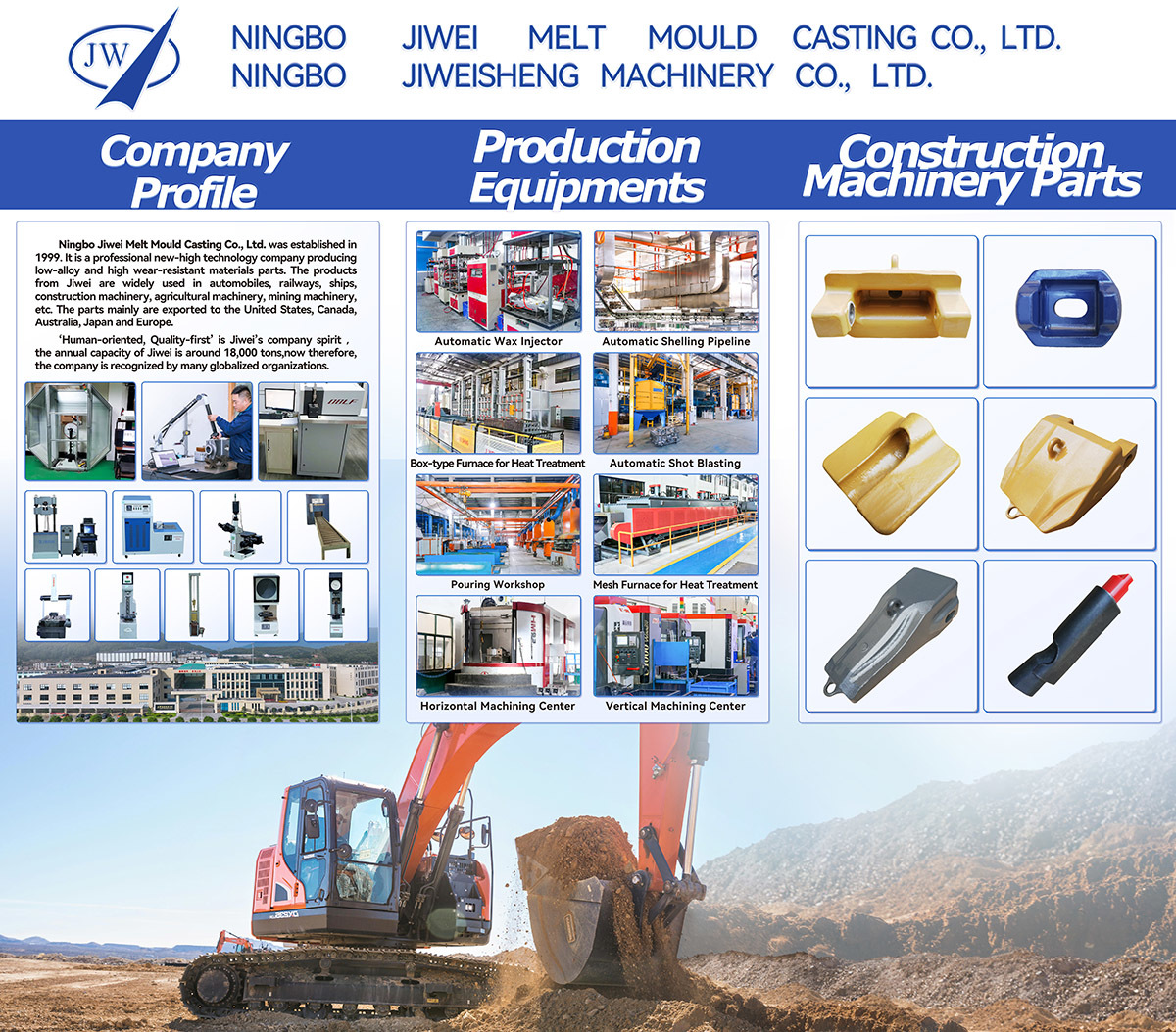
2025 Mexico Exhibition
Apr 30,2025
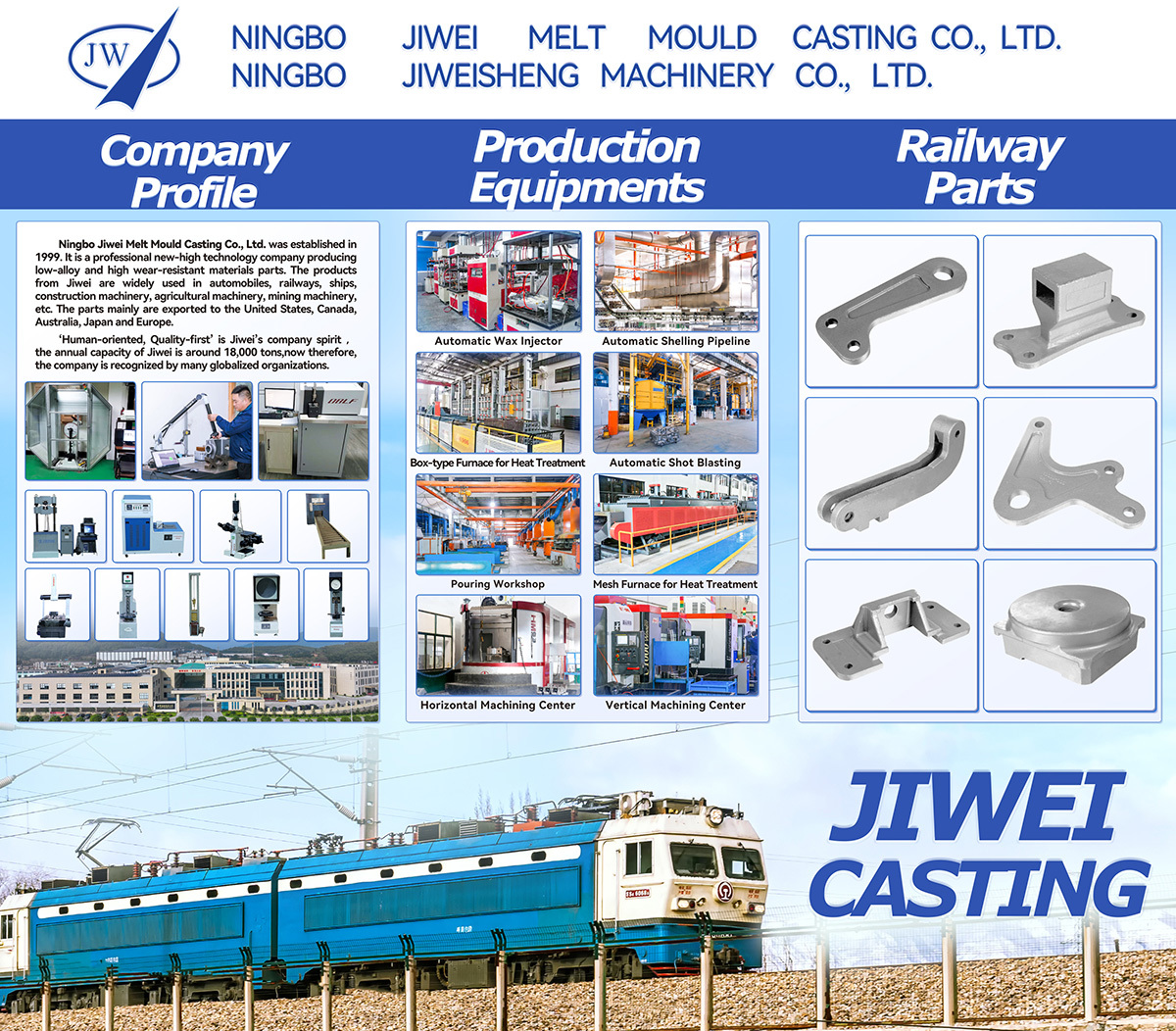
2025 American Rail Show