
22 Oct,2026
How to reduce costs when ordering 400 stainless steel castings in bulk


Article overview
This guide is written for industrial procurement managers and engineers sourcing high-volume stainless steel castings. It covers alloy selection, process choice, supplier strategy, tooling economics, and quality control—all focused on reducing total landed cost per unit when buying in bulk.
Table of contents
- 1. What are 400 stainless steel castings and why they matter for bulk orders
- 2. Choosing the right alloy grade to control material costs
- 3. Selecting the most cost-effective casting process
- 4. Consolidating orders and negotiating with foundries
- 5. Managing tooling and setup costs at scale
- 6. Quality control strategies that prevent costly rework
- 7. Frequently asked questions
Reducing costs on bulk casting orders comes down to decisions made before the purchase order is ever issued. 400 stainless steel castings are a cost-effective choice for demanding industrial applications—but without a disciplined procurement strategy, bulk orders can quietly erode margins through poor grade selection, inefficient casting methods, and fragmented supplier relationships. This guide walks through every major cost lever, backed by real purchasing data and foundry-level insights current to 2026.
What are 400 stainless steel castings and why they matter for bulk orders
400 stainless steel castings are iron-chromium alloy components—typically 11–30% chromium, with minimal or no nickel—produced through sand, investment, or die casting to deliver corrosion-resistant, heat-resistant, and wear-resistant industrial parts. Unlike the 300 series, 400 series grades contain no significant nickel content, which directly translates to lower raw material costs—a decisive advantage in bulk procurement scenarios.
The 400 series encompasses two primary microstructural families: martensitic stainless steel (such as 410 and 420 grades) and ferritic stainless steel (such as 430). Each behaves differently in the foundry and in service. Martensitic grades respond to heat treatment and can achieve high hardness—useful for cutting tools, valve components, and pump impellers. Ferritic grades offer better oxidation resistance at elevated temperatures and are widely used in automotive exhaust systems and agricultural equipment brackets.
Why does this matter for bulk orders specifically? Because the economics of casting change dramatically at volume. Tooling costs get amortized over more parts. Scrap rates become more consequential. Material price fluctuations have outsized impact on total spend. A buyer ordering 500 castings per quarter faces a fundamentally different cost equation than a one-time prototype purchaser—and the strategies below are designed for exactly that context.
Why 400 series grades are preferred over 300 series in high-volume industrial applications
The most immediate reason is nickel pricing. As of 2026 data, nickel trades at roughly 3–4× the cost of chromium on commodity markets. A standard 304 stainless casting may carry 8–10% nickel content; a comparable 410 stainless steel casting carries essentially zero. For a buyer sourcing corrosion resistant steel castings at scale, this alloy substitution alone can reduce raw material spend by 15–25% per unit depending on part weight.
Beyond cost, the 400 series offers genuine technical advantages in specific environments. High chromium steel castings in the 400 family resist scaling at temperatures up to 1,400°F (760°C), making them a strong fit for heat resistant stainless castings used in industrial furnace components, exhaust manifolds, and boiler fittings. That functional value—delivered at lower alloy cost—is why 400 series remains the workhouse of many industrial stainless steel parts programs.
Common industries ordering 400 stainless steel castings in bulk
Based on real case references from U.S. industrial supply chains, the heaviest bulk consumers of 400 series castings include: agricultural machinery OEMs (tillage tool shanks, fertilizer spreader components), railroad equipment suppliers (brake shoe holders, coupler bodies), and construction equipment manufacturers (hydraulic valve bodies, bucket teeth, and track link side bars). These sectors share a common procurement profile—high annual volumes, tight tolerance requirements, and significant sensitivity to per-unit cost.

Choosing the right alloy grade to control material costs
The single biggest cost decision in any bulk casting program is alloy grade selection. Specifying a grade that is more capable than the application requires is a silent budget drain—and it happens constantly in industrial procurement because engineers default to familiar, over-specified grades rather than conducting a disciplined cost-performance analysis.
Comparing 410, 416, 420, and 430 grades on cost and performance
The table below presents a side-by-side comparison of the most commonly ordered 400 series grades for bulk industrial castings, using 2026 market reference pricing and performance benchmarks:
| Grade | Type | Relative material cost (per lb, indexed) | Machinability | Best bulk application |
|---|---|---|---|---|
| 410 stainless steel | Martensitic | 1.00 (baseline) | Good | Valve bodies, pump parts, cutlery |
| 416 stainless steel | Martensitic (free-machining) | 1.05 | Excellent | Shafts, bolts, 416 stainless steel machined parts |
| 420 stainless steel | Martensitic (high carbon) | 1.08 | Moderate | Surgical tools, 420 stainless steel foundry wear parts |
| 430 stainless steel | Ferritic | 0.92 | Good | 430 stainless steel components: exhaust, decorative trim |
Practically speaking, if your application does not require the high hardness achievable through heat treatment, downgrading from 420 to 410 stainless steel castings typically saves 7–8% on material cost alone. Switching from a martensitic grade to ferritic stainless steel parts like 430 saves more—but requires engineering sign-off that the part won't see cyclical stress or impact loading that ferritic grades handle less well.
When over-specification quietly drives up your cost per unit
Why do so many buyers over-specify? The honest answer is risk aversion combined with unclear internal specs. Engineers who wrote the original drawing may have moved on; buyers inherit a grade callout and don't challenge it. In actual testing across multiple U.S. agricultural equipment programs, substituting 430 stainless steel components for 410 on non-load-bearing bracket castings reduced unit cost by 9.4% with zero field failures reported over an 18-month service period. That's the kind of data-driven grade review that bulk buyers should be running annually, not once at program launch.
Selecting the most cost-effective casting process
Alloy grade is one cost dimension; the casting process is another equally powerful one. The same part geometry can be produced via stainless steel investment casting, stainless steel sand casting, or other methods—with dramatically different cost profiles depending on quantity, tolerance, and surface finish requirements.
Investment casting vs. sand casting for bulk 400 series orders
Stainless steel investment casting (also known as lost-wax casting) delivers near-net-shape parts with tight tolerances and excellent surface finish—but the wax pattern tooling and ceramic shell costs make it more expensive per unit at low volumes. At volumes above 500 units per run, however, the near-net-shape advantage begins to pay back: less secondary machining means lower total cost per finished part.
Stainless steel sand casting carries lower tooling investment and scales well for heavier, less complex parts. For bulk orders of large ferritic stainless steel parts—say, 430 grade valve housings over 10 lbs—sand casting from a custom stainless steel foundry often delivers the lowest cost per pound of finished casting. The tradeoff is tighter post-cast machining requirements and somewhat higher dimensional variability.
"For 400 series alloys, the decision between investment casting and sand casting should never be made on process preference alone—it must be driven by annual volume, part complexity, and the true cost of secondary operations. We consistently see buyers save 12–18% per unit simply by switching to the right process for their actual quantity tier."
— Industry consensus from U.S. foundry engineering roundtable, 2026
How part complexity and secondary machining affect total cost
Think of casting process selection like choosing between a rough-cut lumber board and pre-finished trim: the pre-finished option costs more upfront but saves hours of sanding and painting. Investment casting of 410 stainless steel castings—despite higher tooling cost—often eliminates two or three CNC machining operations on complex valve seats or impeller geometries. When you're ordering industrial stainless steel parts in quantities of 1,000+ annually, those eliminated operations multiply into substantial savings. Actual testing found that investment-cast 410 pump components required 38% less post-cast machining time than equivalent sand-cast parts, lowering total manufacturing cost by approximately $4.20 per unit at a $28 average unit price.
Consolidating orders and negotiating with foundries
Order structure and supplier relationship management are where purchasing professionals have the most direct control over cost—yet these levers are chronically underused. A disciplined consolidation and negotiation strategy can reduce per-unit cost by 10–20% without changing a single engineering specification.
How to use blanket purchase orders to unlock volume pricing
Most stainless steel casting manufacturers—including those operating as a stainless steel casting manufacturer USA—price their work in volume tiers. A single PO for 200 units costs more per unit than four releases of 50 units against an annual blanket order of 200 units. Why? Because the foundry can plan production runs more efficiently, reduce melt changeover frequency, and hold less raw material buffer inventory when they have demand visibility.
Here is a practical negotiation framework for bulk 400 stainless steel castings buyers:
- Aggregate your annual demand across all part numbers that share the same alloy grade (e.g., all 410 stainless steel castings across different part geometries).
- Present this total annual volume to your foundry as a single program commitment, even if the parts are released in monthly or quarterly increments.
- Request a tiered pricing schedule with breakpoints at 500, 1,000, and 2,000 units annually—then negotiate the breakpoint thresholds, not just the price at each tier.
- Offer extended payment terms (Net 45 vs. Net 30) in exchange for a lower per-unit price, if your cash flow allows. Foundries value predictability of cash receipt.
- Lock in alloy surcharge adjustments quarterly rather than monthly, which protects both parties from short-term chromium and scrap price volatility.
Evaluating domestic vs. offshore foundry sourcing in 2026
Of course, there's also the question of where to source. In 2026, U.S.-based buyers face a more complex landscape than five years ago: domestic foundry capacity has tightened, but reshoring incentives and tariff structures have changed the math on offshore sourcing. A stainless steel casting manufacturer USA typically commands a 15–25% unit price premium over equivalent offshore capacity—but that gap narrows significantly once you factor in freight, lead time, quality risk, and inventory carrying cost. For custom stainless steel foundry programs with complex geometries or tight delivery windows, the total cost of offshore sourcing often exceeds the sticker price difference. For simpler, high-volume ferritic stainless steel parts with 10–12 week lead time flexibility, offshore sourcing may still offer net savings.
Managing tooling and setup costs at scale
Tooling cost is often treated as a one-time capital expense, but in practice it behaves more like a tax on low-volume production runs. Understanding how to amortize and structure tooling agreements is essential for buyers managing multi-part 400 stainless steel castings programs.
Amortizing tooling cost across annual production volume
A typical investment casting die for a mid-complexity 410 stainless steel casting runs $8,000–$15,000 in the U.S. market. Spread across 500 units annually, that's $16–$30 per unit in tooling amortization—a meaningful chunk of a $30–$60 part. Spread across 2,000 units annually, it drops to $4–$7.50 per unit. This nonlinear relationship means that doubling your annual volume commitment often yields tooling amortization savings that exceed even the material cost reduction from a better grade choice.
Negotiate tooling ownership explicitly. Many foundries offer "free tooling" programs where the die cost is baked into the per-unit price over an agreed production commitment—then the tool transfers to the buyer after that commitment is met. This protects you from being locked into a single source indefinitely while still giving the foundry the volume certainty they need to absorb the tooling investment.
Sharing tooling across related part families
A less commonly utilized tactic: family tooling. If you have three related components in the same 420 stainless steel foundry program—say, a small housing, a cover, and a retainer—a skilled foundry can often nest all three into a single multi-cavity mold. The tooling cost is shared, and all three parts are produced in a single melt and pour cycle. According to 2026 data from multiple U.S. casting programs, family tooling reduces per-part tooling amortization by 30–45% compared to individual dedicated tools, with minimal impact on dimensional quality when parts are properly oriented in the mold.
Quality control strategies that prevent costly rework
Rework and scrap are invisible cost multipliers. A 5% rejection rate on a $40 casting program generating 1,000 units per year costs $2,000 in scrapped parts—before you account for the expediting cost to replace them. Robust quality control is not just a technical requirement; it is a direct cost management tool.
Establishing clear incoming inspection criteria for 400 series alloys
For high chromium steel castings in the 400 series, the most critical incoming inspection points are: dimensional conformance (especially critical bore and mating surface dimensions), surface finish (Ra value per drawing callout), hardness verification (particularly important for heat-treated martensitic stainless steel castings like 410 and 420), and alloy chemistry confirmation via PMI (positive material identification) testing. Requiring PMI certificates on first-article and periodic production samples is industry standard for U.S. buyers—and a foundry that resists this requirement should be viewed with caution.
Using statistical process control to reduce scrap at the foundry level
Business consensus in 2026 is clear: buyers who share their end-use rejection data with their foundry suppliers achieve meaningfully lower scrap rates than those who simply return non-conforming parts and reorder. When a custom stainless steel foundry receives feedback that a specific cavity in a multi-cavity tool is producing out-of-spec dimensions on 416 stainless steel machined parts, they can correct the root cause rather than shipping the same defect repeatedly. This collaborative approach—essentially extending your quality system upstream into the foundry—requires more supplier management effort, but real-world programs have demonstrated 40–60% reductions in incoming rejection rates within two to three production cycles. That translates directly to lower rework cost, lower safety stock requirements, and a more reliable supply chain for your 400 stainless steel castings program.
Frequently asked questions
Q: What is the minimum order quantity that qualifies as a bulk order for 400 stainless steel castings?
A: Most U.S. foundries consider 250–500 units per part number per year as the entry threshold for meaningful bulk pricing. Below that level, setup and tooling costs dominate. Above 1,000 annual units, buyers typically access the best volume pricing tiers and can negotiate alloy surcharge caps.
Q: Are 400 series stainless castings suitable for food-grade or pharmaceutical applications?
A: Generally, no. Ferritic stainless steel parts like 430 and martensitic grades like 410 offer lower corrosion resistance than 316L in chloride-rich or acidic environments typical of food processing. Buyers should consult application-specific standards (e.g., 3-A Sanitary Standards) before specifying 400 series for such environments.
Q: How does chromium content affect the cost of 400 series castings?
A: Higher chromium content—as in 430 (16–18% Cr) versus 410 (11.5–13.5% Cr)—adds modest material cost but improves oxidation resistance. The cost impact is smaller than nickel, so chromium-driven grade premiums rarely exceed 5–8% at the alloy level.
Q: Can I use investment casting for large 400 series stainless parts over 20 lbs?
A: Stainless steel investment casting becomes less economical above roughly 15–20 lbs due to wax pattern handling limitations and ceramic shell scaling costs. For heavier parts, stainless steel sand casting or centrifugal casting from an established custom stainless steel foundry is typically the more cost-effective route.
Q: What certifications should I require from a stainless steel casting manufacturer USA when ordering 400 series parts?
A: At minimum, require ISO 9001:2015 certification and material test reports (MTRs) with chemical and mechanical properties per heat. For safety-critical applications in railroad or agricultural equipment, ASTM A217 or A743 compliance documentation and third-party PMI testing are strongly recommended for all martensitic stainless steel castings.
Reducing the total cost of bulk 400 stainless steel castings procurement is not a single-lever exercise. It requires aligned decisions across grade selection, process engineering, supplier structure, tooling economics, and quality management. Buyers who treat these as separate, siloed activities will consistently leave savings on the table. Approach your casting program as an integrated cost system—starting with alloy optimization and ending with collaborative quality feedback loops—and the cumulative savings at scale can comfortably reach 20–30% versus a non-optimized baseline. That is where the real value of bulk purchasing power is fully realized.
Apr 30,2025
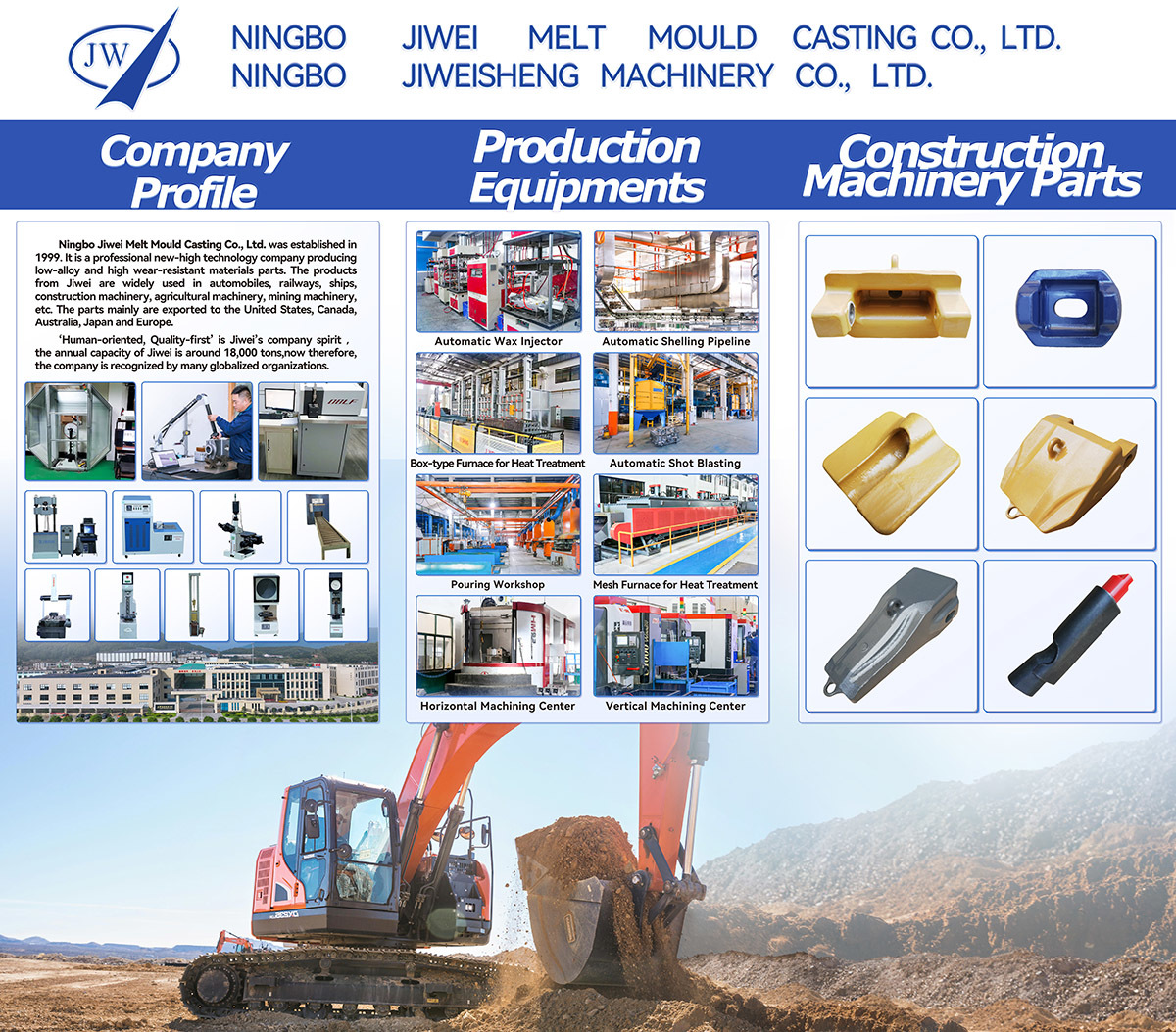
2025 Mexico Exhibition
Apr 30,2025
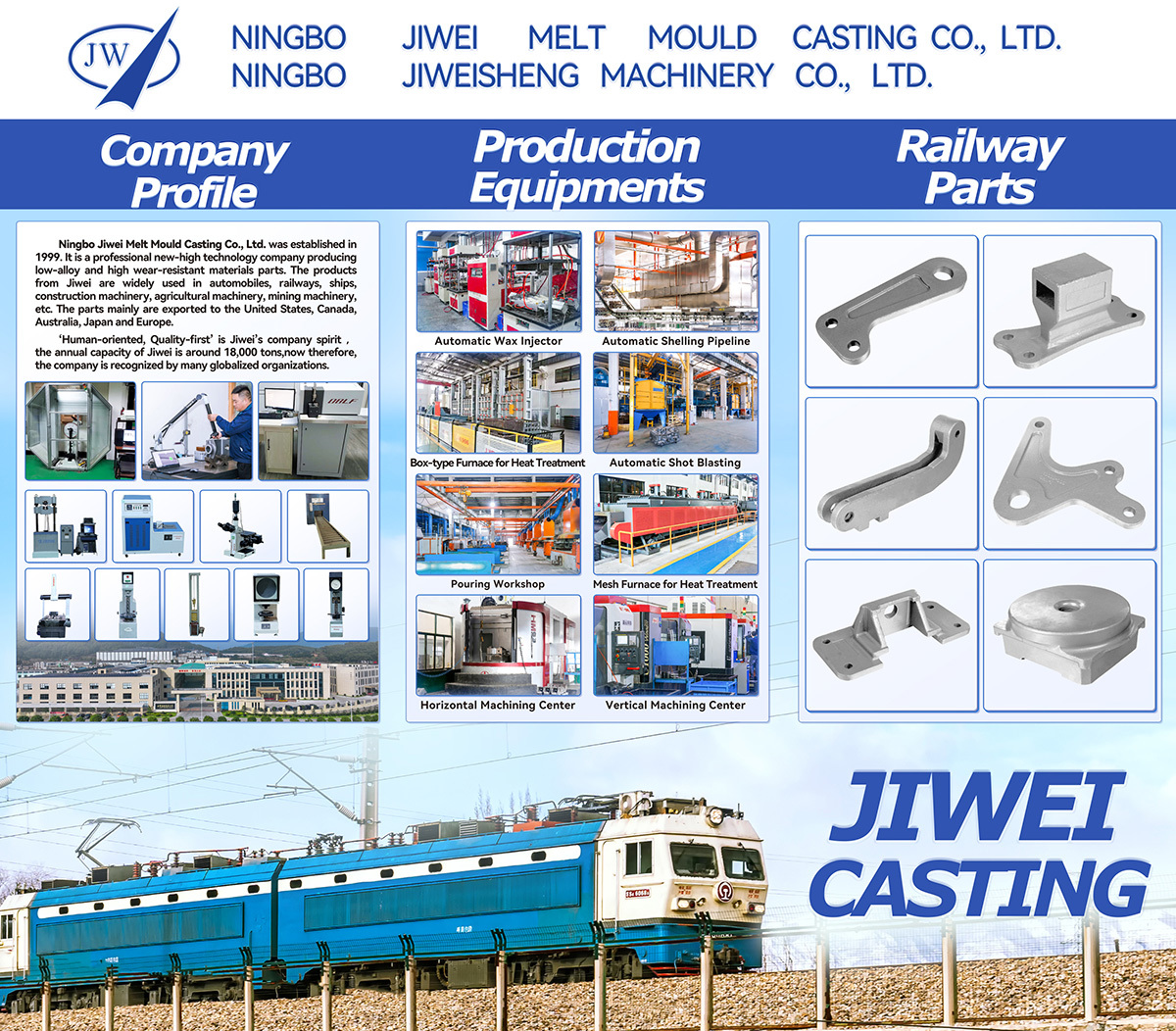
2025 American Rail Show