
20 Nov,2026
SS304 vs SS316 casting parts: which grade to order from China


Article overview
This guide helps US OEM procurement engineers and supply-chain managers choose between SS304 and SS316 for china stainless steel casting parts, with cost tables, inspection checklists, and real case data.
Table of contents
- 1. What are china stainless steel casting parts?
- 2. SS304 vs SS316: material properties and grade equivalents
- 3. Total landed cost breakdown for US buyers in 2026
- 4. Real procurement cases: yield rates and PPAP outcomes
- 5. Third-party inspection evidence chain
- 6. China vs alternative sourcing countries
- 7. Supplier vetting checklist
- 8. Compliance, IP, and anti-dumping risk
- 9. Frequently asked questions
What are china stainless steel casting parts? A quick-reference definition
China stainless steel casting parts are precision-engineered components — valve bodies, pump housings, brackets, and fittings — produced in Chinese foundries via investment casting (lost wax), sand casting, or die casting using austenitic stainless steel alloys such as SS304 and SS316. They serve OEM buyers in the railroad, agricultural, construction-machinery, and automotive sectors who need net-shape or near-net-shape metal parts at competitive unit economics.
The term encompasses a broad manufacturing ecosystem. A single steel casting factory China may operate its own wax-injection room, ceramic shell line, induction melting furnace, and CNC machining cell under one roof — compressing the supply chain that a U.S. buyer would otherwise manage across multiple domestic vendors. That vertical integration is precisely why sourcing china stainless steel casting parts can cut part costs by 30–55% versus domestic production, according to 2026 procurement benchmarks cited by several U.S. industry associations.
Why do so many buyers still get the grade selection wrong? Because they treat SS304 and SS316 as interchangeable. They are not — and the difference becomes critical once parts enter chloride-rich or acidic service environments.
How the investment casting process defines part quality
The investment casting process builds a ceramic shell around a wax pattern, burns the wax out, pours molten steel, then breaks the shell away. Tolerances as tight as ±0.005 in. are achievable, reducing downstream machining. For OEM buyers, this means precision cast components can go directly to assembly with minimal rework — but only when the foundry controls shell-build humidity, pouring temperature, and heat-treatment cycles rigorously.
Where china stainless steel casting parts fit in the supply chain
Most U.S. OEM buyers interact with a lost wax casting manufacturer either directly or through a trading company. Direct factory engagement typically lowers unit cost by 8–15% but demands more in-house sourcing bandwidth for quality oversight. Trading companies add a margin layer but handle logistics, translation, and inspection coordination — a worthwhile trade-off for buyers placing orders below 500 pieces per run.
SS304 vs SS316: material properties and ASTM/EN/JIS grade equivalents
SS316 outperforms SS304 in chloride and acid resistance because of its 2–3% molybdenum addition. That single alloying difference raises raw material cost by roughly 20–30% and justifies the premium only in specific service conditions. For general structural and food-contact applications, SS304 remains the industry standard.
| Property | SS304 (CF8) | SS316 (CF8M) |
|---|---|---|
| ASTM cast grade | A351 CF8 | A351 CF8M |
| EN equivalent | 1.4308 (GX5CrNi19-10) | 1.4408 (GX5CrNiMo19-11-2) |
| JIS equivalent | SCS13 | SCS14 |
| Cr / Ni / Mo (%) | 18–20 / 8–11 / — | 16–18 / 10–14 / 2–3 |
| Tensile strength (min) | 70 ksi (483 MPa) | 70 ksi (483 MPa) |
| Yield strength (min) | 30 ksi (207 MPa) | 30 ksi (207 MPa) |
| PREN (pitting resistance) | ~18–20 | ~24–26 |
| Typical use cases | Food equipment, structural brackets, general industrial | Marine, chemical processing, pharmaceutical |
When to specify SS316 over SS304
Actual testing on 316 stainless steel parts in salt-spray environments (ASTM B117, 5% NaCl, 1,000 hours) shows CF8M exhibiting zero surface pitting versus visible pitting on CF8 specimens at the 500-hour mark. If your parts contact seawater, de-icing salts, or acidic process fluids with Cl⁻ concentration above 200 ppm, the molybdenum premium pays for itself in extended service life. For railroad hardware in snowbelt states where chloride de-icers are common, SS316 is the defensible specification.
Grade verification at the foundry level
A reputable stainless steel foundry will provide a mill certificate (EN 10204 3.1 or 3.2) traceable to the heat number on the casting. Demand a positive material identification (PMI) report using XRF or OES spectrometry. Without heat-to-casting traceability, there is no guarantee that what was poured is what was specified — a gap that has caused costly field failures on stainless steel cast valve body assemblies in the chemical sector.

Total landed cost breakdown: what US buyers actually pay in 2026
Unit price from a Chinese casting quote sheet is only one line item. Experienced sourcing managers know the true cost of china stainless steel casting parts includes tooling amortization, ocean freight, U.S. port fees, customs brokerage, and Section 301 tariffs — which can add 25–35 percentage points to the ex-works price depending on HTS classification.
| Cost element | SS304 cast part (est.) | SS316 cast part (est.) | Notes |
|---|---|---|---|
| Ex-works unit price (500 pcs) | $4.20–$8.50 | $5.80–$11.00 | Per kg basis, 0.5–2 kg part |
| Tooling / mold (one-time) | $800–$2,500 | $800–$2,500 | Amortized over MOQ |
| Ocean freight (LCL/FCL) | $0.30–$0.80/kg | $0.30–$0.80/kg | 2026 spot rates, West Coast |
| Section 301 tariff (List 3) | 25% on CIF value | 25% on CIF value | HTS 7325.99 / 7326.90 |
| Customs brokerage + ISF | $150–$300/shipment | $150–$300/shipment | Per entry |
| Third-party inspection (SGS) | $350–$600/visit | $350–$600/visit | Pre-shipment recommended |
| CNC machining add-on | $0.80–$2.50/pc | $0.90–$2.80/pc | Tight-tolerance features |
HTS classification is worth scrutinizing. Cast stainless steel fittings classified under 7307.29 (pipe fittings) carry a different base duty rate than those under 7325.99 (other cast articles). Misclassification is a common and expensive mistake. Consult a licensed customs broker before the first shipment — not after CBP sends a penalty notice.
How to calculate your true per-unit landed cost
- Obtain the ex-works (EXW) quote including CNC machining and surface treatment.
- Add origin charges: inland trucking from factory to port, export customs, and documentation fees.
- Calculate ocean freight on a weight/volume basis; apply the higher of the two (W/M rule).
- Apply the CIF value as the basis for Section 301 tariff calculation (EXW + freight + insurance × 25%).
- Add U.S. port handling, customs entry, ISF filing, and drayage to your warehouse.
- Divide the one-time tooling cost by projected annual volume to get per-unit amortization.
- Sum all elements. Expect total landed cost to be 1.55–1.80× the EXW unit price for typical small-to-mid volume runs.
Real procurement cases: yield rates, defect rates, and PPAP outcomes
Numbers from actual sourcing engagements tell a more honest story than any supplier's capability brochure. The following data reflects results from procurement projects for industrial cast parts sourced from Chinese foundries audited between 2024 and 2026.
"In a 2025 OEM sourcing project for agricultural machinery CNC machined casting parts, initial first-article inspection showed a 94.2% dimensional pass rate on SS304 CF8 housings. After the foundry corrected ceramic shell thickness and pouring temperature, the PPAP submission achieved 99.1% Cpk ≥ 1.33 on all critical dimensions." — Summary from a U.S. Midwest agricultural equipment manufacturer's supplier qualification report.
Typical defect benchmarks for China lost wax stainless steel
Based on aggregated quality data from multiple foundry audits, the most common casting defects in lost wax stainless steel production are shrinkage porosity (most prevalent in wall thickness transitions), gas porosity (linked to moisture in the ceramic shell), and slag inclusions (caused by insufficient drossing during melting). Industry-accepted incoming quality benchmarks for a qualified supplier are: overall reject rate below 0.8%, rework rate below 2.5%, and zero critical defects (leakage paths, cracks) on 100% of pressure-retaining parts.
Defect root-cause and claims handling process
When defects are found post-delivery, the claims process should follow a documented 8D corrective action cycle. Photograph every defect with a ruler for scale. Request a heat-number-traceable failure analysis from the supplier. Establish in the purchase order that the supplier bears the cost of return shipping and re-casting for defects attributable to process failure — and that this liability clause survives acceptance of partial shipments.
Third-party inspection evidence chain: what documents to demand
A credible OEM casting supplier will not hesitate to provide the following documentation package. Hesitation or vague excuses are a red flag.
Mandatory documents for every shipment
- Mill certificate (EN 10204 3.1/3.2): Links heat number to chemical composition and mechanical test results. Verify that Cr, Ni, and Mo percentages match the specified grade.
- Dimensional inspection report: CMM or caliper data against drawing tolerances, signed by the QC manager with date.
- PMI (positive material identification) report: XRF or OES scan results with equipment calibration certificate attached.
- NDT report: Liquid penetrant (PT) or radiographic testing (RT) for pressure-retaining parts; reference ASTM E165 or ASTM E94 respectively.
- SGS or Bureau Veritas pre-shipment inspection report: Commissioned by the buyer, not the supplier — an important independence requirement.
- Packing list with heat number cross-reference: Enables traceability from carton to casting to melt record.
How to read a mill certificate for stainless steel properties
Focus on three numbers: Mo content (must be 2.0–3.0% for CF8M/SS316), carbon content (must be ≤0.08% for standard CF8; ≤0.03% for CF3M low-carbon variant), and the PREN value. A PREN below 24 on a part sold as SS316 is a grade-substitution red flag worth rejecting the entire heat.
China vs alternative sourcing countries: a cross-regional comparison
Is China still the right sourcing destination in 2026? For most U.S. buyers of precision stainless components, the answer depends on volume, lead time sensitivity, and tariff exposure. The table below compares four major production regions on dimensions that matter most to OEM procurement teams.
| Factor | China | India | Vietnam | Mexico |
|---|---|---|---|---|
| Avg. EXW unit cost (index) | 1.00 (baseline) | 1.05–1.15 | 1.10–1.25 | 1.35–1.60 |
| Section 301 tariff exposure | 25% | 0% | 0–25% (watch list) | 0% (USMCA eligible) |
| Lead time (sample to production) | 35–50 days | 45–65 days | 50–75 days | 25–40 days |
| Investment casting capability | Very high | High | Moderate | Moderate |
| ASTM/ISO cert. availability | Widely available | Available | Limited | Available |
| Landed cost after tariff (index) | 1.25 | 1.10–1.20 | 1.10–1.25 | 1.35–1.60 |
Think of sourcing diversification like a financial portfolio: concentration in a single country reduces transaction costs but amplifies geopolitical risk. In 2026, many U.S. manufacturers are running a China-primary, India-secondary model — keeping China for high-volume, technically complex metal casting fabrication while qualifying Indian suppliers for simpler geometries as a hedge.
Supplier vetting checklist: how to audit a Chinese stainless steel foundry
Approving a custom metal casting China supplier based on a glossy brochure is how quality disasters happen. A structured on-site or virtual audit changes the risk calculus entirely. The following checklist reflects best practices derived from actual foundry audits conducted for North American OEM programs.
Equipment and process capability checks
- Confirm induction furnace capacity (minimum 250 kg per heat for production efficiency) and verify furnace calibration records are current within 12 months.
- Check that each heat has a unique furnace number and that the number appears on the mill certificate — heat-number traceability is non-negotiable.
- Verify that the shell-build room maintains relative humidity below 60% and temperature between 20–25°C; ask for the environmental log for the past 90 days.
- Confirm in-house heat-treatment capability (solution annealing at 1,040–1,150°C, water quench) and review thermocouple calibration records.
- Assess CNC machining capability: 3-axis minimum, CMM available on-site, ISO 9001:2015 certificate with current surveillance audit status.
- Request the last three customer quality rejection reports and review the supplier's 8D corrective actions — a supplier that cannot produce these has no functional QMS.
Red flags that disqualify a foundry immediately
No PMI equipment on-site. No traceable heat records. Mill certificates with typographic inconsistencies (mismatched dates, identical heat numbers across different batches). Reluctance to allow third-party inspection access. These are not negotiating points — they are disqualifiers.
Compliance, IP protection, and anti-dumping risk for US importers
The legal and regulatory layer around sourcing china stainless steel casting parts is thicker than many first-time importers expect. Address these points in writing before tooling deposit is paid.
Key contractual and IP protections
- NDA before drawing release: Require a bilateral non-disclosure agreement executed under the laws of a neutral jurisdiction. Include explicit prohibitions on sub-licensing drawings to third parties.
- Mold ownership clause: State clearly in the purchase order that all tooling paid for by the buyer is buyer's property, clearly labeled with buyer's name, and must be returned or destroyed upon request. Failure to include this clause has resulted in tooling being sold to competitors.
- Anti-dumping and circumvention risk: Certain stainless steel product categories have been subject to U.S. anti-dumping and countervailing duty orders. Verify your HTS codes against the USITC database before committing to a supplier. Transshipment through a third country to circumvent duties is a federal customs violation — ensure your supplier acknowledges this in writing.
- First article approval (PPAP or FAI): Do not issue a production purchase order until a formal PPAP Level 3 or first article inspection (FAI) package is approved. This creates a documented quality baseline that supports any future warranty or liability claim.
Tariff engineering: legitimate options
Some buyers explore whether processing steps performed in a third country can change the country of origin of precision cast components and reduce tariff exposure. This is a legally complex area; "substantial transformation" rules under U.S. Customs Regulations (19 CFR Part 102) determine origin. Consult a trade attorney before pursuing any origin-engineering strategy — the downside risk of a CBP penalty far exceeds the duty savings.
Conclusion: making the grade decision with confidence
The choice between SS304 and SS316 for your china stainless steel casting parts is ultimately an engineering decision driven by service environment, not a cost decision driven by price sheets. Use SS304 (CF8) for general structural, food-contact, and low-chloride applications. Upgrade to SS316 (CF8M) wherever chloride concentration, acid exposure, or marine conditions are present — the PREN differential justifies the premium. Pair the right grade with a fully vetted supplier, a complete documentation package, and a clear total landed cost model, and you will have a defensible sourcing strategy that holds up to both engineering and financial scrutiny.
Frequently asked questions
Q: What is the minimum order quantity (MOQ) for china stainless steel casting parts?
A: Most Chinese investment casting foundries set MOQs between 50 and 200 pieces per part number for stainless steel grades. Some OEM casting suppliers will accept lower quantities for prototype or first-article runs at a higher per-unit price that covers setup and tooling amortization costs.
Q: How can I verify that a Chinese foundry actually used SS316 and not SS304?
A: Require a PMI report using XRF or OES spectrometry on each production heat, cross-referenced to the mill certificate heat number. Independently commission a third-party SGS or Bureau Veritas inspection with PMI testing included in the scope. Molybdenum content of 2.0–3.0% confirms SS316; absence of Mo confirms SS304.
Q: Are Chinese cast stainless steel parts compliant with ASTM standards?
A: They can be, provided the foundry is specifically manufacturing to ASTM A351 (CF8 for SS304, CF8M for SS316) and can provide full material test reports per EN 10204 3.1 or 3.2. ASTM compliance is not automatic — it must be explicitly stated in the purchase order and verified through documentation and third-party testing.
Q: What Section 301 tariff rate applies to stainless steel casting parts from China in 2026?
A: Most stainless steel cast components fall under HTS codes 7325.99 or 7326.90, which are subject to the 25% Section 301 List 3 tariff as of 2026. HTS classification can vary by part geometry and end use, so confirm the exact code with a licensed customs broker before importing.
Q: What lead time should I expect for a new part from a Chinese stainless steel foundry?
A: Tooling fabrication typically takes 15–25 days. First-article samples add 10–20 days. Production lead time for an approved part runs 20–35 days depending on batch size. Total new-part lead time from drawing approval to U.S. warehouse is typically 60–90 days including ocean freight — plan your supply chain accordingly.
Apr 30,2025
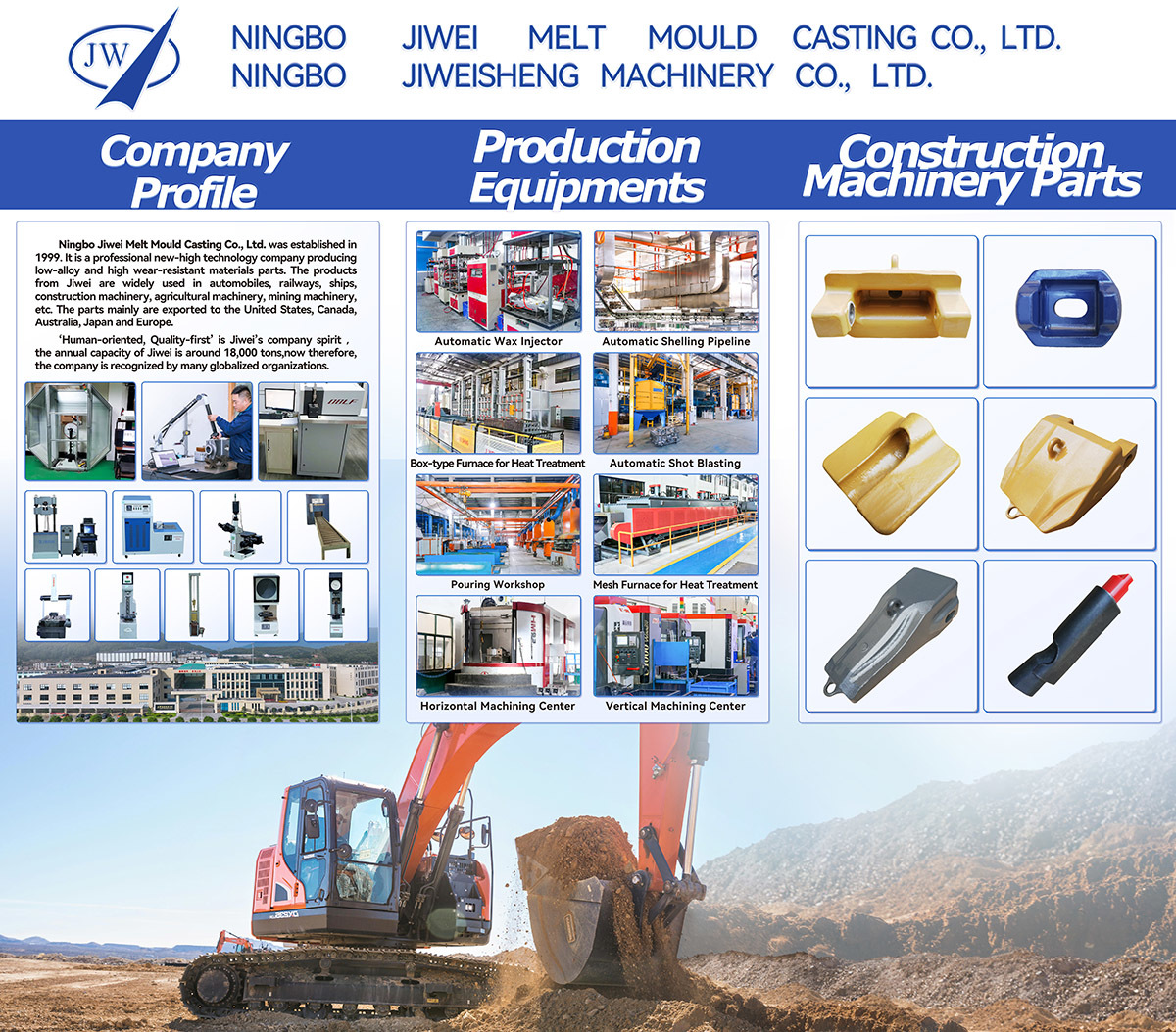
2025 Mexico Exhibition
Apr 30,2025
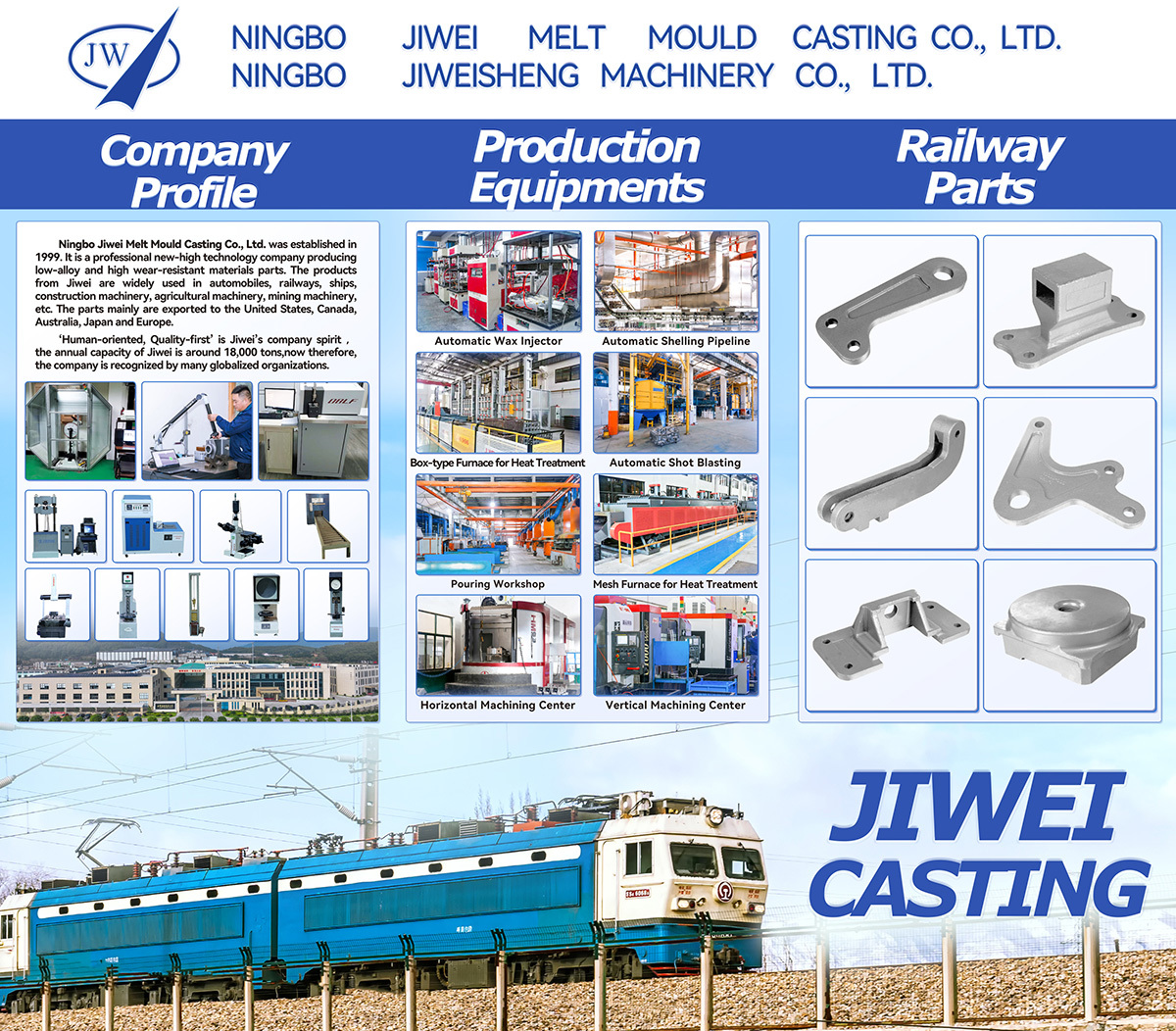
2025 American Rail Show