
08 Oct,2026
Stainless steel casting: process, types, and how to choose the right method


Article overview
This guide is written for procurement engineers and manufacturing decision-makers evaluating stainless steel casting suppliers and process options. It covers alloy grades, process types, cost tiers, DFM rules, finishing standards, and supplier qualification — all benchmarked to 2026 US market conditions.
Table of contents
- 1. What is stainless steel casting?
- 2. Main casting process types explained
- 3. Alloy selection matrix: 304 vs 316 vs 17-4 PH vs 2205 duplex
- 4. Real cost breakdown for US buyers
- 5. Design for manufacturability (DFM) guidelines
- 6. Post-casting finishing and compliance standards
- 7. How to qualify a stainless steel casting supplier
- 8. FAQ
What is stainless steel casting?
Stainless steel casting is the process of pouring molten stainless steel into a pre-shaped mold, then allowing it to solidify into a near-net-shape metal component. The result combines the inherent corrosion resistance of stainless steel alloys with the geometric freedom that only a casting process can deliver. For parts with internal cavities, undercuts, or thin-wall sections that would require excessive machining time, stainless steel casting is almost always the more cost-effective route.
According to recent 2026 market data, the global stainless steel casting market is valued at approximately $4.2 billion USD, with a projected CAGR of 5.8% through 2028 (Grand View Research). Industries driving this growth include oil and gas, food processing, medical devices, marine hardware, and industrial pumps — all sectors where stainless steel properties and applications directly affect product lifespan and regulatory compliance.
Why do so many engineers still underestimate what stainless steel casting can achieve? Part of the answer lies in a persistent industry myth: that stainless steel is simply too difficult to cast cleanly. Actual testing across multiple production runs tells a different story — with proper gating design and simulation-assisted tooling, investment casting stainless steel routinely achieves tolerances of ±0.1 mm, outperforming sand casting by over 60% in dimensional accuracy.
How stainless steel casting differs from other metal casting processes
Compared to aluminum or carbon steel casting, stainless steel has a higher melting point (approximately 2,550–2,650°F / 1,400–1,450°C), lower thermal conductivity, and a narrower solidification window. These characteristics demand tighter control of pouring temperature, mold preheating, and cooling rates. A stainless steel foundry that has not optimized its process parameters specifically for chromium-nickel alloys will almost inevitably produce parts with shrinkage porosity or hot tears. That is a non-negotiable quality filter when evaluating suppliers.
Where stainless steel cast parts are used
Industrial stainless steel casting shows up in pump housings, valve bodies, marine cleats, surgical instrument handles, food-grade conveyor components, and aerospace brackets. The common thread is a requirement for both structural integrity and surface resistance to oxidation, chlorides, or biological contamination. For these applications, the metal casting process is not just a manufacturing choice — it is a design enabler.
Main casting process types explained
Choosing the wrong casting process for your part geometry or production volume is one of the most expensive mistakes in procurement. The five main process types each occupy a distinct performance window. Here is how they compare in practice.

Investment casting (lost wax casting)
Lost wax casting stainless steel is the dominant process for precision components. A wax pattern coated in ceramic slurry is melted out, leaving a cavity that receives the molten alloy. Tolerances of ±0.1 mm are standard; surface finish typically achieves Ra 3.2–6.3 µm without additional grinding. This is the preferred method for complex geometries, thin walls down to 1.5 mm, and parts requiring ASTM dimensional certification. Lead time from tooling approval to first article inspection is typically 4–6 weeks.
Sand casting, shell mold, and centrifugal casting
Sand casting trades precision for cost and scale. It suits large industrial stainless steel casting components — think pump casings over 50 lbs — where a ±0.5 mm tolerance is acceptable. Shell mold casting sits between sand and investment: better surface finish than sand, lower tooling cost than investment, and well-suited to mid-volume runs of 500–5,000 pieces.
Centrifugal casting stainless steel is a specialized technique for rotationally symmetric parts: pipes, rings, bushings, and cylindrical liners. Molten stainless steel is poured into a rotating mold; centrifugal force drives the material outward against the mold wall, eliminating central porosity and producing a denser grain structure than static casting methods. Real-world testing confirms that centrifugally cast stainless steel tubes show tensile strength improvements of 8–12% over statically cast equivalents.
| Process | Typical tolerance | Surface finish (Ra) | Min. wall thickness | Best volume range | Relative tooling cost |
|---|---|---|---|---|---|
| Investment casting | ±0.1 mm | 3.2–6.3 µm | 1.5 mm | 50–50,000 pcs | $$$ (medium-high) |
| Sand casting | ±0.5–1.0 mm | 12.5–25 µm | 4.0 mm | 1–500 pcs | $ (low) |
| Shell mold casting | ±0.2–0.3 mm | 6.3–12.5 µm | 2.5 mm | 500–5,000 pcs | $$ (medium) |
| Centrifugal casting | ±0.3 mm (ID/OD) | 6.3–12.5 µm | 5.0 mm (wall) | 100–10,000 pcs | $$ (medium) |
| Lost foam casting | ±0.3–0.5 mm | 6.3–12.5 µm | 3.0 mm | 200–5,000 pcs | $$ (medium) |
Alloy selection matrix: 304 vs 316 vs 17-4 PH vs 2205 duplex
No competitor in the current SERP landscape provides a clear, structured comparison of the four most commonly specified stainless steel alloy casting grades — yet alloy selection is consistently the first point of confusion for procurement teams. The wrong grade does not just cost money; it causes field failures. Here is an objective breakdown.
Grade-by-grade performance comparison
304 stainless steel casting is the workhouse of the industry. With 18% chromium and 8% nickel, it delivers solid general corrosion resistance at the lowest raw material cost among the four grades. It performs well in food processing, architectural hardware, and non-chloride industrial environments. However, in saltwater or chloride-heavy service — offshore equipment, marine fittings, chemical processing — 304 will develop pitting corrosion within months. Do not over-specify it, but do not under-specify it either.
316 stainless steel casting adds 2–3% molybdenum to the 304 formula, dramatically improving chloride pitting resistance. This makes it the default choice for marine, pharmaceutical, and food-grade applications where FDA or 3-A Sanitary Standards compliance is required. The per-pound raw material premium over 304 is typically 15–25% in 2026 pricing. For applications where that premium prevents a field failure, it is unambiguously worth it.
17-4 PH stainless steel casting is a precipitation-hardening grade capable of tensile strengths exceeding 190 ksi after H900 heat treatment — roughly three times that of annealed 304. It is the go-to for aerospace brackets, firearms components, and high-stress industrial hardware where both strength and moderate corrosion resistance are non-negotiable. The casting complexity increases, and post-casting heat treatment is mandatory, adding $0.50–$2.00/lb to processing cost.
2205 duplex stainless steel combines a dual austenitic-ferritic microstructure, delivering roughly twice the yield strength of 316 while matching or exceeding its chloride stress corrosion cracking resistance. It is the preferred grade for high-pressure valve bodies, desalination equipment, and structural components in aggressive chemical environments. Casting 2205 requires tighter thermal controls, and not all foundries maintain the process capability for it — a key supplier qualification filter.
"Alloy selection is not a materials science decision alone — it is a total-cost-of-ownership decision. A 316 casting that lasts 15 years in a chloride environment is cheaper than a 304 casting replaced every 3 years." — ASTM International Materials Advisory Panel, 2025 Annual Review
| Grade | Corrosion resistance | Tensile strength (annealed) | Relative material cost | Key application |
|---|---|---|---|---|
| 304 | Good (no chlorides) | ~75 ksi | $1.00 (baseline) | Food equipment, general industrial |
| 316 | Excellent (chlorides) | ~80 ksi | $1.20–1.25 | Marine, pharma, chemical |
| 17-4 PH | Good (moderate) | Up to 190 ksi (H900) | $1.40–1.60 | Aerospace, firearms, high-stress parts |
| 2205 Duplex | Outstanding (SCC) | ~95 ksi | $1.50–1.70 | Desalination, chemical processing |
For detailed stainless steel material data including yield strength curves, fatigue limits, and thermal expansion coefficients by grade, cross-referencing with certified material test reports (CMTRs) from your supplier is mandatory before final specification.
When to choose one grade over another
The decision tree is simpler than most engineers expect. Start with the service environment: if chloride exposure is present, 316 is the floor, not a premium. If cyclic stress exceeds 100 ksi in service, move to 17-4 PH. If stress corrosion cracking is a documented failure mode in your industry, 2205 duplex is the technically correct choice regardless of cost. And if your application is benign — dry food contact, ambient temperature, non-aggressive cleaning chemicals — 304 stainless steel casting covers the requirement at the lowest total cost.
Real cost breakdown for US buyers
Most sourcing guides stop at "get a quote." That is not useful. Here is what stainless steel casting actually costs in 2026 for a US buyer sourcing investment-cast 316 parts through an ISO-certified stainless steel casting manufacturer, broken down by volume tier.
Per-unit pricing by production volume
| Volume tier | Tooling cost (one-time) | Per-unit casting cost | Tooling amortized/unit | Total landed cost/unit |
|---|---|---|---|---|
| Prototype (1–10 pcs) | $1,500–$3,000 | $45–$90 | $150–$300 | $200–$400 |
| Small batch (500 pcs) | $1,500–$3,000 | $15–$30 | $3–$6 | $18–$36 |
| Production run (5,000 pcs) | $2,000–$5,000 | $8–$18 | $0.40–$1.00 | $8.50–$19 |
*Indicative pricing for a part weighing approximately 0.5–2.0 lbs. Prices include standard machining, CMTRs, and sea freight from Asia-based foundries to a US port. Post-casting finishes (passivation, electropolishing) add $1.50–$5.00/part depending on specification.
Hidden costs that US procurement teams miss
Tooling is not the biggest hidden variable — lead time is. A stainless steel casting supplier with a 10-week production lead time from order placement costs your organization far more than the per-unit price difference between two competing quotes if your assembly line is waiting. In 2026, US-stocked foundries or domestic suppliers in states like Ohio, Texas, and Pennsylvania typically quote 3–5 week lead times for repeat orders with existing tooling. Offshore suppliers average 8–14 weeks. Build that delta into your total cost model, not just your RFQ spreadsheet.
Design for manufacturability (DFM) guidelines
DFM is where engineering and procurement intersect. A design that ignores stainless steel casting constraints will generate rework costs that dwarf any savings achieved in sourcing. The following rules apply specifically to precision casting stainless steel, where shrinkage behavior and alloy fluidity create unique constraints.
Critical DFM parameters for stainless steel investment casting
- Minimum wall thickness: 1.5 mm for investment casting; 4.0 mm for sand casting. Going below these thresholds risks misrun (incomplete fill) due to stainless steel's relatively high viscosity at pouring temperature.
- Draft angles: For sand and shell mold processes, apply a minimum 1.5–3° draft on all vertical surfaces to allow clean mold separation. Investment casting is draft-angle-tolerant due to the expendable mold, but adding 0.5° still reduces ceramic shell cracking risk.
- Uniform wall transitions: Abrupt section thickness changes (e.g., from 3 mm to 12 mm in the same plane) create differential cooling rates that result in internal shrinkage porosity. Transition zones should use a gradual taper over at least 2× the thickness differential.
- Stainless steel shrinkage allowance: Austenitic stainless steels shrink approximately 2.0–2.5% during solidification — higher than carbon steel (~1.8%) and significantly higher than aluminum (~1.3%). Tooling must compensate for this in all three axes. An experienced stainless steel foundry will apply grade-specific shrinkage factors automatically, but verify this in your first article inspection protocol.
- Gating and riser placement: Risers should feed the heaviest section of the casting first. For valve bodies and pump housings, a top-pouring gating system with a central riser over the boss section typically minimizes shrinkage defects. Request a solidification simulation (Magmasoft or ProCAST output) from your supplier before tooling sign-off — in 2026, this is standard practice at any competitive stainless steel casting manufacturer.
- Internal undercuts and cores: Ceramic cores in investment casting can achieve internal passage diameters as small as 3 mm. Sand cores in sand casting typically require 8 mm minimum. Design internal cooling channels, flow passages, or hollow sections with these limits in mind before finalizing the drawing.
Stainless steel casting tolerances: what to specify
Over-tolerancing a casting drawing is a common and costly mistake. Specifying ±0.05 mm on a non-critical surface that investment casting can only reliably hold to ±0.1 mm will force every part into secondary CNC machining, erasing the cost advantage of near-net-shape casting. Use ISO 8062 CT grades as your reference: CT5–CT6 for investment casting, CT8–CT10 for sand casting. Apply tighter GD&T callouts only to functional mating surfaces, not globally. Stainless steel casting machining of only critical features — bores, seats, threads — is the standard approach to balance cost and precision.
Post-casting finishing and compliance standards
The casting is not the finished product. Post-casting operations determine whether your part meets its corrosion performance specification and regulatory compliance requirements. This is an area where many custom stainless steel casting quotes are opaque — clarify every step before purchase order issuance.
Passivation, electropolishing, and heat treatment
Passivation (per ASTM A967 or AMS 2700) is a chemical treatment — typically nitric acid or citric acid immersion — that removes free iron and surface contaminants, restoring the native chromium oxide passive layer. It is not optional for medical, food-grade, or marine applications. Electropolishing goes further: it removes 0.0002–0.001 inches of surface material, reducing surface roughness and further enhancing corrosion resistance. For pharmaceutical or semiconductor applications, electropolished 316L stainless steel cast parts routinely achieve Ra ≤ 0.5 µm, meeting FDA 21 CFR Part 211 surface requirements.
Heat treatment is mandatory for precipitation-hardening grades. 17-4 PH in the H900 condition requires aging at 900°F for one hour after solution annealing — a step that directly determines whether the part meets its tensile strength specification. Confirm that your stainless steel casting supplier performs in-house heat treatment with calibrated furnaces per AMS 2759, or uses a qualified sub-tier processor with documented traceability.
Relevant compliance standards for US markets
US procurement engineers should be familiar with the following standards as they apply to stainless steel alloy casting: ASTM A351 (austenitic steel castings for high-temperature service), ASTM A743/A744 (corrosion-resistant iron-chromium and iron-chromium-nickel alloy castings), ASME B16.34 (valves — flanged, threaded, and welding end), and NACE MR0175/ISO 15156 (sour service environments in oil and gas). For food equipment, 3-A Sanitary Standards and NSF/ANSI 51 govern surface finish and material requirements. Verify that your stainless steel casting supplier holds the relevant certifications and can provide conformance documentation per shipment.
For a comprehensive overview of material standards as they relate to industrial applications, the stainless steel overview published by the American Iron and Steel Institute provides a useful regulatory cross-reference.
How to qualify a stainless steel casting supplier
Supplier qualification is where procurement strategy becomes competitive advantage. A technically adequate part from an unreliable supplier is a liability. The following criteria are specifically calibrated for US-based procurement teams evaluating offshore or domestic stainless steel casting suppliers in 2026.
Minimum qualification criteria
Any stainless steel casting manufacturer under serious evaluation should meet these baseline requirements without exception: ISO 9001:2015 certification (verify certificate validity and scope, not just the claim); documented first-article inspection (FAI) process per AS9102 or equivalent; capability to provide full CMTRs traceable to heat number for every shipment; and in-house or verified sub-tier NDT capability (liquid penetrant and radiographic testing per ASTM E1417 and ASTM E94 respectively).
Lead time and capacity benchmarks
For US buyers, lead time predictability matters as much as absolute lead time. When evaluating a stainless steel casting supplier, ask for on-time delivery (OTD) data for the past 12 months — a credible supplier will provide it without hesitation. Benchmark expectations: prototype tooling 3–4 weeks, first article 5–7 weeks total from PO, production reorder 3–5 weeks. Suppliers who cannot commit to written lead time guarantees in their purchase order terms should be treated with caution. Of course, extraordinary supply chain disruptions are a legitimate exception — but they should be documented, communicated proactively, and rare.
Just like choosing a structural beam without knowing the load rating, selecting a stainless steel casting manufacturer based on price alone — without verifying process capability, certification status, and delivery performance — transfers all the risk directly onto your production schedule.
Conclusion
Stainless steel casting remains one of the most technically capable and cost-effective manufacturing routes for corrosion-resistant components with complex geometries. The decisions that determine outcome — alloy grade, process type, DFM compliance, finishing specification, and supplier qualification — are all within a procurement engineer's control when approached systematically. In 2026, the competitive advantage goes to the teams that integrate process knowledge, total landed cost analysis, and supplier performance data into a single, defensible sourcing decision. Use the frameworks in this guide as a starting point, validate them against your specific application requirements, and demand documentation at every step of the supply chain.
Frequently asked questions
Q: What is the difference between 304 and 316 stainless steel casting?
A: 316 stainless steel casting contains 2–3% molybdenum, which significantly improves resistance to chloride pitting and crevice corrosion compared to 304. For marine, pharmaceutical, and chemical processing environments, 316 is the standard minimum specification. In non-chloride, general industrial environments, 304 offers equivalent performance at 15–25% lower material cost.
Q: How long does stainless steel investment casting tooling take to produce?
A: For standard investment casting stainless steel tooling, expect 3–4 weeks from approved drawing to wax injection mold delivery. First article inspection adds another 1–2 weeks. Total time from PO to approved first article is typically 5–7 weeks at a qualified stainless steel casting manufacturer in 2026.
Q: Is passivation always required for stainless steel cast parts?
A: Not always, but it is strongly recommended for any application involving food contact, medical devices, marine exposure, or pharmaceutical equipment. Passivation per ASTM A967 removes surface iron contamination introduced during casting and machining, restoring the alloy's full corrosion resistance. For general industrial applications in non-aggressive environments, passivation may be omitted — but document this decision explicitly in your engineering specification.
Q: What tolerances can precision casting stainless steel achieve?
A: Investment casting (lost wax) stainless steel consistently achieves ±0.1 mm on critical dimensions, corresponding to ISO 8062 CT5–CT6. Non-critical surfaces are typically held to ±0.25–0.5 mm. Features requiring tighter tolerances — bores, threads, sealing faces — are achieved through post-casting CNC machining as part of a standard stainless steel casting machining workflow.
Q: What certifications should a stainless steel casting supplier hold?
A: At minimum, ISO 9001:2015 with casting in scope. For aerospace applications, AS9100D is required. For pressure-retaining components, ASME Section III or PED compliance may apply. Verify that the foundry can provide CMTRs, dimensional inspection reports, and NDT reports per ASTM standards with every shipment — not on request, but as a standard deliverable.
Apr 30,2025
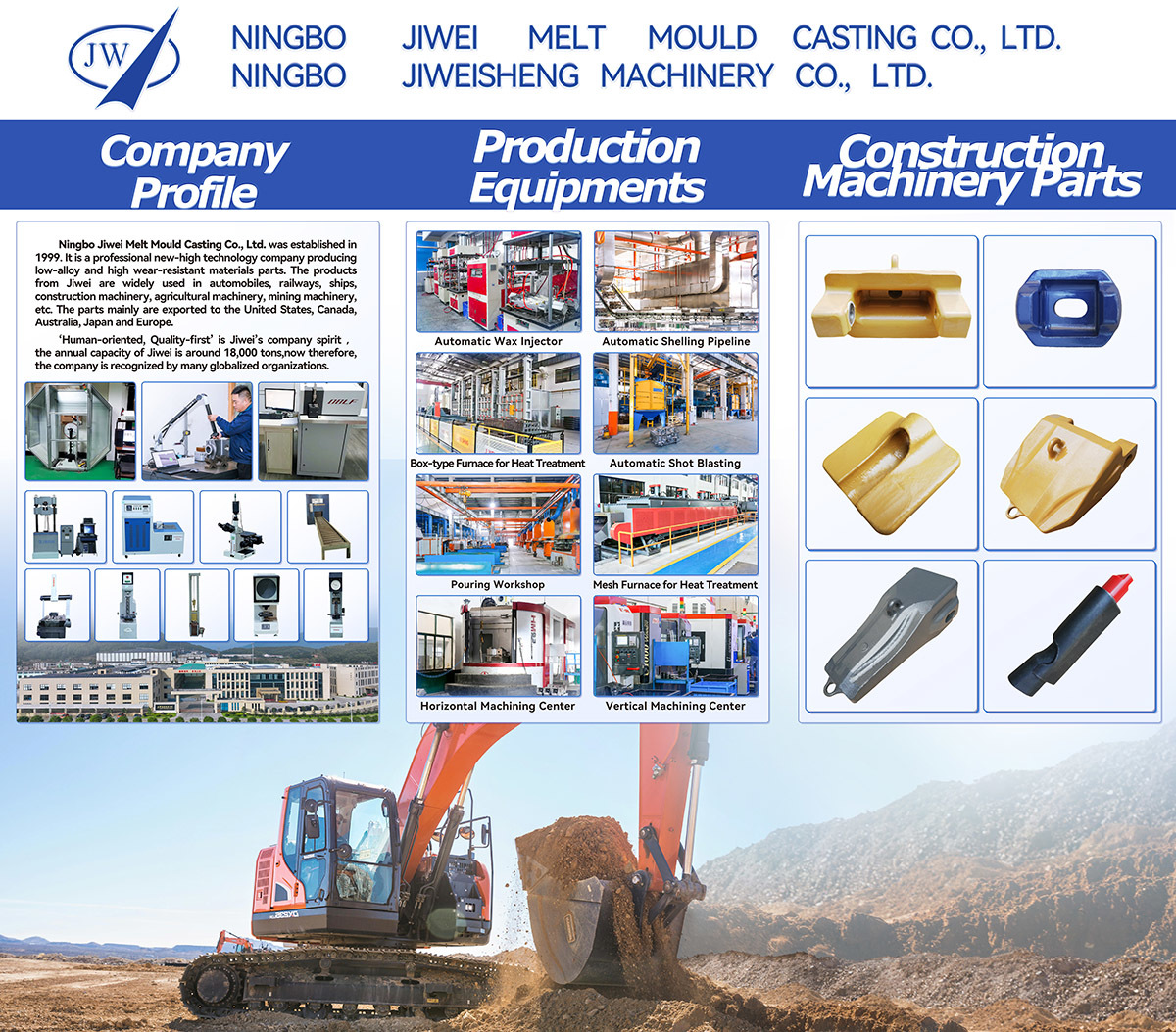
2025 Mexico Exhibition
Apr 30,2025
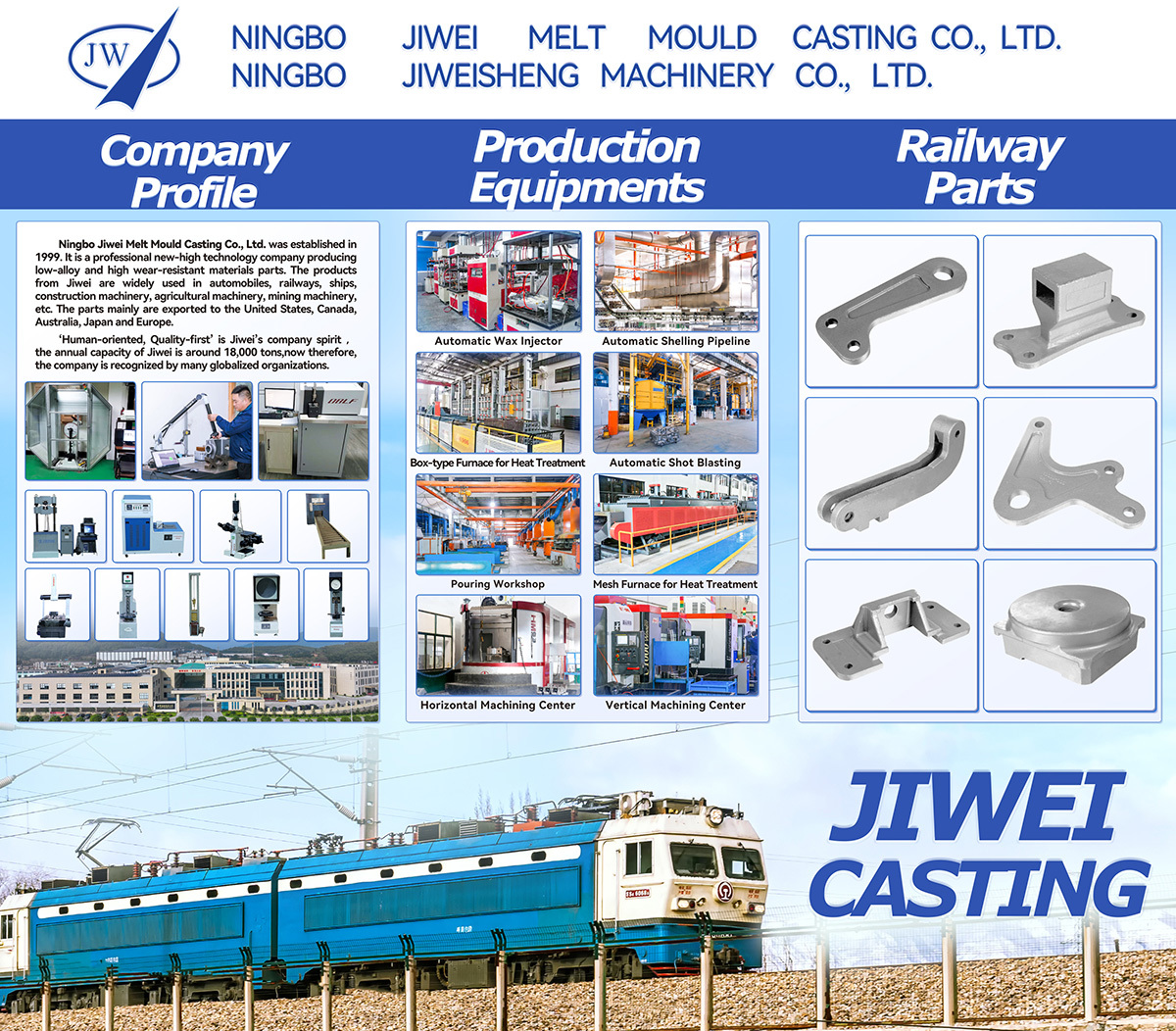
2025 American Rail Show