
11 Nov,2026
Why cast steel parts fail: common defects and how to avoid them


Article overview
Cast steel parts are metal components made by pouring molten steel into molds. This guide explains why cast steel parts crack, leak, wear out, or distort, which defects cause those failures, and how engineers and buyers can prevent them in 2026. It covers the steel casting process, ASTM grade selection, inspection methods, and a supplier audit checklist for wear-resistant and heat-resistant applications. Each section opens with a direct answer, then adds data, steps, and practical examples.
Table of contents
- 1. Why cast steel parts fail in service
- 2. Common defects in steel castings
- 3. How the casting process changes failure risk
- 4. Choosing ASTM grades for wear and heat
- 5. Design and foundry steps that prevent defects
- 6. Inspection, testing, and supplier audits
- 7. Conclusion
- 8. Frequently asked questions
Why cast steel parts fail in service
Cast steel parts usually fail because of a hidden internal defect, a grade that does not match the duty cycle, or heat treatment that missed its target. Often it is all three. The crack you see after a breakdown is typically the last step of a failure that began during pouring or solidification.
Steel castings carry loads in railway couplers, excavator buckets, tractor hitches, and automotive driveline housings, so a small flaw can grow under cyclic stress. The metal casting process looks simple on paper: melt, pour, solidify, finish. Yet steel is poured at roughly 2,800°F (about 1,540°C), and the temperature gradients inside the mold decide the final structure.
What are cast steel parts and where do they fail?
Cast steel parts are steel components formed by pouring molten steel into a mold and letting it solidify into near-net shape. The family includes carbon steel castings, alloy steel castings, and stainless steel castings, produced at a steel foundry by sand, shell, or lost wax steel casting methods. Typical failure sites are thick-to-thin transitions, sharp internal corners, gate contact areas, and machined faces that expose subsurface porosity.
Four service failure modes dominate: brittle fracture at low temperature, fatigue cracking under cyclic loads, abrasive or impact wear, and thermal fatigue in hot zones. Why do the same locations keep showing up? Because steel shrinks as it freezes, and the last metal to solidify has no liquid left to feed it. Think of a loaf of bread that sinks in the middle: a hot spot in a casting leaves a void exactly where stress is highest.
How failure starts in the steel casting process
Failure rarely begins in service. It begins at one of four stages: melting, molding, pouring, or heat treatment. Dirty charge material and weak deoxidation put oxides and sulfides into the melt. Poor mold venting traps gas. An incorrect pouring temperature causes misruns or coarse grains. Heat treatment that skips proper normalizing or quench-and-temper leaves residual stress and uneven hardness. In failure reviews, analysts commonly trace fracture origins back to these upstream steps, not to overload alone. Environmental factors add to the picture, since low temperature, corrosive media, and thermal cycling each push a marginal casting toward failure sooner. Of course, genuine overload and misuse do happen, so any root-cause review should rule them out first for cast steel parts.
Common defects in steel castings
The most common defects in steel castings are shrinkage porosity, gas porosity, hot tears, inclusions, misruns, cold shuts, and sand-related surface flaws. Each has a recognizable cause and a recognizable fix, which makes systematic prevention in cast steel parts realistic.
Shrinkage porosity and hot tears
Shrinkage cavities form when a thick section solidifies without a riser supplying liquid metal. Hot tears appear as ragged cracks where the mold or core restrains the casting while it is still weak at high temperature. Both defects concentrate at section changes. Foundries counter them with risers, chills, padding, and gradual wall transitions. Radiographic testing against ASTM E446, E186, or E280 reference radiographs, chosen by wall thickness, grades severity. In practice, buyers of cast steel parts who review rejected lots often find one defect type clustering on a single pattern, which points to a process cause rather than random bad luck.

Gas porosity, inclusions, and sand defects
Gas porosity comes from hydrogen, nitrogen, or mold gases that cannot escape. Inclusions include slag, deoxidation products, and eroded mold material. Sand defects such as scabs, burn-on, and penetration roughen the surface and create crack starters. Better venting, dry molds, ladle skimming, ceramic filters, and proper deoxidation address most of these in sand cast steel parts. Surface acceptance is commonly referenced to MSS SP-55 or ASTM A802.
Misruns, cold shuts, and dimensional errors
Misruns and cold shuts occur when metal loses fluidity before filling thin sections, or when two streams meet without fusing. Dimensional errors arise from pattern shrinkage allowances, core shift, or distortion during heat treatment. Warping is especially common in long, thin heavy duty steel castings. A higher pouring temperature helps fluidity, but there is a trade-off: it raises the risk of shrinkage and coarse grain.
Table 1. Defect patterns in cast steel parts
| Defect | Typical cause | Common detection | Prevention |
|---|---|---|---|
| Shrinkage porosity | Inadequate feeding | Radiography, ultrasonic | Risers, chills, redesign |
| Gas porosity | Trapped hydrogen or mold gas | Radiography | Venting, dry molds, degassing |
| Hot tear | Restrained contraction | Magnetic particle, penetrant | Fillets, collapsible cores |
| Inclusions | Slag, oxides, mold erosion | Magnetic particle, radiography | Filters, skimming, clean charge |
| Misrun or cold shut | Low fluidity, slow fill | Visual, penetrant | Gating redesign, pour temperature |
| Burn-on or scab | Metal penetration, sand failure | Visual | Mold coatings, sand control |
Not every indication means rejection, though. Acceptance depends on location and class, so drawings should mark critical zones. Timing matters as well. A flaw caught at the foundry costs a repair, one found after machining also costs the machining, and one found in the field costs downtime.
How the casting process changes failure risk
Process choice shifts defect risk because each method controls cooling, surface finish, and feeding differently. Sand casting suits large, heavy parts, while investment casting suits complex, thin-walled shapes with tighter tolerances. The principles of solidification behind these effects are summarized in casting in metallurgy, and they apply to every steel foundry regardless of method.
Sand cast steel parts vs investment cast steel parts
Sand cast steel parts dominate railway, mining, and construction work because sand molds handle weights from a few pounds to several tons. The trade-offs are rougher surfaces, wider tolerances, and higher exposure to sand inclusions. Investment cast steel parts, produced by lost wax steel casting, use ceramic shells built around wax patterns. The result is finer detail and tighter dimensions, with thinner sections than sand allows. However, shell cracks can create fins, and loose ceramic particles can become inclusions. No process is defect-free; each simply moves the risk.
Table 2. General comparison of two casting routes
| Process | Size range | Surface and tolerance | Typical defect risk |
|---|---|---|---|
| Sand casting | Small to very large | Rougher, wider tolerance | Sand inclusions, burn-on |
| Investment casting | Small to medium | Smoother, tighter tolerance | Shell cracks, ceramic inclusions |
Cast steel vs forged steel: which fails less?
Neither is universally safer. Forging refines grain flow and closes internal porosity through deformation, which is why highly stressed shafts and crankshafts are often forged. Casting wins on geometry, since it can form internal cavities such as those in cast steel valve bodies, and it is often more economical for complex shapes at low-to-medium volumes. When weighing cast steel vs forged steel, ask what load the part actually sees. Cast steel components perform well under compressive, wear, and moderately cyclic duty when internal quality is verified. For high-cycle tension or bending, forging or a more conservative design factor deserves serious consideration. Cost matters too, but the cheaper route on paper can become the expensive one after a single field failure.
Where does heat treatment fit in?
Heat treatment can correct the as-cast microstructure but cannot close a void. Normalizing refines grains in carbon steel castings, quench and temper raises strength in alloy steel castings, and solution annealing restores corrosion resistance in stainless steel castings. Hot isostatic pressing can close internal porosity in critical cast steel parts, though it adds cost and is used selectively. Always ask for the heat treatment record, because an out-of-range furnace can undo a well-poured casting.
Choosing ASTM grades for wear and heat
Select the grade by duty first: ASTM A27 for general carbon steel service, A216 for pressure-containing parts, A217 for higher-temperature alloy service, A148 for higher strength, A128 for impact wear, and A351 for corrosive duty. Matching the grade to the failure mode is the cheapest defect prevention available for cast steel parts.
Carbon steel castings and ASTM A27 cast steel
ASTM A27 cast steel is the usual starting point for general-purpose carbon steel castings. Grade 60-30 offers a minimum tensile strength of 60 ksi and a minimum yield of 30 ksi, while Grade 70-40 reaches 70 ksi and 40 ksi. Higher strength usually costs ductility and weldability, so stronger is not always better. Table 3 lists commonly specified grades.
Table 3. Minimum mechanical properties of common cast steel grades
| Specification and grade | Tensile (ksi) | Yield (ksi) | Elongation (%) | Typical use |
|---|---|---|---|---|
| A27 Grade 60-30 | 60 | 30 | 24 | General machinery |
| A27 Grade 65-35 | 65 | 35 | 24 | General structural |
| A27 Grade 70-36 | 70 | 36 | 22 | Housings, brackets |
| A27 Grade 70-40 | 70 | 40 | 22 | Higher-load components |
| A216 Grade WCB | 70 | 36 | 22 | Valve bodies, flanges |
| A148 Grade 80-50 | 80 | 50 | 22 | Structural, higher strength |
These are published minimums. Confirm them against the current edition of each standard and your drawing before ordering.
Alloy and stainless steel castings for wear and heat
For abrasive wear and impact, such as crusher parts and track components, austenitic manganese steel (ASTM A128) work-hardens in service, while quenched and tempered low-alloy grades balance hardness and toughness. For heat, alloy steel castings containing chromium and molybdenum, such as ASTM A217 WC6, resist creep better than plain carbon steel. For corrosion, stainless steel castings like CF8M (ASTM A351) are common in chemical and food equipment. Misapplying a grade, for example using a plain carbon casting above its creep limit, is a classic cause of premature failure in cast steel parts. In wear applications, specifying the hardness range and heat treatment matters as much as naming the base alloy.
Relative cost and sourcing trade-offs
Table 4 shows general industry tendencies, not price quotes. Actual cost depends on weight, volume, tolerances, testing scope, and market conditions in 2026.
| Material family | Relative material cost | Machining and welding | Best fit |
|---|---|---|---|
| Carbon steel | Low | Generally good | General structural duty |
| Low-alloy steel | Low to medium | Moderate, may need preheat | Strength and wear |
| Manganese steel | Medium | Difficult to machine | Heavy impact wear |
| Cr-Mo alloy steel | Medium to high | Preheat and post-weld heat treatment | Elevated temperature |
| Stainless steel | High | Varies by grade | Corrosive environments |
A cheaper grade that fails early is usually the most expensive option once downtime, replacement labor, and secondary damage are counted. When sourcing cast steel parts, compare total cost of ownership, not just the piece price.
Design and foundry steps that prevent defects
Prevention works best when it starts on the drawing, not on the shop floor. Uniform walls, generous fillets, and a feeding plan reviewed before pattern construction remove most shrinkage and hot tear risk without any extra tooling cost.
Design rules that improve castability of cast steel parts
Keep wall thickness as uniform as practical, and blend transitions with a gradual taper instead of an abrupt step. Use internal fillet radii large enough to avoid hot spots, because sharp corners concentrate both stress and heat. Avoid isolated heavy bosses that have no feed path. Add draft angles and rounded edges so the mold does not tear or erode during stripping. Leave machining allowance that does not strip sound skin from critical faces. Ask the custom steel casting manufacturer to run solidification simulation before cutting the pattern. Simulation is no guarantee, since results depend on input quality, but it often flags trouble spots early.
Step-by-step defect prevention workflow
Follow this sequence when you specify or review cast steel parts:
- Define the duty: load, temperature, wear mode, corrosion exposure, and design life, then mark critical zones on the drawing.
- Select the grade and specification, such as ASTM A27 cast steel or A216 WCB, and state heat treatment and test class.
- Review castability and request a feeding and gating plan, ideally supported by solidification simulation.
- Approve the pattern and a first-article sample, then verify dimensions, chemistry, and mechanical properties.
- Control melting with verified charge materials, documented deoxidation, recorded pouring temperature, and filtration.
- Heat treat in calibrated furnaces with recorded charts, then inspect by the agreed NDT method and acceptance level.
- Keep heat numbers for traceability, and feed every reject back into pattern or process changes.
Can defective cast steel parts be repaired?
Yes, in many cases. Weld repair is routine for steel castings, but excessive or unqualified repair creates new failure sites. Specify procedure qualification, post-weld heat treatment where required, and re-inspection of repaired areas. Ask for repair maps showing where and how often welding occurred. Frequent repair in the same location signals a root cause that grinding and welding will not resolve. Cosmetic repair of surface-breaking defects is usually acceptable under agreed limits, whereas through-wall leaks or fatigue-critical zones may justify rejection instead. Align these limits with the purchaser's specification before production starts.
Inspection, testing, and supplier audits
A reliable inspection plan combines visual checks, surface NDT, volumetric NDT, and mechanical testing, selected by the risk level of each of your cast steel parts. Supplier audits then confirm that the foundry can repeat that quality lot after lot. Inspection can reveal problems, but it cannot add quality that the process failed to build in.
How do you inspect cast steel parts for defects?
Visual examination catches surface flaws. Magnetic particle testing (ASTM E709) detects surface and near-surface cracks in ferromagnetic steel, while liquid penetrant testing (ASTM E165) serves stainless and other non-magnetic grades. Radiography and ultrasonic testing, including ASTM A609 for carbon and low-alloy castings, find internal voids. Hydrostatic testing proves pressure integrity for cast steel valve bodies.
Paraphrased from the scope of ASTM A27/A27M: the specification covers carbon steel castings for general applications, and purchasers may invoke supplementary requirements, such as additional testing, when service demands exceed the base standard. (ASTM International)
In other words, the standard sets a baseline. Critical service demands a tighter inspection scope written into the purchase order.
Illustrative case: a leaking valve body
The following scenario is illustrative, assembled from common failure patterns rather than from a single customer. A carbon steel valve body passed visual inspection but weeped during hydrostatic testing near a thick flange-to-body junction. Sectioning revealed shrinkage porosity at the thermal center. The root cause was an undersized riser and no chill at that junction. The corrective plan had three actions: relocate the gate, add chills and enlarge the riser, then radiograph the first castings from the revised pattern before releasing production. The lesson for cast steel parts is simple. The leak was a design-and-feeding problem, so extra grinding or sealing would only have hidden it.
Steel foundry audit checklist
Use this checklist when auditing a steel foundry, either on site or through documents:
- Chemistry verified by spectrometer, with heat-by-heat reports
- Tensile and impact tests from the same heat and heat treatment as the shipped parts
- NDT personnel qualified under a written practice such as ASNT SNT-TC-1A
- Calibrated furnaces with recorded heat treatment charts
- Traceability from melt heat number to shipment
- Written, qualified weld repair procedures
- Defect logs and documented corrective actions
- Willingness to share sample reports and past inspection records
Request material test reports that cite the heat number, and compare them with your specification line by line. A foundry that tracks scrap and repair rates by pattern usually controls its process better than one that tracks only shipments.
How do you choose a custom steel casting manufacturer?
Start with capability fit: the sizes, weights, process, and grades the foundry actually runs. Request sample reports, ask which scrap and repair rates it tracks, and compare quotes on total cost, including inspection and rework, rather than unit price alone. Be cautious with any supplier unwilling to share test records, and treat "zero defects" claims skeptically, since no steel foundry achieves that consistently. Sourcing cast steel parts is a risk-management exercise as much as a purchasing task.
Conclusion
Cast steel parts fail for reasons that can be traced, measured, and largely prevented. Shrinkage, gas, inclusions, and cracks come from identifiable weaknesses in design, melting, molding, or heat treatment. Matching the grade to the duty, such as ASTM A27 for general service or alloy and stainless grades for heat and corrosion, removes another large share of risk. Inspection and supplier audits then confirm that the plan worked in practice. No method guarantees perfection, but disciplined control makes dependable service the norm rather than the exception.
Quick decision summary
Choose sand casting for large, heavy, wear-resistant components and investment casting for intricate, tight-tolerance shapes. Choose forging when high-cycle tension dominates. Specify NDT scope, acceptance levels, and heat treatment on the purchase order. Compare suppliers on traceability, test records, and repair discipline, not price alone.
Next steps for buyers
Gather your duty data, mark critical zones, and shortlist grades from Table 3. Then request quotations, sample reports, and a casting simulation from each candidate steel foundry. Whether you source railway, agricultural, construction machinery, or automotive cast steel parts, the same discipline applies. For safety-critical applications, have a qualified metallurgical engineer review the final specification, and document every lesson learned so the next purchase order starts from a stronger baseline.
Frequently asked questions
Q: What is the most common defect in cast steel parts?
A: Shrinkage porosity is among the most common, forming where thick sections solidify without enough feed metal. It often sits near section changes, where stress is also highest. Proper riser design, chills, and gradual wall transitions reduce it, and radiographic or ultrasonic testing verifies the result before shipment.
Q: Can heat treatment repair casting defects?
A: No. Heat treatment refines grain structure, relieves stress, and adjusts strength, but it cannot close voids or cracks. Hot isostatic pressing may reduce internal porosity in critical cast steel parts, though it adds cost. Prevention through design, feeding, and melt control remains the primary defense.
Q: Which ASTM specification covers general cast steel parts?
A: ASTM A27 is the usual choice for general-purpose carbon steel castings, with grades such as 60-30 and 70-40. Pressure-containing valve parts often use ASTM A216 WCB. Always confirm requirements against the current standard and your engineer's specification before ordering.
Q: How can buyers verify a steel foundry's quality?
A: Request material test reports tied to heat numbers, NDT records, heat treatment charts, and sample castings. Ask how the foundry tracks scrap and weld repairs by pattern, and consider an on-site or document audit. Qualified NDT personnel and full traceability are strong signs of process control.
Q: Are investment cast steel parts stronger than sand cast steel parts?
A: Not necessarily. Strength depends on grade, heat treatment, and internal soundness, not the mold method. Investment casting offers finer detail and tighter tolerances for smaller parts, while sand casting handles larger, heavier sections. Choose by size, geometry, and duty.
Apr 30,2025
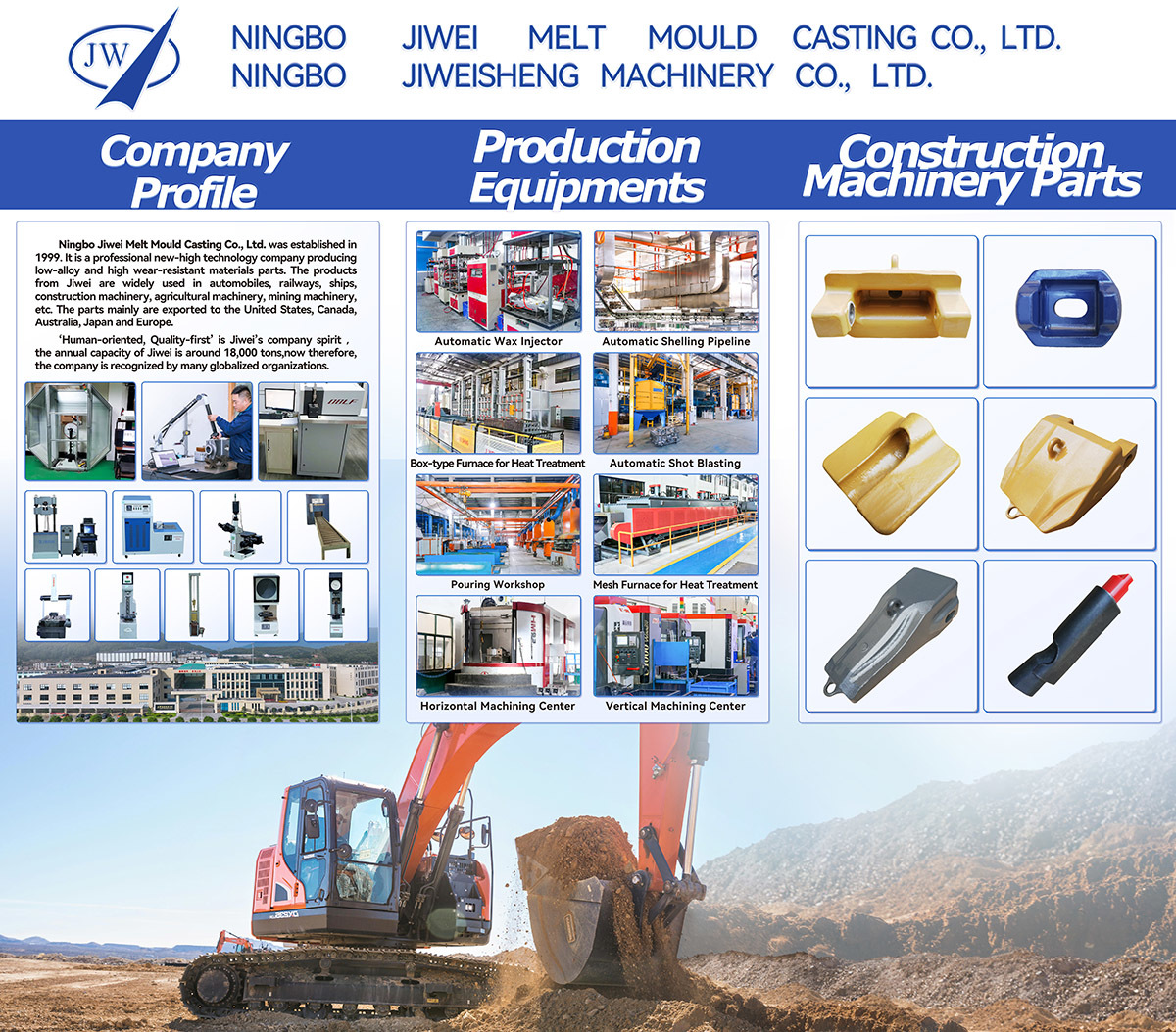
2025 Mexico Exhibition
Apr 30,2025
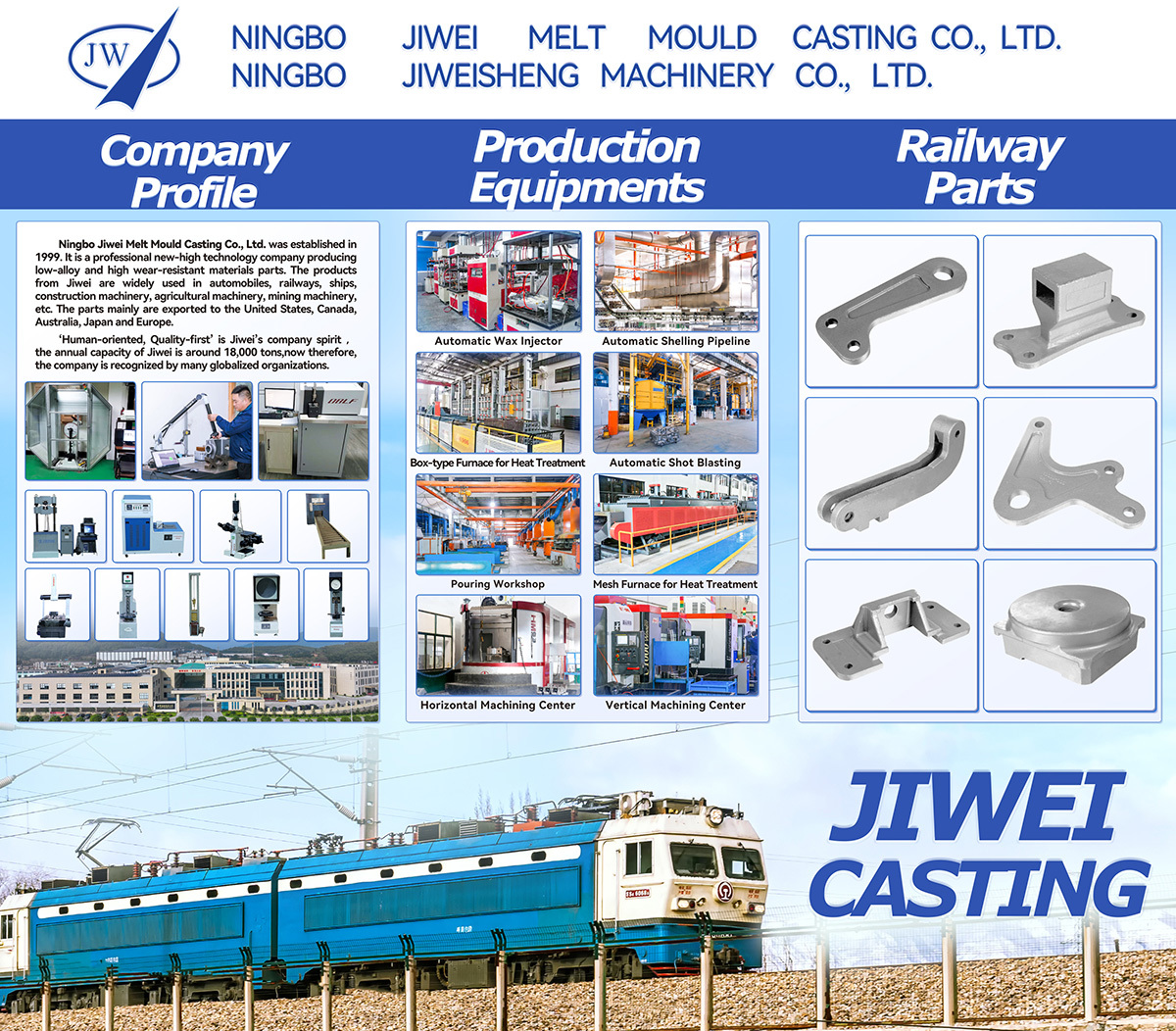
2025 American Rail Show