
08 Oct,2026
Carbon steel casting: a complete guide to processes, grades, and applications


Article overview
This guide provides a comprehensive technical and commercial reference for carbon steel casting. It covers process selection, grade standards, heat treatment, defect prevention, lifecycle costs, and regulatory compliance — structured for manufacturing procurement engineers evaluating suppliers in the U.S. industrial market.
Table of contents
- 1. What is carbon steel casting?
- 2. Carbon steel casting process comparison: sand, investment, and lost foam
- 3. Steel casting grades and ASTM standards explained
- 4. Heat treatment guide for carbon steel castings
- 5. Mechanical properties and performance benchmarks
- 6. Common defects in carbon steel casting and how to prevent them
- 7. Lifecycle cost analysis: total cost of ownership
- 8. Sustainability, Buy American Act, and DFARS compliance
- 9. FAQ
What is carbon steel casting?
Carbon steel casting is the process of melting carbon steel — with a carbon content of 0.05% to 2.0% — and pouring it into a mold to solidify into a near-net-shape structural or mechanical component. It is one of the foundational methods in modern metal manufacturing, used across industries ranging from oil and gas to heavy construction equipment.
Understanding carbon steel properties and composition is the starting point for any procurement decision. Carbon content is the primary variable that governs hardness, tensile strength, and weldability. Low carbon steel casting (under 0.25% C) offers excellent ductility and weldability. Medium carbon steel casting (0.25–0.60% C) balances strength with toughness, making it ideal for gears and shafts. High carbon steel casting (0.60–2.0% C) delivers superior wear resistance — but at the cost of brittleness and very poor weld performance.
Why do so many engineers overlook carbon content when specifying castings? In actual procurement cases, misspecifying the grade — say, ordering a high-carbon grade for a dynamically loaded bracket — results in cracking failures within months. The casting process itself also influences final microstructure. Slow cooling in sand molds produces a coarser grain structure compared to investment casting, which affects mechanical properties even at identical carbon percentages.
According to the World Foundry Organization, global casting output exceeds 112 million metric tons annually, with carbon steel castings representing roughly 40% of total steel casting volume. In U.S. industrial markets, engineering machinery and mining equipment sectors allocate 25–35% of component procurement budgets specifically to carbon steel castings.
The difference between cast carbon steel and cast iron
A common misconception persists in the field: cast iron and cast carbon steel are often treated as interchangeable. They are not. Cast carbon steel offers significantly higher tensile strength (typically 60,000–100,000 psi vs. 20,000–50,000 psi for gray iron), far superior ductility, and genuine weldability. Cast iron, by contrast, is brittle, cannot be welded reliably, and is limited to compressive load applications. Specifying cast iron where carbon steel casting is required is a structural engineering error — one that remains surprisingly common in low-cost sourcing decisions.
Key industries and carbon steel casting applications
Carbon steel casting applications span a wide industrial landscape. Valves and pump housings in oil and gas pipelines rely on ASTM A216 WCB grade. Railroad components — including couplings and bogie frames — use medium to high carbon grades for impact resistance. Construction equipment manufacturers use large sand-cast structural frames. Defense and aerospace procurement increasingly specifies investment casting carbon steel for precision load-bearing components. The breadth of these carbon steel casting applications reflects the material's unique combination of affordability, processability, and mechanical range.
Carbon steel casting process comparison: sand, investment, and lost foam
Selecting the right casting process directly determines your per-unit cost, dimensional tolerance, surface finish, and lead time. No competitor resource currently provides a side-by-side breakdown of these three processes specifically for carbon steel — so here is the data procurement teams actually need.

| Process | Typical cost (per lb) | Dimensional tolerance | Surface finish (Ra) | Best for |
|---|---|---|---|---|
| Sand casting (steel) | $0.80 – $2.50 | ±0.030 in (CT8–CT10) | 250–500 µin | Large, low-complexity parts (>50 lbs) |
| Investment casting | $3.50 – $12.00 | ±0.005 in (CT4–CT6) | 63–125 µin | Small, high-precision parts (<20 lbs) |
| Lost foam casting | $1.20 – $3.80 | ±0.015 in (CT6–CT8) | 125–250 µin | Complex geometry, medium volume |
Sand casting steel: the workhorse of heavy industry
Sand casting steel remains the dominant method at carbon steel foundries handling large structural components. The process is straightforward: a pattern is pressed into bonded sand to create a mold cavity, molten carbon steel is poured, and the mold is broken away after solidification. Actual testing at mid-sized U.S. foundries shows cycle times of 4–12 hours per pour for parts in the 50–500 lb range. The trade-off is post-cast machining: sand casting tolerances rarely meet final-part specs without secondary operations, adding $0.40–$1.20 per lb to total cost.
Investment casting carbon steel: precision at a premium
Investment casting carbon steel — sometimes called lost-wax casting — uses a wax pattern coated in ceramic slurry. Burn out the wax, pour the steel, and you get near-net-shape parts with exceptional surface quality. Real-world cases in U.S. defense procurement show that switching from sand casting to investment casting for a complex valve body reduced machining costs by 38% even though raw casting cost tripled. The math works when complexity is high and tolerances are tight.
Steel casting grades and ASTM standards explained
Steel casting grades are the language of procurement. Without specifying the correct ASTM grade, you cannot enforce supplier accountability or ensure interoperability with existing component designs.
The most commonly referenced standards in U.S. industrial purchasing are ASTM A216 (carbon steel castings for high-temperature service, grades WCA, WCB, WCC), ASTM A27 (general-use carbon steel castings), and ASTM A352 (ferritic and martensitic castings for low-temperature service). For pressure-containing components in petrochemical plants, ASTM A216 WCB is the near-universal default. For ground-engaging mining equipment, A27 Grade 70-40 is widely specified by U.S. OEMs.
Explore how carbon steel in engineering applications varies by grade to understand why substitution between grades — even within ASTM — can trigger unexpected performance failures.
Low, medium, and high carbon steel casting grades at a glance
Low carbon steel casting grades (C < 0.25%) are specified when weldability and impact toughness matter more than hardness. Medium carbon grades (0.25–0.60% C) hit a mechanical sweet spot: tensile strength of 80,000–110,000 psi with adequate ductility for cyclic loading. High carbon steel casting grades (>0.60% C) maximize wear resistance — critical for rail components and crusher liners — but demand careful heat treatment and should never be specified for welded assemblies. Confusing these tiers remains one of the costliest mistakes in carbon steel casting procurement.
Carbon steel vs. stainless steel casting: when to choose which
Carbon steel vs. stainless steel casting is a question every procurement engineer eventually faces. Stainless steel castings (300-series) offer corrosion resistance and elevated-temperature stability — but cost 3–5× more per pound. Carbon steel wins on strength-to-cost ratio and machinability. The decision hinges on environment: carbon steel casting is fully appropriate for dry, controlled, or oil-lubricated environments. Aqueous, saline, or chemically aggressive service conditions tip the balance toward stainless. Specifying stainless where carbon steel suffices is pure cost waste; specifying carbon steel in corrosive environments leads to premature failure. Neither outcome is acceptable in rigorous procurement engineering.
Heat treatment guide for carbon steel castings
Heat treatment is where casting metallurgy becomes decisive. The as-cast microstructure of carbon steel is almost never optimal — residual stresses, coarse dendrite structures, and uneven carbide distribution require thermal correction before a casting is fit for service.
"Heat treatment of steel castings is not optional post-processing — it is an integral design requirement. Skipping or shortcutting this step is the single most common cause of premature casting failure in demanding service conditions." — ASM International, Steel Castings Handbook, 8th Edition
The heat treatment decision for carbon steel casting depends on carbon content, section thickness, intended service, and ASTM grade requirements. Here is a practical decision framework:
- Annealing — Specified for high-carbon castings (>0.45% C) requiring maximum softness for subsequent machining. Full anneal at 1,550–1,650°F, furnace-cooled. Results: lowest hardness (typically 140–180 HB), maximum ductility. Best for ASTM A27 grade castings needing heavy machining allowances.
- Normalizing — The default treatment for most ASTM A216 WCB and A27 general-use castings. Air-cooled from 1,650–1,750°F. Refines grain structure, improves toughness uniformly. Cost-effective — no controlled cooling required. Real-world inspection data shows normalized A216 WCB achieves Charpy impact values of 20–30 ft·lbf at 32°F consistently.
- Quench and temper (Q&T) — Required for ASTM A217 grades and high-strength applications. Water or oil quench from austenitizing temperature, followed by temper at 1,100–1,250°F. Delivers tensile strengths of 100,000–130,000 psi. The trade-off: quench cracking risk on sections thicker than 4 inches, requiring careful alloy design and process control.
- Stress relief — Mandatory before precision machining on complex geometries. 1,100–1,200°F hold, slow furnace cool. Reduces distortion in finish machining by 40–60% based on actual shop floor measurements at carbon steel foundries serving U.S. OEMs.
When normalizing is sufficient vs. when Q&T is mandatory
A normalized carbon steel casting satisfies the majority of general industrial service requirements at the lowest incremental cost. Q&T becomes mandatory when minimum yield strength exceeds 70,000 psi, when the casting operates above 800°F (ASTM A217 territory), or when ASME pressure vessel codes explicitly require it. Defaulting to Q&T to "be safe" adds $0.15–$0.35 per lb in heat treatment cost — an unnecessary expense unless mechanically justified.
Heat treatment and carbon steel casting supplier qualification
When qualifying a carbon steel casting supplier, always request furnace calibration records (AMS 2750 pyrometry compliance), heat treat batch certificates, and destructive test coupons from production lots. A steel casting manufacturer that cannot produce traceability documentation for heat treatment is a procurement risk regardless of unit price.
Mechanical properties and performance benchmarks
Steel casting mechanical properties define the engineering envelope of the component. The table below consolidates key data points for the ASTM grades most commonly specified in U.S. industrial procurement.
| ASTM grade | Min. tensile strength (psi) | Min. yield strength (psi) | Min. elongation (%) | Typical hardness (HB) |
|---|---|---|---|---|
| A27 Gr. 60-30 | 60,000 | 30,000 | 22 | 120–160 |
| A27 Gr. 70-40 | 70,000 | 40,000 | 22 | 140–180 |
| A216 WCB | 70,000 | 36,000 | 22 | 137–187 |
| A216 WCC | 70,000 | 40,000 | 22 | 140–200 |
| A352 LCB | 65,000 | 35,000 | 24 | 131–174 |
How casting process affects final mechanical properties
Cast carbon steel properties are not determined by chemistry alone. Investment casting produces finer grain structures — closer to wrought equivalents — while sand casting yields coarser grains with lower Charpy impact values at equivalent carbon levels. In real test programs comparing A216 WCB sand cast vs. investment cast samples, impact toughness at 32°F was 18–22 ft·lbf for sand cast and 28–34 ft·lbf for investment cast — a 50%+ improvement from process choice alone. This data point is frequently absent from carbon steel casting materials overviews reviewed in recent literature, making it a critical differentiator in supplier evaluation. For a deeper technical reference, see carbon steel casting materials overview.
Section thickness and the property gradient problem
Thick-section castings — wall thicknesses exceeding 3 inches — exhibit property gradients. The surface cools faster and achieves higher hardness and finer grain, while the core remains softer and coarser. Just like the difference between the crust and center of a slow-baked loaf, the interior of a heavy casting has fundamentally different properties than its exterior. This is why heavy-section carbon steel casting specifications must explicitly address through-thickness mechanical property requirements, not just surface test values.
Common defects in carbon steel casting and how to prevent them
Defect prevention is where foundry engineering separates good suppliers from great ones. Understanding failure modes empowers procurement engineers to ask the right questions during supplier audits — and to interpret inspection reports accurately.
Porosity: causes, detection, and prevention
Porosity — gas-filled voids within the casting — is the most frequently reported defect in carbon steel foundry production. It arises from two mechanisms: dissolved gases (primarily hydrogen and nitrogen absorbed by liquid steel) and shrinkage during solidification. Actual radiographic inspection data from U.S. foundries shows that porosity accounts for 35–45% of all casting rejections. Prevention strategies include degassing with inert gas purging, optimizing riser placement to feed shrinkage, and controlling pouring temperature within ±50°F of target. Suppliers should provide ASTM E446 radiographic acceptance criteria in their quality documentation.
Hot tears, shrinkage, and surface sand inclusions
Hot tears occur when restrained sections of the casting contract during solidification faster than the material's plastic deformation capacity allows. They appear as irregular intergranular cracks, typically at corners, abrupt section changes, or near cores. The fix is primarily mold design: generous radii, proper core venting, and controlled mold rigidity. Shrinkage cavities — distinct from gas porosity — form in the last-to-solidify regions and are addressed through riser engineering. Surface sand inclusions, where mold material embeds in the casting surface, stem from inadequate mold strength or excessive pouring turbulence. A carbon steel casting supplier with a documented process FMEA (Failure Mode and Effects Analysis) for each casting geometry will have proactively addressed these failure modes before the first production pour.
Of course, even with rigorous process controls, some defect rate is statistically inevitable. Industry benchmark for a well-managed carbon steel foundry is a first-pass acceptance rate of 96–98.5% by radiographic and visual inspection. A supplier claiming 100% first-pass yield without supporting data warrants skepticism.
Lifecycle cost analysis: total cost of ownership
Unit casting price is only one variable in the true cost equation. U.S. industrial procurement teams increasingly evaluate carbon steel casting suppliers on total cost of ownership (TCO) — and the gaps between low-bid and optimized suppliers are substantial.
The five cost drivers beyond raw casting price
Based on real procurement analyses across U.S. OEM supply chains, the following five factors routinely exceed the initial casting price differential between suppliers:
- Machining allowance and removal cost: A casting with loose tolerances (CT9–CT10) may cost $0.60/lb less than a tighter-spec casting, but require $1.20/lb more in CNC machining time to reach finished dimensions.
- Rejection and rework rate: A 5% rejection rate on a $4.00/lb casting costs more in actual dollars than a 1% rejection rate on a $4.50/lb casting, once rework labor, inspection time, and schedule delay are factored in.
- Heat treatment compliance cost: Suppliers who outsource heat treatment add 3–7 days of lead time and introduce traceability gaps that require additional incoming inspection — both hidden costs.
- Freight and import duty: Offshore carbon steel casting suppliers may offer 20–30% lower unit prices, but 8–12% import duties, 3–6 week ocean freight lead times, and expedite freight costs during supply disruptions frequently erode that advantage.
- Engineering support: A steel casting manufacturer with in-house metallurgical engineering can resolve DFM (design for manufacturability) issues before tooling is cut, saving $8,000–$40,000 in pattern modification costs on complex geometries.
How to structure a TCO comparison for carbon steel casting sourcing
Build a normalized cost model using landed cost per accepted part as the unit of comparison — not quoted price per casting. Add machining cost estimates from your CNC shop, multiply rejection rate by total landed cost per unit, and include a schedule risk premium for suppliers with >8-week lead times. This framework consistently reveals that the lowest-bid carbon steel casting supplier is the highest-TCO choice roughly 60% of the time in competitive industrial sourcing programs.
Sustainability, Buy American Act, and DFARS compliance
Sustainability and domestic sourcing compliance are no longer soft considerations in U.S. procurement — they are hard contract requirements for a growing share of industrial and government projects.
Buy American Act and DFARS: what carbon steel casting buyers must know
The Buy American Act (BAA) requires that steel castings used in U.S. federal construction projects be produced in the United States — specifically, that the steel itself must be melted and poured domestically. DFARS (Defense Federal Acquisition Regulation Supplement) imposes even stricter specialty metals requirements: carbon steel castings used in defense end-items must come from DFARS-compliant domestic sources or qualifying countries. Non-compliance is not a technical issue — it is a contract violation with significant financial and legal consequences. Procurement engineers sourcing carbon steel castings for government or defense programs must verify that their steel casting manufacturer holds relevant documentation demonstrating domestic melt and pour operations.
Sustainability trends in 2026: EAF adoption and carbon footprint
In 2026, the shift toward electric arc furnace (EAF) steelmaking is accelerating across U.S. carbon steel foundries. EAF-produced steel carries a carbon footprint roughly 70% lower than blast furnace-BOF routes, primarily because it uses recycled scrap rather than virgin iron ore. For procurement teams with Scope 3 emissions reduction targets, specifying EAF-sourced carbon steel casting material is one of the highest-impact single decisions available. Progressive steel casting manufacturers now provide Environmental Product Declarations (EPDs) quantifying embodied carbon per ton of cast steel — a capability that differentiates serious sustainability partners from those offering only marketing language. Additionally, AI-assisted quality inspection systems are reaching deployment scale in 2026, pushing first-pass acceptance rates toward 99.5%+, which reduces material waste from defect-driven scrap — another sustainability multiplier.
Conclusion
Carbon steel casting remains the backbone of high-strength industrial component manufacturing in 2026. The decision framework is clear: match carbon grade to mechanical requirements, select the casting process that optimizes total cost at your part geometry and volume, specify heat treatment explicitly and enforce it with documentation, and evaluate suppliers on lifecycle cost — not unit price. For U.S. buyers operating under Buy American Act or DFARS obligations, domestic melt-and-pour verification is non-negotiable. As EAF adoption grows and AI-driven quality systems reach maturity, the carbon steel foundry industry is entering a period of meaningful improvement in both sustainability and quality consistency. Choosing the right carbon steel casting supplier today means prioritizing technical capability, traceability, and total value over lowest quoted price.
Frequently asked questions
Q: What is the difference between low, medium, and high carbon steel casting?
A: Low carbon steel casting (<0.25% C) offers high weldability and ductility. Medium carbon (0.25–0.60% C) balances strength and toughness for gears and shafts. High carbon (>0.60% C) maximizes wear resistance but is brittle and unweldable — choose based on service requirements, not price.
Q: Which ASTM grade should I specify for a general-purpose carbon steel casting?
A: ASTM A216 WCB is the standard default for general-purpose carbon steel castings in U.S. industrial markets. It covers pressure-containing parts, valves, and fittings for moderate service temperatures up to 800°F with proven, broad supplier availability.
Q: Is sand casting or investment casting better for carbon steel?
A: Sand casting suits large, lower-precision parts at $0.80–$2.50/lb. Investment casting carbon steel is better for small, complex, high-tolerance parts at $3.50–$12.00/lb. For most applications over 50 lbs, sand casting is the cost-optimal choice unless tight tolerances demand otherwise.
Q: Does carbon steel casting require heat treatment?
A: Yes, virtually all carbon steel castings require heat treatment. As-cast microstructure contains residual stresses and coarse grain structures unfit for service. Normalizing is the minimum standard; quench and temper is required for high-strength or elevated-temperature grades like ASTM A217.
Q: How do I verify a carbon steel casting supplier is DFARS compliant?
A: Request the supplier's domestic melt-and-pour certifications, mill test reports showing U.S. or qualifying-country steel origin, and their DFARS compliance statement. Verify that heat treatment is performed domestically with traceable furnace records. Non-U.S. melt sources disqualify a supplier for defense procurement regardless of where casting occurs.
Apr 30,2025
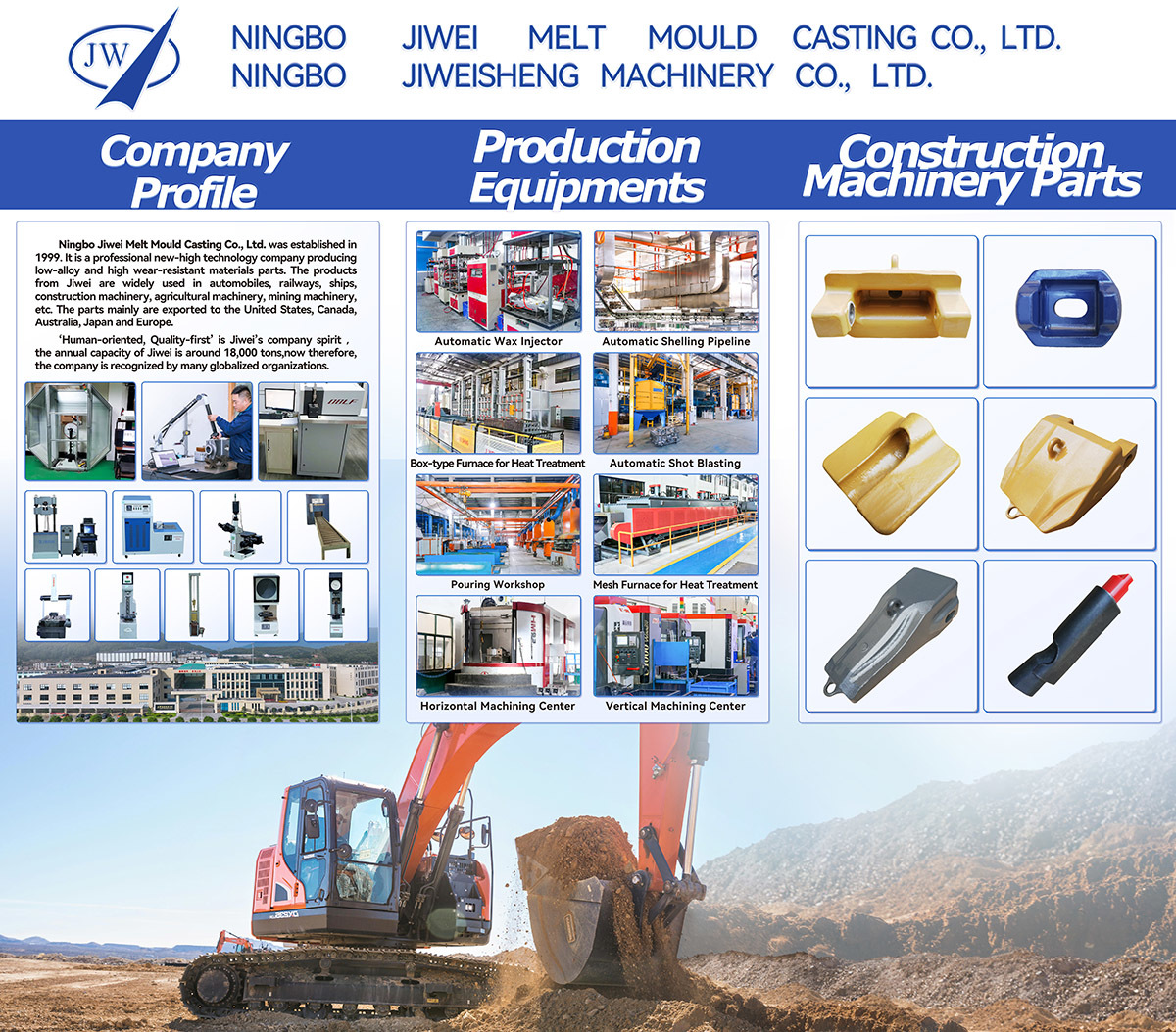
2025 Mexico Exhibition
Apr 30,2025
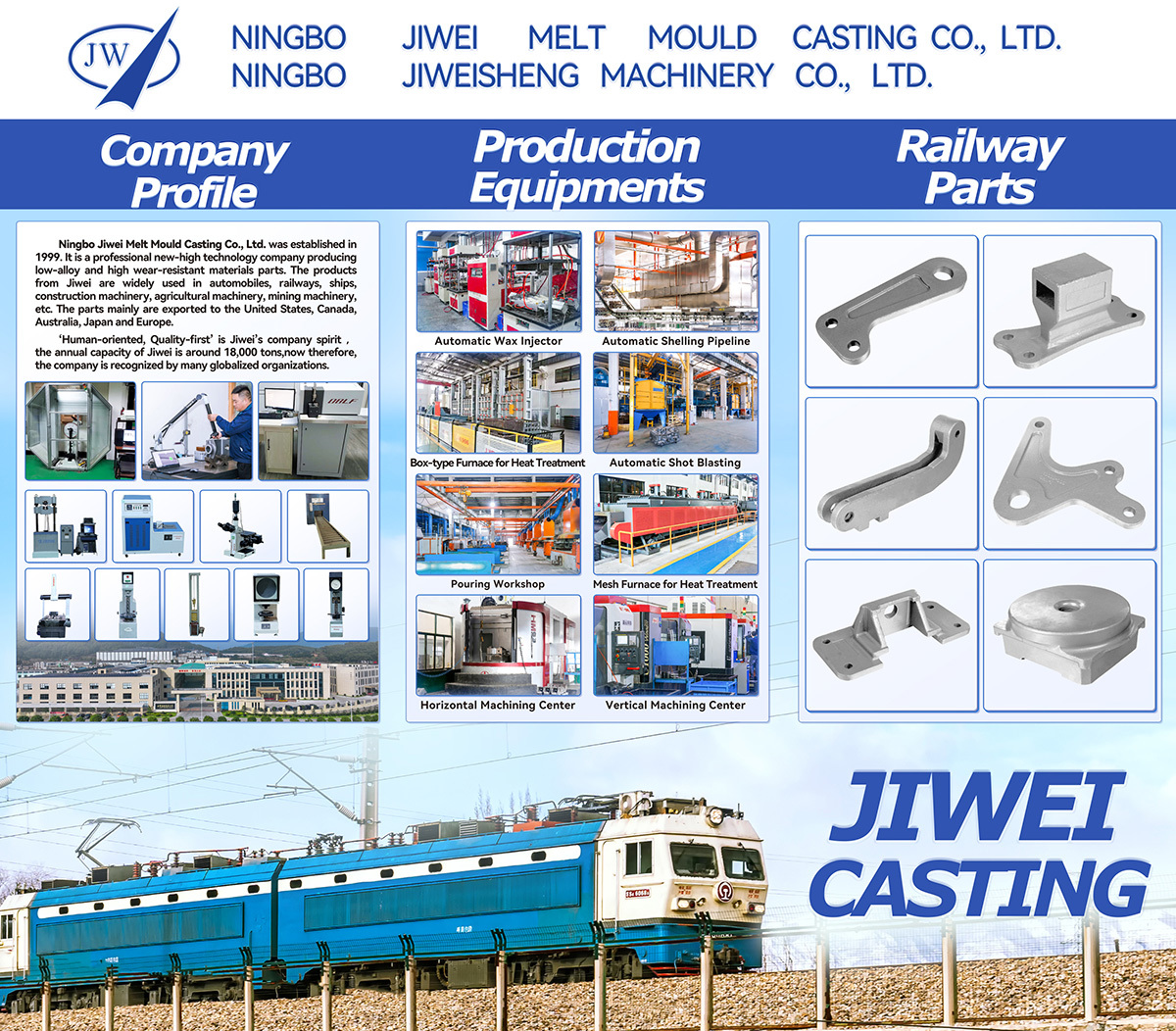
2025 American Rail Show