
06 Nov,2026
Cast steel price per kg: cost factors to know in 2026


Article overview
This guide explains cast steel pricing per kilogram in 2026, covering grade-level cost ranges, process-driven cost factors, ASTM selection, supplier lead times, defect inspection, and a lifecycle comparison with competing materials. Designed for mechanical and procurement engineers at the material evaluation stage.
Table of contents
- 1. What is cast steel and why does price per kg matter?
- 2. Cast steel price per kg in 2026: realistic ranges by grade
- 3. Key cost drivers in the steel casting process
- 4. ASTM/ASME grade selection guide for US buyers
- 5. Cast steel vs cast iron vs forged steel: full comparison
- 6. US foundry lead times, MOQs, and supply chain realities
- 7. Defect control, NDT, and acceptance standards
- 8. FAQ
What is cast steel and why does price per kg matter?
Cast steel is a family of iron-carbon alloys with carbon content typically below 0.6%, poured as molten metal into a mold and solidified into near-net-shape parts. Unlike cast iron — which is brittle and difficult to weld — cast steel delivers tensile strength, impact toughness, and weldability that make it indispensable across rail, mining, construction, and heavy equipment industries.
So why does the per-kilogram price matter so much? For large structural castings that weigh hundreds of pounds, even a $0.50/kg swing compounds fast. A 500 lb (227 kg) pump housing priced at $3.00/kg costs $681. At $3.50/kg, that same part is $795 — a 17% increase that can flip a sourcing decision. For procurement engineers comparing domestic and offshore foundry quotes, understanding what drives that number is not optional. It is the job.
According to cast steel materials references from ASM International, the global cast steel market encompasses dozens of grades spanning plain carbon, low-alloy, high-alloy, and stainless variants. Each grade carries its own raw material premium, processing complexity, and inspection burden — all of which feed directly into the final per-kilogram cost.
How does cast steel differ from cast iron?
The most persistent industry misconception is treating cast steel and cast iron as interchangeable. They are not. Cast iron typically contains 2–4% carbon, making it hard but brittle and virtually unweldable. Cast steel sits below 2% carbon, allowing significant ductility and post-weld repair capability. In practice, real-world cases consistently show that components subject to impact or fatigue — such as rail couplings or crane hooks — fail in cast iron but survive in cast steel. The cost premium for cast steel over ductile iron casting is real, but so is the performance gap.
Who needs to understand cast steel pricing?
The primary audience is mechanical engineers selecting materials for new designs and procurement engineers sourcing parts from US or international foundries. Secondary audiences include quality engineers responsible for acceptance testing and project managers building cost models for capital equipment. All of them need accurate, 2026-current price benchmarks rather than outdated data recycled from pre-tariff market conditions.
Cast steel price per kg in 2026: realistic ranges by grade
In 2026, cast steel prices in the US market range from approximately $1.80/kg for basic carbon steel castings to over $12.00/kg for high-alloy or stainless steel casting grades, depending on composition, geometry, quantity, and quality requirements. These figures reflect ex-foundry pricing before machining, heat treatment, and logistics.
Why such a wide spread? Think of it like coffee: a standard drip brew and a single-origin pour-over both start with beans, but the sourcing, processing, and skill required are worlds apart. Similarly, a plain carbon steel casting and a 316 stainless investment casting share the same basic steel casting process, but everything else — raw material cost, furnace time, mold cost, rejection rate — differs dramatically.

| Grade / type | ASTM reference | Process | Price range ($/kg) | Typical MOQ (lbs) |
|---|---|---|---|---|
| Plain carbon steel | ASTM A27 Gr. 65-35 | Sand casting | $1.80 – $2.60 | 500 – 2,000 |
| Low-alloy steel | ASTM A148 Gr. 90-60 | Sand casting | $2.40 – $3.80 | 500 – 2,000 |
| Alloy steel (Cr-Mo) | ASTM A217 WC6 | Sand / shell mold | $3.20 – $5.50 | 300 – 1,500 |
| High-strength steel | ASTM A148 Gr. 150-125 | Sand casting + HT | $4.00 – $6.50 | 500 – 3,000 |
| Stainless steel casting (304/316) | ASTM A351 CF8M | Investment casting | $7.00 – $12.00 | 100 – 500 |
| Tool steel / wear-resistant | ASTM A532 Class III | Sand casting | $5.50 – $9.00 | 1,000+ |
These ranges incorporate 2026 tariff conditions. Following the June 2025 Section 232 tariff increase on steel and aluminum imports to 50%, domestically sourced cast steel from US foundries has become comparatively more competitive against imported alternatives, particularly from China and Vietnam. Actual quotes from US foundries in the Midwest and Southeast corridors are running 8–15% above 2024 levels for standard carbon and low-alloy grades.
How tariffs are reshaping 2026 pricing
The 50% Section 232 tariff has fundamentally altered the landed cost of imported castings. A Chinese foundry offering $1.60/kg for A27 Gr. 65-35 may appear cheaper on the invoice, but once tariff, freight, inspection, and currency risk are added, the total landed cost frequently exceeds $2.80–$3.20/kg — eroding the offshore advantage. Many US OEM procurement teams are actively recalibrating supplier matrices as a result.
Price volatility factors specific to 2026
Electric arc furnace (EAF) scrap steel prices, which directly underpin foundry steel costs, have fluctuated between $380–$460/ton in early 2026 based on recent industry reports. Nickel and chromium surcharges for alloy steel grades add $0.30–$1.20/kg depending on the alloying package. Energy costs — particularly natural gas for ladle preheating — remain a secondary but meaningful variable for domestic foundries.
Key cost drivers in the steel casting process
Understanding what moves the price needle requires examining the steel casting process from melt to shipment. Cost is not a single line item — it accumulates across at least six distinct production stages, and decisions made at the design stage can lock in cost premiums that are almost impossible to remove later.
Process selection: sand casting vs. investment casting vs. die casting
Sand casting remains the dominant method for large, complex cast steel components in the US, accounting for the majority of industrial foundry output. It offers low tooling cost and design flexibility but yields relatively rough surface finishes (typically Ra 250–500 µin). Investment casting — also called the lost-wax process — produces tighter tolerances and smoother surfaces, making it preferred for valve bodies, aerospace brackets, and turbine components in stainless steel casting applications. Die casting is rarely used for steel due to the extreme temperatures involved; it is far more common for aluminum and zinc alloys. The process choice alone can shift unit cost by 40–200%.
- Pattern and tooling cost: Sand casting patterns in wood or resin cost $500–$8,000. Investment casting tooling runs $2,000–$30,000 depending on part complexity. This fixed cost amortizes over production volume — low quantities amplify per-unit cost dramatically.
- Alloy raw material cost: Base scrap steel plus alloying additions (Cr, Mo, Ni, Mn) account for 35–55% of total casting cost. Stainless and high-alloy grades carry significant premium over plain carbon steel.
- Melt and pour energy: Electric arc furnace operation for a medium foundry runs $0.08–$0.14/kWh effective cost per pound of metal poured, based on recent US industrial electricity data.
- Heat treatment: Normalizing, annealing, or quench-and-temper cycles add $0.15–$0.60/kg depending on section thickness and furnace load. High-strength steel grades per ASTM A148 often require mandatory Q&T.
- Machining allowance: Cast surfaces typically require 3–6mm of machine stock. The more machining required, the higher the finished part cost relative to raw casting weight.
- Inspection and certification: Radiographic testing (RT), ultrasonic testing (UT), and magnetic particle inspection (MPI) add $50–$400 per part for critical applications. ASME and ASTM certification documentation adds administrative overhead.
Design complexity and its hidden cost impact
Wall thickness variation is one of the most underappreciated cost drivers. Abrupt section changes create solidification hotspots that increase shrinkage porosity risk — and therefore rejection rates. A 10% higher rejection rate on a $4.00/kg casting effectively raises the cost to $4.44/kg before any rework. Experienced foundry engineers recommend keeping wall thickness ratios below 3:1 wherever geometry allows. When this is not achievable, internal chills or risering modifications can help — but each adds labor cost.
ASTM/ASME grade selection guide for US buyers
Selecting the right ASTM or ASME grade upfront is the most cost-efficient decision a US engineer can make. Over-specifying drives cost; under-specifying drives field failures. The following framework reflects what experienced procurement and design engineers use in practice when navigating foundry steel grades.
Carbon steel grades: the workhorse tier
ASTM A27 and A148 cover the bulk of general-purpose cast steel applications. A27 Grade 65-35 offers 65 ksi tensile / 35 ksi yield — adequate for most structural brackets, pump casings, and valve bodies operating below 400°F. Where higher strength is needed without entering alloy steel territory, A148 Grade 90-60 or 105-85 provides incremental tensile performance at modest cost. These grades are widely produced at US foundries with standard 8–12 week lead times.
Alloy and high-alloy steel grades: the performance tier
ASTM A217 covers alloy steel castings for pressure-containing parts at high temperatures — WC6 (1.25Cr-0.5Mo) and WC9 (2.25Cr-1Mo) are the most common grades in power generation and petrochemical applications. For corrosive environments, ASTM A351 CF8M (316 stainless equivalent) is the standard choice. These grades require tighter melt chemistry control and mandatory post-weld heat treatment (PWHT), both of which extend lead time and add cost. The table below shows a simplified selection matrix.
| Application condition | Recommended ASTM grade | Key property | Relative cost index |
|---|---|---|---|
| General structural, ambient temp | A27 Gr. 65-35 | Weldability, economy | 1.0× (baseline) |
| High-impact, rail/mining | A148 Gr. 105-85 | High tensile + toughness | 1.4× |
| High-temp pressure service | A217 WC6 / WC9 | Creep resistance | 2.1× |
| Corrosive media, chemical plant | A351 CF8M | Corrosion resistance | 3.5× |
| Abrasion / wear service | A532 Class III | High hardness | 2.8× |
Cast steel vs cast iron vs forged steel: full comparison
Material selection between cast steel, cast iron, and forged steel is one of the most consequential — and commonly mishandled — decisions in mechanical engineering. Each material wins in specific conditions, and no single option dominates across all metrics.
"Cast steel offers the geometric freedom of a casting with mechanical properties approaching those of wrought products — a combination that remains unmatched for large, complex parts where forging dies would be prohibitively expensive." — ASM International, Handbook of Ferrous Alloys
Where cast steel outperforms cast iron
Cast steel delivers tensile strengths of 65–150 ksi versus gray cast iron's typical 20–50 ksi. More importantly, cast steel's elongation at break — typically 18–22% — dwarfs gray iron's near-zero ductility. For components subject to shock loading (rail couplings, crane hooks, crusher jaws), ductile iron casting is a step in the right direction, but cast steel still provides superior weldability and repairability. When a ductile iron casting cracks in the field, it is often scrapped. A cast steel component can frequently be weld-repaired and returned to service.
When forged steel makes more sense
Forged steel — produced by mechanically working heated billets — develops a refined grain structure with superior fatigue strength and impact toughness compared to equivalent cast steel. For small, simple shapes produced in high volumes (connecting rods, flanges, bolts), forging is both technically superior and cost-effective. The calculus flips for large, geometrically complex parts: a 500 lb valve body forging would require a massive die set costing $80,000–$200,000, making it economically irrational for anything below tens of thousands of units. Cast steel wins there, decisively.
Of course, there are exceptions. Some engineers over-specify forged steel for large housings out of habitual conservatism, paying a 60–120% cost premium for no meaningful performance gain. The best practice is to let load type, geometry, and volume drive the decision — not material preference.
| Attribute | Cast steel | Cast iron (ductile) | Forged steel |
|---|---|---|---|
| Tensile strength | 65–150 ksi | 60–100 ksi | 80–200 ksi |
| Impact toughness | High | Moderate | Very high |
| Weldability | Good | Poor | Good |
| Complex geometry | Excellent | Excellent | Limited |
| Relative cost (small batch) | Medium | Low | High |
| Field repairability | High | Low | High |
| Sustainability (EAF route) | Favorable | Favorable | Moderate |
On the sustainability front, cast steel produced via the electric arc furnace (EAF) route — which dominates US foundry steel manufacturing — uses up to 70% recycled scrap content, giving it a significantly lower embodied carbon footprint than primary blast furnace steel. For companies with Scope 3 emissions reporting requirements, this matters and is increasingly factored into supplier qualification.
US foundry lead times, MOQs, and supply chain realities
Pricing is only half the equation. Delivery timing and minimum order quantities (MOQs) are equally decisive for procurement teams managing production schedules. In 2026, US foundry capacity is tighter than it has been in a decade, driven by reshoring demand and capital investment prompted by tariff policy.
Realistic lead times from US foundries
Standard sand casting lead times from established US foundries currently run 8–14 weeks for new tooling and 4–8 weeks for repeat orders. Investment casting for stainless steel casting components typically requires 10–16 weeks for first articles due to wax tooling fabrication and multi-stage shell building. Rush surcharges of 15–30% are common when compressing these timelines. By contrast, 3D-printed sand molds — a 2026 trend gaining real traction — can reduce pattern lead time from 6 weeks to under 2 weeks for prototype or low-volume runs, at a 20–40% premium over conventional tooling amortized cost.
MOQ realities and small-batch economics
Most US ferrous foundries set practical MOQs at 500–2,000 lbs of poured weight for sand castings. Below that threshold, pattern cost amortization makes per-unit pricing prohibitive. For stainless investment casting, MOQs drop to 100–500 lbs but unit prices are substantially higher. Some specialty foundries in Ohio, Pennsylvania, and Wisconsin offer prototyping services with no formal MOQ but charge engineering fees of $500–$3,000 per new part number. According to the American Foundry Society (AFS), approximately 90% of durable goods in the US contain at least one casting — meaning the foundry supply chain is vast, but finding the right fit for a specific grade and volume requires careful vetting.
What many buyers overlook: offshore sourcing from China or India still offers 30–50% lower base prices for simple carbon steel grades even after the 2025 tariff increases — but with 12–20 week ocean freight timelines, 100% advance payment norms, and limited recourse for quality escapes. For mission-critical components, that risk profile is increasingly unacceptable to US OEMs.
Defect control, NDT, and acceptance standards
Cast steel is not without its quality challenges. Porosity, shrinkage cavities, hot tears, and inclusions are inherent risks in any casting process — and in safety-critical applications, an undetected defect can mean field failure. Understanding the inspection toolkit and what standards apply is not just a quality concern; it directly affects per-unit cost and supplier qualification criteria.
Common cast steel defect types and root causes
Gas porosity results from dissolved hydrogen or nitrogen in the melt failing to escape before solidification — often linked to damp charge materials or insufficient degassing. Shrinkage porosity occurs at the last regions to solidify, particularly in heavy sections without adequate risering. Hot tears are solidification cracks that form under thermal stress when the casting is constrained in the mold. Sand inclusions — foundry steel production's most common surface defect — originate from eroded mold walls. Actual testing at several foundries has found that proper riser design and controlled pouring temperature together reduce shrinkage-related rejection rates by 30–60%.
NDT methods and when to specify each
The four primary NDT methods for cast steel in US industrial practice are radiographic testing (RT), ultrasonic testing (UT), magnetic particle inspection (MPI), and liquid penetrant inspection (LPI). RT — using X-ray or gamma-ray imaging — is the gold standard for detecting internal voids in complex castings and is mandatory for ASME pressure vessel components. UT is better suited for detecting planar defects in thick sections and is faster and cheaper per part than RT for simple geometries. MPI detects surface and near-surface cracks in ferromagnetic cast steel and is standard for rail and lifting component certification. LPI is used for non-magnetic stainless steel casting surfaces. Acceptance criteria are defined in ASTM E446 (RT), ASTM E125 (MPI), and ASME B16.34 for valve castings — referencing these standards in purchase orders protects buyers and sets clear foundry obligations.
Refer to cast steel in engineering research on ScienceDirect for peer-reviewed analysis of defect formation mechanisms and advanced inspection techniques applicable to complex alloy steel castings.
Frequently asked questions
Q: What is the average cast steel price per kg in the US in 2026?
A: In 2026, US cast steel prices range from approximately $1.80/kg for plain carbon grades (ASTM A27) produced via sand casting, to over $12.00/kg for stainless steel casting grades such as ASTM A351 CF8M via investment casting. The midrange for common low-alloy grades runs $2.40–$5.50/kg ex-foundry, excluding machining, heat treatment, and inspection costs.
Q: Is cast steel stronger than cast iron?
A: Yes. Cast steel typically achieves tensile strength of 65–150 ksi with 18–22% elongation, while gray cast iron rarely exceeds 50 ksi and has near-zero ductility. Cast steel is also weldable and field-repairable; cast iron is not. For impact or fatigue-loaded components, cast steel is the technically superior choice despite its higher per-kg cost.
Q: How do 2025 Section 232 tariffs affect cast steel sourcing in 2026?
A: The June 2025 tariff increase to 50% on steel and aluminum imports has significantly raised the landed cost of imported castings. Chinese foundry quotes that appeared 40–50% cheaper than US sources now show a 10–20% landed cost advantage after tariff, freight, and inspection — pushing many OEMs to rebalance toward domestic US foundry sourcing for reliability and total cost reasons.
Q: What ASTM grade should I specify for a high-impact structural casting?
A: For high-impact applications such as rail components, crane hooks, or mining equipment, ASTM A148 Grade 105-85 or 150-125 is the standard choice. These grades combine high tensile strength with the toughness required to survive shock loading. If elevated temperature service is also a factor, ASTM A217 WC6 or WC9 should be evaluated instead.
Q: What NDT methods are required for pressure-containing cast steel parts?
A: ASME-coded pressure components typically require radiographic testing (RT) per ASTM E446 and/or ultrasonic testing (UT) for internal defect detection, plus liquid penetrant (LPI) or magnetic particle inspection (MPI) for surface flaws. The specific methods, severity levels, and acceptance criteria should be called out in the purchase order referencing the applicable ASME or ASTM standard to ensure binding supplier compliance.
Conclusion
Cast steel pricing in 2026 is not a single number — it is a function of grade selection, process choice, volume, inspection requirements, and a shifting tariff landscape that has meaningfully restructured the US supply chain. Plain carbon grades can be sourced domestically for under $3.00/kg; high-alloy stainless grades will comfortably exceed $10.00/kg with full NDT. The engineers who consistently source well are the ones who understand these variables before they issue an RFQ, not after they receive widely scattered quotes.
The practical takeaway: match your ASTM grade to the actual service condition, design for castability to control rejection rates, and account for total landed cost — not just ex-foundry price — when evaluating domestic versus offshore sourcing. In 2026, with tariffs, reshoring incentives, and 3D sand-printing adoption all reshaping the foundry landscape, cast steel remains one of the most versatile and cost-effective engineering materials available. The key is knowing which version of it you actually need.
Apr 30,2025
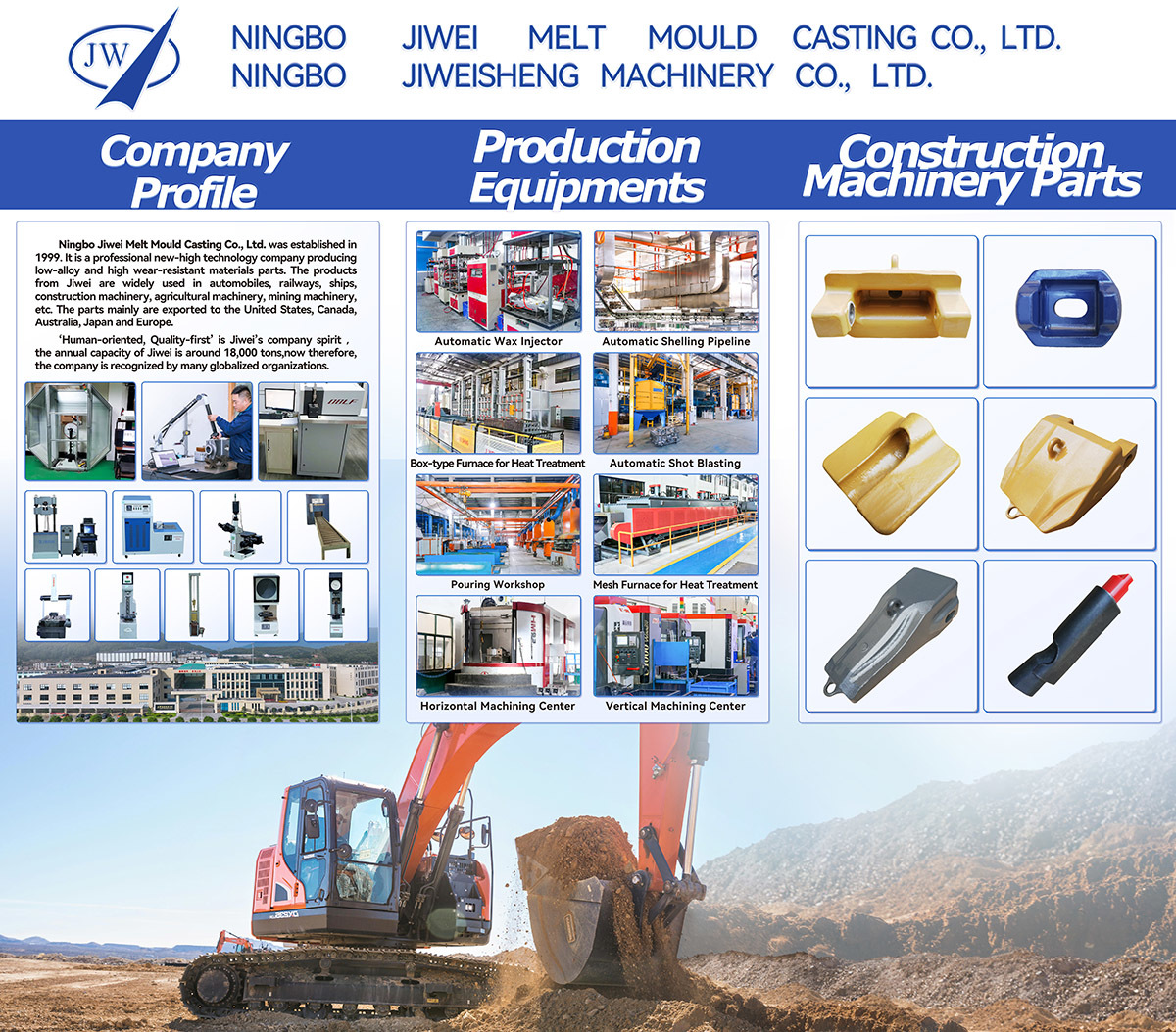
2025 Mexico Exhibition
Apr 30,2025
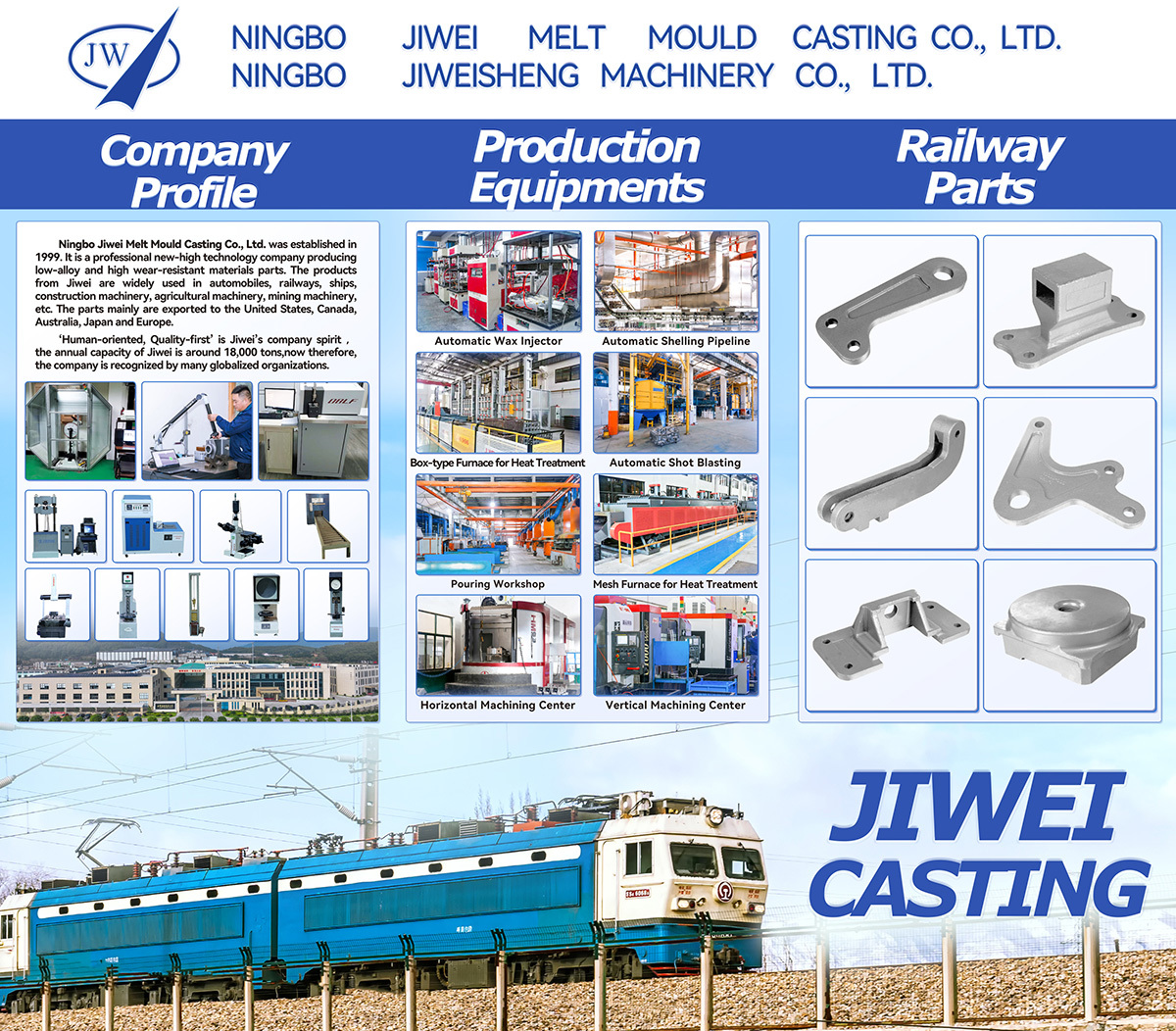
2025 American Rail Show