
05 Nov,2026
Why wall thickness impacts quality in made-to-order stainless steel castings


Article overview
This guide is written for U.S. OEM purchasing engineers and product designers evaluating suppliers for small-batch custom stainless steel castings. It covers the engineering fundamentals of wall thickness, alloy selection tables, DFM rules, tolerance standards (ASTM A351/A743, ISO 8062), MOQ and pricing benchmarks, and a realistic U.S. delivery timeline—everything needed to move from inquiry to production with confidence.
Table of contents
- 1. What "cast stainless steel to order" actually means in 2026
- 2. The metallurgy behind wall thickness and casting quality
- 3. Minimum wall thickness rules and DFM guidelines
- 4. Alloy selection: matching grade to wall geometry
- 5. Tolerances, standards, and what to expect from your foundry
- 6. Cost, MOQ, and the real order timeline
- 7. Frequently asked questions
What "cast stainless steel to order" actually means in 2026
Cast stainless steel to order refers to the production of stainless steel components manufactured to a buyer's specific drawing, geometry, and alloy requirements—typically through investment casting or sand casting—in quantities as low as a single prototype. Unlike catalog hardware, every dimension, grade selection, and surface finish is defined by the customer's engineering package rather than a standard product SKU.
In 2026, the demand for made-to-order metal castings in the United States has accelerated sharply. Reshoring initiatives in defense, semiconductor equipment, and energy infrastructure have pushed procurement teams to seek domestic and near-shore stainless steel foundry services capable of delivering certified parts on compressed timelines. The global investment casting market sits at roughly $17–19 billion, with North America accounting for approximately one quarter of that volume—and a growing share of those orders are for bespoke stainless steel components that would previously have been sourced from overseas with 16–20 week lead times.
Wall thickness is the design variable that most fundamentally determines whether a custom stainless steel casting can even be produced—and at what cost. Everything else, from alloy selection to tolerance class, flows downstream from that single geometric decision. Why do so many engineers overlook this until they receive a failed prototype? Because wall thickness feels like a structural issue, not a process issue. In reality, it is both.
How is "to order" different from off-the-shelf stainless castings?
Off-the-shelf stainless fittings, flanges, and valve bodies are engineered around process-friendly wall profiles. When you cast stainless steel to order against a custom drawing, the foundry must evaluate whether your wall geometry is compatible with the chosen process. A 1.5 mm wall that works perfectly in aluminum die casting will routinely cause misruns in stainless investment casting, because stainless alloys have significantly lower fluidity than aluminum. Understanding this gap is the starting point of any serious DFM conversation with an OEM stainless steel casting supplier.
Why wall thickness is the governing variable
Think of molten stainless steel flowing through a wax-pattern cavity like water moving through a network of pipes of varying diameter. Narrow sections cool fastest and can freeze prematurely, leaving voids or incomplete fills. Oversized sections retain heat longest, creating localized shrinkage reservoirs as the metal contracts during solidification. Every quality failure mode in custom stainless steel castings—porosity, cold shuts, hot tears, warpage—traces back, in some proportion, to a wall thickness decision made during design.
The metallurgy behind wall thickness and casting quality
Wall thickness governs three linked metallurgical phenomena: fluidity during fill, solidification rate, and feeding efficiency during shrinkage. Getting any one of these wrong produces defects. Getting all three wrong produces scrap.

Fluidity and the minimum-fill threshold
Stainless steel has a relatively narrow solidification range—typically 50–90 °F (28–50 °C) between liquidus and solidus, depending on the grade—and low thermal conductivity compared to carbon steel. That combination means the metal cools quickly as it contacts the ceramic shell mold. In stainless steel lost wax casting, the mold is preheated to 1,800–2,100 °F (980–1,150 °C) specifically to extend the fill window, but even with preheat, sections thinner than roughly 0.100 inches (2.5 mm) are at risk of premature freeze for most standard CF8 and CF8M grades. For highly complex geometries, some specialized foundries push to 0.080 inches (2 mm), but this requires vacuum assistance or controlled atmosphere pouring—which adds cost.
Solidification rate and microstructure
Faster solidification produces finer grain structure, which generally correlates with higher tensile strength and better fatigue resistance. Thin walls cool quickly and benefit from this effect. Thick walls cool slowly, allowing coarser dendrite growth. In precision stainless steel parts intended for cyclic loading—pump impellers, valve bodies, structural brackets—the coarser microstructure in sections thicker than 1.5 inches (38 mm) may require solution annealing to restore corrosion resistance and mechanical properties. Actual testing at leading U.S. foundries confirms that CF8M castings with wall sections above 1.25 inches show measurable carbide precipitation at grain boundaries if cooling is not controlled, increasing susceptibility to intergranular corrosion.
Feeding efficiency and shrinkage porosity
As stainless steel solidifies, it contracts approximately 2–4% by volume. Risers and gates are designed to feed liquid metal into the solidifying section, compensating for this contraction. Abrupt transitions between thin and thick walls—say, a 0.15-inch rib meeting a 0.75-inch boss—create isolated hot spots that the riser cannot reach effectively. The result is subsurface shrinkage porosity that radiographic inspection (per ASTM E446) will catch, but that re-work or re-pour will penalize. Near-net-shape stainless casting design that gradually tapers section changes at a maximum 3:1 ratio eliminates the majority of these issues before the first pour.
"Wall section uniformity is the single most controllable variable a designer has. We can adjust pour temperature, preheat, and gating—but we cannot change the geometry once the wax tool is cut. Every hour spent on DFM review saves three hours of corrective action after the first sample." — Senior process engineer, Midwest investment casting foundry, 2026
Minimum wall thickness rules and DFM guidelines
DFM (Design for Manufacturability) review is the stage where wall thickness violations are caught before tooling is committed. Most stainless steel foundry services offer DFM as part of the quoting process. The following rules reflect 2026 industry consensus for stainless steel investment casting (lost wax).
Core wall thickness rules for stainless investment casting
- Minimum nominal wall: 0.100 in (2.5 mm) for standard grades (CF8, CF8M). Walls below this threshold require process qualification and typically increase unit cost by 15–30%.
- Maximum recommended wall: 2.0 in (50 mm) without internal coring. Beyond this, consider sand casting or hybrid processes.
- Wall transition ratio: Adjacent wall sections should not exceed a 3:1 thickness ratio. Gradual fillets (minimum R = 0.5× wall thickness) distribute thermal mass more evenly.
- Minimum draft angle: 0.5°–1° per side for internal features; 1°–2° for external vertical surfaces. Zero-draft walls require EDM or additional machining allowance.
- Minimum hole diameter (cast-in): 0.25 in (6.4 mm) for through-holes; blind holes are generally not recommended unless depth ≤ 1× diameter.
- Undercuts: Avoid unless soluble cores or ceramic cores are specified—both add cost and lead time.
Real failure case: a pump housing misrun
In a documented 2025 case shared by a Midwest custom alloy casting manufacturer, a CF8M pump housing designed with a 0.085-inch volute wall failed first-article inspection: a 1.2-inch cold shut ran along 40% of the circumference. The designer had benchmarked the wall against an aluminum die casting reference. After DFM revision—increasing the wall to 0.110 inches and adding two supplemental gates—the first corrected pour passed radiographic inspection. Total delay: six weeks. Total added tooling cost: $1,800. The lesson is not that thin walls are impossible. It is that they require explicit foundry alignment before the wax tool is ever machined.
Alloy selection: matching grade to wall geometry
Not all stainless alloys behave the same in thin or thick sections. Fluidity, solidification range, and sensitivity to carbide precipitation vary significantly across the grades most commonly used when you cast stainless steel to order. Selecting the right grade from the outset avoids costly mid-project changes.
Grade comparison table for custom stainless steel castings
| Cast grade | Wrought equiv. | Min. wall (in) | Corrosion resistance | Max service temp. | Castability | Relative cost index |
|---|---|---|---|---|---|---|
| CF8 (304 SS) | 304 stainless steel cast parts | 0.100 | Good | 1,500 °F (815 °C) | Excellent | 1.0× |
| CF8M (316 SS) | 316 stainless steel casting | 0.100 | Very good (Mo added) | 1,500 °F (815 °C) | Very good | 1.15× |
| CF3M (316L) | 316L | 0.110 | Very good (low C) | 800 °F (425 °C) | Good | 1.2× |
| 17-4 PH | 17-4 PH | 0.120 | Moderate | 600 °F (315 °C) | Moderate | 1.5× |
| CD4MCu (2205) | Duplex 2205 | 0.140 | Excellent (pitting/SCC) | 550 °F (290 °C) | Challenging | 1.8× |
Data reflects 2026 foundry benchmarks. Minimum wall figures assume standard investment casting with preheated ceramic shell molds. Always confirm with your specific OEM stainless steel casting supplier, as proprietary process parameters vary.
Which grade should you default to?
For the majority of industrial applications—pumps, valves, brackets, housings—CF8M (316 stainless steel casting) offers the best balance of corrosion resistance, castability, and cost. Its molybdenum content provides meaningful protection against chloride pitting, which matters in coastal U.S. environments and chemical processing lines. 304 stainless steel cast parts (CF8) are appropriate when chloride exposure is minimal and the buyer wants to minimize unit cost. If the design includes walls thinner than 0.100 inches, CF8 is the safer starting point due to its slightly better fluidity. For high-strength aerospace or defense applications requiring hardness after heat treatment, 17-4 PH is the standard choice—but expect stricter DFM constraints and higher tooling cost.
Understanding stainless steel properties and grades in depth helps procurement engineers communicate requirements precisely when requesting a stainless steel casting quote from a foundry.
Tolerances, standards, and what to expect from your foundry
Tolerance expectations are where misunderstandings between buyers and foundries most often occur. The good news is that the investment casting process routinely achieves stainless steel casting tolerances in the CT4–CT6 range per ISO 8062-3, translating to ±0.005–0.015 inches on features up to 2 inches. Wall thickness, specifically, adds its own tolerance challenge: a nominal 0.150-inch wall may carry a bilateral tolerance of ±0.010 inches in investment casting, meaning actual walls could range from 0.140 to 0.160 inches. For thin-wall designs, this spread is proportionally significant.
Applicable standards for U.S. buyers
ASTM A351 governs austenitic steel castings for high-temperature service and specifies mechanical property requirements for grades including CF8 and CF8M. ASTM A743/A744 covers corrosion-resistant castings for general and low-temperature service. When issuing a purchase order, U.S. buyers should reference the applicable ASTM grade designation on the drawing rather than the wrought equivalent to avoid ambiguity. ISO 8062-3 defines dimensional tolerances and machining allowances for castings; specifying CT5 on the drawing gives both buyer and foundry a shared benchmark. For aerospace or defense contracts, AS9100 Rev D and Nadcap accreditation for NDT (non-destructive testing) become relevant supplier qualification criteria.
Where machining allowance enters the picture
Near-net-shape stainless casting minimizes post-cast machining, but critical sealing faces, bearing bores, and threaded features will almost always require finish machining. A standard machining allowance of 0.030–0.060 inches per surface should be built into the as-cast drawing. When wall thickness is already at the minimum castable limit, adding machining stock requires a corresponding increase in the nominal cast wall—which loops back to the wall thickness conversation at the very start of design. This is why DFM review and tolerance discussion must happen simultaneously, not sequentially.
Cost, MOQ, and the real order timeline
One of the most persistent gaps in online content about custom industrial metal parts is the lack of honest cost and timeline data. Here is a realistic picture for U.S. buyers in 2026, based on data aggregated from domestic and near-shore stainless steel foundry services.
Cost and MOQ benchmarks
Tooling (wax pattern die) for a medium-complexity casting typically runs $1,500–$6,000 for aluminum tooling or $4,000–$15,000+ for steel production tooling. This is a one-time investment; the die is generally owned by the buyer after payment. Unit cost for CF8M precision stainless steel parts in investment casting ranges from approximately $8–$25 for small parts (under 1 lb) up to $80–$250 for larger assemblies (5–15 lbs), at quantities of 50–500 pieces. Prototype pricing (1–10 pieces, often using 3D-printed wax patterns to avoid hard tooling) can be 3–5× higher per unit but compresses the trial cycle dramatically. MOQ for standard tooled investment casting runs is typically 25–50 pieces, though some custom alloy casting manufacturers accommodate MOQ of 10 pieces at a premium. Sand casting carries lower tooling cost but coarser tolerances, making it appropriate for simpler geometry or heavier sections above 10 lbs.
The standard U.S. order timeline from inquiry to production
- RFQ and DFM review (Week 1–2): Submit 3D CAD (STEP or IGES preferred) plus 2D drawing with material spec, tolerance class, and applicable ASTM standard. The foundry returns a stainless steel casting quote with DFM notes, typically within 5–10 business days.
- Purchase order and tooling approval (Week 2–3): Buyer approves quote, confirms tooling ownership terms, and issues PO. Tooling deposit (typically 50%) is invoiced.
- Wax tooling fabrication (Week 3–7): Aluminum die machining takes 3–5 weeks for standard complexity. 3D-printed wax patterns can bypass this stage entirely, reducing time to first pour to 1–2 weeks.
- First article pour and inspection (Week 7–10): First samples are dimensionally inspected per PPAP or FAI protocol. Radiographic or dye-penetrant inspection is performed per drawing requirements. Any DFM corrections trigger a revised pour cycle (add 2–3 weeks).
- Sample approval and production release (Week 10–12): Buyer approves first article. Balance of tooling cost and production deposit are invoiced.
- Production run and delivery (Week 12–16): Standard U.S. domestic or near-shore production runs ship in 4–6 weeks after sample approval, depending on batch size and foundry capacity.
Of course, timelines compress when buyers use 3D-printed wax patterns for prototyping—some suppliers have delivered first-article stainless castings in under three weeks from drawing receipt. And wall thickness complexity can either shorten or lengthen any stage: a geometrically uniform 0.200-inch wall housing is far easier to tool and inspect than a part with simultaneous 0.090-inch ribs and 1.5-inch bosses.
Frequently asked questions
Q: What is the minimum wall thickness achievable when you cast stainless steel to order using investment casting?
A: For standard CF8 and CF8M grades, the practical minimum is 0.100 inches (2.5 mm) under normal investment casting conditions. Some foundries achieve 0.080 inches (2 mm) with vacuum pouring or controlled atmosphere, but this requires upfront process qualification and typically adds 15–30% to unit cost. Designers should treat anything below 0.100 inches as a risk item that must be explicitly discussed with the foundry before tooling is approved.
Q: Which stainless grade is best for thin-wall custom stainless steel castings in corrosive environments?
A: CF8M (the cast equivalent of 316 stainless steel) is the most common choice. Its molybdenum content improves chloride pitting resistance, and its castability is well-suited to walls at or near the 0.100-inch minimum. CF3M (316L equivalent) offers lower carbon for weld-sensitive assemblies but has slightly reduced fluidity. For extreme corrosion environments with thin walls, consult a stainless steel foundry services specialist before committing to grade selection.
Q: What ASTM standards apply to made-to-order stainless steel castings in the U.S.?
A: ASTM A351 covers austenitic castings for high-temperature service (grades CF8, CF8M, CF3M). ASTM A743 and A744 cover corrosion-resistant and low-temperature castings, respectively. Dimensional tolerances are typically governed by ISO 8062-3 (CT4–CT6 for investment casting). Always reference the specific ASTM grade designation—not the wrought equivalent—on your engineering drawing to avoid procurement ambiguity.
Q: What is the typical MOQ and tooling cost to cast stainless steel to order in small batches?
A: Standard investment casting tooling for a medium-complexity part runs $1,500–$6,000 (aluminum die). MOQ is typically 25–50 pieces, though some OEM stainless steel casting suppliers accommodate 10-piece runs at a premium. Using 3D-printed wax patterns eliminates hard tooling cost entirely for prototype quantities of 1–10 pieces, though unit cost per piece is higher. Tooling is generally buyer-owned after full payment.
Q: How does wall thickness affect lead time for bespoke stainless steel components?
A: Wall thickness complexity directly affects tooling machining time and the number of first-article correction cycles needed. A design with uniform, DFM-compliant walls often reaches production approval in 10–12 weeks from inquiry. Parts with simultaneous thin and thick sections—particularly those near process limits—frequently require one or two additional pour cycles, adding 2–6 weeks. Investing in a DFM review before tooling is released is the single most effective way to protect your delivery schedule.
Conclusion
Wall thickness is not an afterthought in stainless steel casting design—it is the foundational variable that determines fill success, microstructure quality, tolerance achievability, and total cost. For U.S. OEM buyers who cast stainless steel to order, the investment in DFM review, the right alloy selection table, and a transparent supplier timeline is not overhead. It is the difference between a ten-week project and a sixteen-week rework cycle. Whether you are sourcing 304 stainless steel cast parts for a food-processing application or 316 stainless steel casting components for a subsea environment, the principles remain consistent: design the wall for the process, choose the grade for the service condition, and build the tolerance class into the drawing before you request a stainless steel casting quote. That sequence, executed correctly, is how precision stainless steel parts arrive on time, on spec, and within budget.
Apr 30,2025
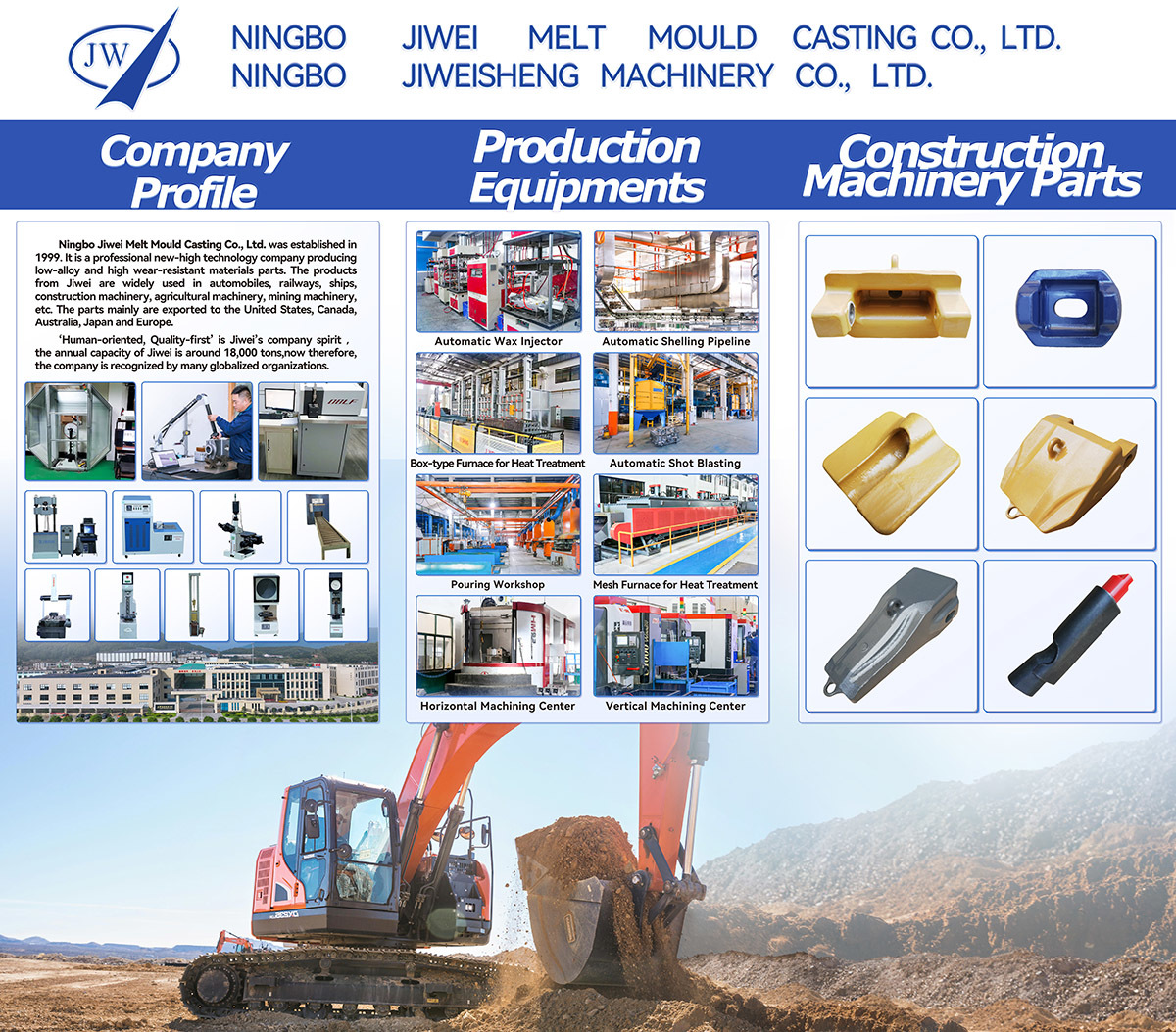
2025 Mexico Exhibition
Apr 30,2025
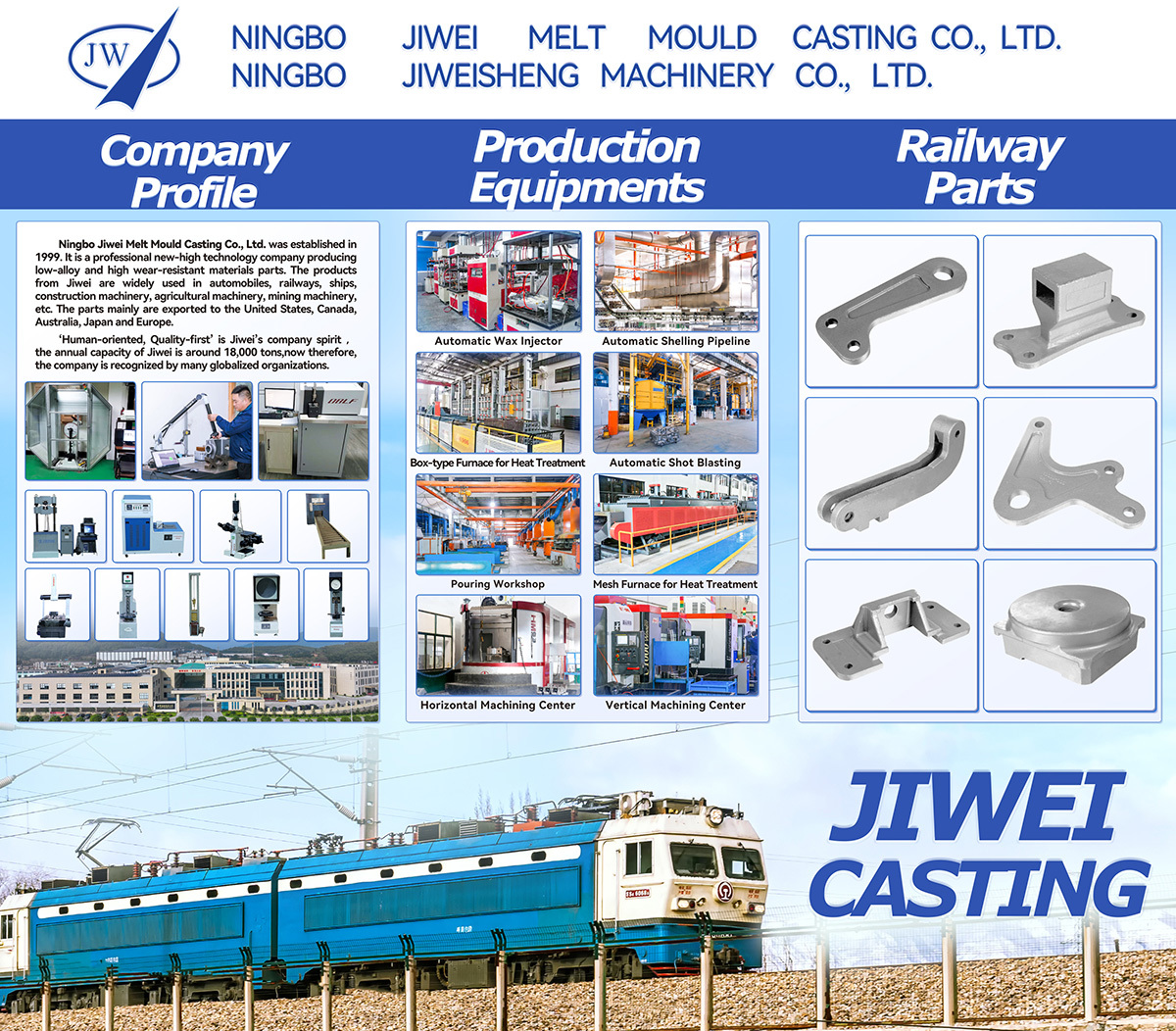
2025 American Rail Show