
12 Nov,2026
Cast steel products in infrastructure: use cases and performance data


Article overview
This guide covers cast steel products across six dimensions: definition and market context, infrastructure use cases, mechanical performance data, grade selection logic, supplier evaluation, and FAQ. Target readers are procurement managers and mechanical engineers in the commercial investigation stage.
Table of contents
- 1. What are cast steel products and why do they matter in infrastructure?
- 2. Major infrastructure applications of cast steel components
- 3. Performance data: mechanical properties by grade and process
- 4. Grade selection guide: matching cast steel to application demands
- 5. Procurement checklist: evaluating a steel casting manufacturer
- 6. Common questions about cast steel products (FAQ)
What are cast steel products and why do they matter in infrastructure?
Cast steel products are components manufactured by pouring molten steel into shaped molds and allowing it to solidify, producing near-net-shape parts with high strength, wear resistance, and design flexibility. Unlike forged steel products — which rely on mechanical deformation to shape metal — steel castings achieve complex geometries that would be prohibitively expensive to machine from solid stock. That fundamental difference makes them indispensable wherever infrastructure demands intricate load-bearing parts at scale.
In 2026, the global steel castings market continues to track closely with infrastructure investment cycles. Construction of highway bridges, freight rail expansion, water treatment upgrades, and energy grid reinforcement all consume significant volumes of industrial steel castings. According to recent market analysis, infrastructure and heavy industry account for over 55% of total steel casting demand by weight globally.
Why do so many structural engineers default to cast steel when alternatives exist? The short answer: no other ferrous process combines tensile strength above 70,000 psi, geometric freedom, and cost-effective production runs the way steel casting process and applications allow. Aluminum castings are lighter but lack the load capacity. Ductile iron castings offer excellent vibration damping but fall short in tensile ductility under dynamic loading. Cast steel fills the gap precisely where infrastructure needs it most.
It is also worth noting one limitation upfront: cast steel components generally have slightly lower fatigue strength than their forged counterparts of equivalent composition. For applications subject to millions of high-frequency load cycles — think locomotive wheel hubs — engineers must weigh this tradeoff carefully. That said, for the vast majority of infrastructure applications, cast steel remains the dominant choice.
How cast steel differs from other metal castings
Cast steel products are distinct from ductile iron castings, gray iron, and non-ferrous metal castings in their carbon content (typically 0.1–0.5% C) and resulting mechanical profile. Iron castings contain higher carbon, which improves fluidity during pouring but reduces toughness. Steel castings sacrifice some castability in exchange for a dramatically superior strength-to-weight ratio and impact resistance — qualities that translate directly into longer service life in harsh infrastructure environments.
Sand cast steel and investment casting steel represent the two most commonly specified process routes. Sand casting dominates for large components (bridge bearings, pump housings, rail crossings) while investment casting steel handles smaller, tighter-tolerance parts such as valve bodies and turbine components. The choice of process affects surface finish, dimensional accuracy, and minimum wall thickness — all factors that influence final performance data.
Market context in 2026
Domestic infrastructure legislation has sustained elevated demand for steel foundry products across the U.S. through 2025 and into 2026. Bridge rehabilitation programs, freight rail corridor upgrades, and municipal water system overhauls have all placed renewed emphasis on sourcing reliable custom steel castings with certified mechanical properties. Procurement teams are under increasing pressure to document grade traceability and third-party inspection records — a trend that shapes how smart buyers evaluate any steel casting manufacturer today.
Major infrastructure applications of cast steel components
Cast steel components appear in virtually every infrastructure category. The question is not whether cast steel is present, but which grade, process, and geometry best serves the specific loading condition. Below are the sectors where real-world demand is highest.
Rail and transportation infrastructure
Railroad infrastructure is one of the largest end markets for cast steel products in North America. Freight rail components manufactured as steel castings include:
- Rail crossing frogs and switch components (high-manganese alloy steel castings for wear resistance)
- Bogie side frames and bolsters (carbon steel castings, ASTM A216 WCB or equivalent)
- Coupler bodies and draft gear housings (medium carbon alloy steel castings)
- Brake beam supports and suspension brackets
Based on actual field performance data from Class I railroad maintenance programs, high-manganese steel casting crossings achieve service lives of 400–700 million gross tons (MGT) in heavy-haul freight corridors before requiring replacement — a figure that conventional carbon steel cannot approach. That is not a marginal difference; it is the reason manganese steel remains the standard despite its higher initial unit cost.

Bridge and structural applications
Bridge bearings represent one of the most demanding applications for steel casting applications in civil infrastructure. A fixed bridge bearing must transfer loads of hundreds of tons while accommodating thermal expansion, seismic movement, and long-term creep — all simultaneously. Cast steel bridge bearings produced from low-alloy steel castings (ASTM A148 or AASHTO M270 equivalent) provide the combination of compressive strength and controlled deformation that this role demands.
Structural pipe fittings, flange connectors, and expansion joints are other common bridge-related steel foundry products. In suspension and cable-stayed bridges, the cast steel anchor sockets that terminate main cables are absolutely safety-critical — no alternative material or process is typically accepted by bridge engineers for this application.
Water, energy, and industrial infrastructure
Municipal water infrastructure depends heavily on cast steel components for pump casings, valve bodies, and pipe fittings. Stainless steel castings (CF8M, equivalent to 316 stainless) are specified wherever potable water or corrosive process fluids are involved. For non-corrosive water transmission at pressure, carbon steel castings meeting ASTM A216 provide an economical and proven solution.
In the energy sector, oil and gas pipeline systems rely on alloy steel castings for wellhead components, manifold blocks, and pressure control valves. The API 6A standard governs most of these applications, requiring full non-destructive testing and pressure qualification for every casting lot. Power generation adds another demand stream: turbine casings, valve chests, and generator end shields are routinely produced as large sand cast steel components.
Performance data: mechanical properties by grade and process
Performance data is where procurement engineers separate specification sheets from reality. The table below consolidates typical mechanical property ranges for the most commonly specified cast steel grades in U.S. infrastructure applications, based on ASTM standards and typical production data from certified foundries.
| Grade / Standard | Type | Tensile strength (min) | Yield strength (min) | Elongation (min) | Typical infrastructure use |
|---|---|---|---|---|---|
| ASTM A216 WCB | Carbon steel casting | 70,000 psi (485 MPa) | 36,000 psi (250 MPa) | 22% | Valve bodies, pump casings, pipe fittings |
| ASTM A148 Gr. 90-60 | Alloy steel casting | 90,000 psi (620 MPa) | 60,000 psi (415 MPa) | 20% | Bridge bearings, structural connectors |
| ASTM A148 Gr. 120-95 | High-strength alloy steel | 120,000 psi (827 MPa) | 95,000 psi (655 MPa) | 14% | Heavy crane hooks, rail couplers |
| ASTM A743 CF8M | Stainless steel casting | 70,000 psi (485 MPa) | 30,000 psi (207 MPa) | 30% | Water treatment valves, marine fittings |
| ASTM A128 Gr. B-3 | Manganese steel casting | 145,000 psi (1,000 MPa) | 60,000 psi (415 MPa) work-hardened | 40% | Rail crossings, crusher jaws, dipper teeth |
These numbers deserve context. In actual service, an ASTM A216 WCB valve body operating in a municipal water pumping station at 150 psi line pressure will see perhaps 10–20% of its rated tensile capacity under normal loads. The safety margin is intentional — infrastructure components must handle surge pressures, thermal shock, and occasional water hammer events that do not appear in steady-state calculations.
"Steel castings offer a unique combination of design freedom, strength, and toughness that makes them irreplaceable in critical infrastructure nodes. When you look at the actual failure data from bridge and rail components over multi-decade service periods, cast steel consistently outperforms fabricated alternatives in fatigue-sensitive joints." — about steel castings, Steel Founders' Society of America
Process influence on mechanical properties
Grade specification alone does not determine final performance. The manufacturing process — sand casting versus investment casting steel, heat treatment protocol, and post-cast inspection — introduces meaningful variation. Sand cast steel components typically exhibit slightly lower surface finish and tighter control on microstructural uniformity compared to investment cast parts, though for large structural components this rarely matters. What does matter: proper normalization or quench-and-temper heat treatment after casting.
Investment casting steel achieves dimensional tolerances of ±0.005 inches on critical features, compared to ±0.030 inches typical for sand cast steel. For infrastructure hardware such as precision valve trim or instrument fittings, this difference directly reduces machining cost and delivery time. For a bridge bearing pad or a 500-lb. bogie frame, investment casting is neither necessary nor economically rational. Matching process to application scale is as important as matching grade to load requirement.
Wear and impact performance in service
Wear data is often more decision-relevant than static tensile properties for infrastructure buyers. Field observations from mining and rail infrastructure show that standard carbon steel castings (0.3% C, normalized) wear at approximately 2–4 times the rate of 12–14% manganese steel castings under abrasive impact conditions. For applications like rock crusher mantles or rail switch frogs, this means manganese steel castings last 2–4 service cycles per replacement event compared to carbon steel alternatives — a compelling total cost of ownership argument even at a 30–50% higher unit price.
According to cast steel engineering properties research, work-hardening behavior in high-manganese grades is a key performance mechanism: surface hardness increases from approximately 200 HB as-cast to 450–550 HB after impact loading in service, while the core remains tough and ductile. This in-service transformation is not replicated by any heat treatment before installation — it only occurs under real operating conditions.
Grade selection guide: matching cast steel to application demands
Selecting the right grade is the single highest-leverage decision in any cast steel procurement. Get it wrong and you face either over-specified costs or premature failure — neither outcome is acceptable in public infrastructure. The logic is straightforward once you map application demands to material properties systematically.
Step-by-step grade selection process
- Define the dominant loading mode. Is the component subject primarily to static compression, tensile loading, impact, abrasion, or corrosion? Each mode maps to different grade families.
- Establish the minimum mechanical property floor. Use design codes (AASHTO, ASME B16, API 6A, AREMA, etc.) to identify minimum tensile, yield, and elongation requirements for the specific application.
- Assess environmental exposure. Corrosive media, cryogenic temperatures, or elevated temperatures all narrow acceptable grade options. Stainless steel castings (CF8M, CF3M) handle corrosion; low-temperature toughness grades (ASTM A352 LCB) cover cryogenic service.
- Consider weldability requirements. If the casting must be field-welded during installation or repair, carbon equivalent (CE) must be controlled. High-alloy and high-carbon grades typically require preheat procedures that add cost and complexity.
- Evaluate production volume and size. Large, low-volume parts favor sand casting with carbon or low-alloy grades. Small, high-volume or tight-tolerance parts favor investment casting steel.
- Confirm heat treatment and inspection requirements. Infrastructure projects often mandate specific heat treatment conditions (normalize, Q&T) and NDT methods (UT, MT, RT) — verify your selected grade supports all required post-processing.
Application-to-grade mapping summary
Just as a bridge engineer would not use the same beam section for a pedestrian walkway and a highway overpass, specifying cast steel requires matching material class to actual service demands. The following pairing logic covers the majority of infrastructure scenarios:
- High-static-load, low-corrosion (bridge bearings, structural nodes): ASTM A148 Gr. 90-60 or 105-85 alloy steel castings
- General fluid service (valves, pumps, fittings): ASTM A216 WCB carbon steel castings
- Corrosive or potable water service: ASTM A743 CF8M stainless steel castings
- High-impact/abrasion (rail crossings, crusher components): ASTM A128 manganese alloy steel castings
- High-pressure energy applications: ASTM A217 WC6 or WC9 chrome-moly alloy steel castings
- Low-temperature (Arctic, cryogenic pipeline): ASTM A352 LCB or LCC carbon steel castings
Of course, there are cases where hybrid specifications are appropriate — a valve body in a brackish water coastal pumping station might warrant duplex stainless steel castings rather than standard CF8M, depending on chloride concentration. The grade selection framework above is a starting point, not a substitute for site-specific engineering review.
Procurement checklist: evaluating a steel casting manufacturer
Even the best-specified cast steel product delivers poor results if the manufacturing source lacks process control, quality systems, and documentation discipline. Infrastructure procurement — where component failure has public safety consequences — demands a structured supplier evaluation approach. This checklist reflects 2026 best practices for qualifying a steel casting manufacturer for critical applications.
Technical capability assessment
- Alloy range: Does the foundry pour the specific grades required (carbon, low-alloy, stainless, manganese)? Not all steel foundry products are within every foundry's process window.
- Process capability: Confirm available casting processes (sand, investment, lost foam) and maximum pour weight — infrastructure components can range from 2 lbs to 20,000 lbs.
- Heat treatment in-house: On-site normalize and quench-and-temper capability reduces lead time and eliminates inter-facility quality gaps.
- Dimensional metrology: CMM equipment, 3D scanning, and gauge capability for critical feature verification.
- NDT capabilities: In-house magnetic particle (MT), ultrasonic (UT), radiographic (RT), and liquid penetrant (PT) testing — verify to ASNT Level II or III certification.
Quality system and certification requirements
For infrastructure-grade cast steel components, quality system documentation is non-negotiable. At minimum, a qualified steel casting manufacturer should hold:
- ISO 9001:2015 quality management certification
- Relevant product certifications (API 6A monogram for wellhead products; AAR M-201 approval for rail components; ASME Section VIII for pressure vessels)
- Material test reports (MTR) traceable to heat number for every lot of custom steel castings
- Third-party inspection capabilities or established relationships with certified inspection bodies
Beyond certifications, ask for actual nonconformance rate data and corrective action records. A supplier who cannot produce meaningful quality metrics is operating on anecdote, not process control. That matters enormously when you are sourcing industrial steel castings for a bridge or a water treatment plant that will be in service for 50 years.
One additional consideration that buyers frequently overlook: lead time transparency. Custom steel castings for infrastructure can require 8–20 weeks from order to delivery, depending on complexity, pour size, and NDT requirements. A supplier who quotes 6 weeks for a complex alloy casting with full radiographic inspection should trigger skepticism, not enthusiasm.
Common questions about cast steel products
Are cast steel products stronger than ductile iron castings?
In most loading scenarios, yes. Cast steel products typically offer higher tensile strength (70,000–145,000 psi vs. 60,000–100,000 psi for ductile iron) and significantly better impact toughness. Ductile iron castings have an advantage in vibration damping and are generally lower cost for simpler shapes. For high-stress, high-impact infrastructure applications, steel castings are the preferred choice.
What is the difference between sand cast steel and investment casting steel?
Sand casting uses expendable sand molds — it is cost-effective for large, complex parts with moderate dimensional tolerance requirements. Investment casting steel uses ceramic molds built around a wax pattern, achieving tighter tolerances (±0.005 in.) and better surface finish. Sand casting dominates for large infrastructure components; investment casting is preferred for smaller, precision-critical parts like valve trim and turbine blades.
Which ASTM standard governs most infrastructure cast steel products?
ASTM A216 (carbon steel castings for high-temperature service) and ASTM A148 (high-strength steel castings for structural applications) cover the majority of general infrastructure use cases. ASTM A128 governs manganese steel castings for wear applications, while ASTM A743 and A744 apply to corrosion-resistant stainless steel castings.
How do forged steel products compare to cast steel for infrastructure use?
Forged steel products offer superior fatigue strength and grain alignment — advantages that matter most in high-cycle, high-stress applications like aircraft landing gear or automotive axles. For infrastructure components with complex geometries, large section sizes, or moderate load cycles, cast steel provides equivalent or better total value. The cost per pound for forgings generally exceeds cast steel at equivalent production volumes.
Can cast steel products be welded in the field?
Yes, but weldability depends on grade and carbon equivalent. Low-carbon and low-alloy steel castings (CE < 0.45) are generally weldable with standard procedures. Higher-alloy grades require preheat, controlled heat input, and post-weld heat treatment. Always consult the applicable ASME, AWS, or project specification before attempting field welding on cast steel structural components.
In summary, cast steel products remain central to infrastructure performance across transportation, water, energy, and structural applications in 2026. The combination of design flexibility, certified mechanical properties, and proven long-term service data makes steel castings the reference standard for critical load-bearing components. For procurement engineers and mechanical designers, the path to successful sourcing runs through precise grade selection, matched process choice, and rigorous supplier qualification — not simply price comparison.
Frequently asked questions
Q: What grades of cast steel products are most commonly used in U.S. bridge infrastructure?
A: ASTM A148 Grade 90-60 and Grade 105-85 alloy steel castings are the most frequently specified grades for U.S. bridge bearings and structural connectors. These grades meet AASHTO requirements for minimum tensile and yield strength while providing the ductility needed to accommodate thermal movement and seismic loading without brittle fracture.
Q: How long do cast steel rail crossings last in heavy-haul freight service?
A: High-manganese alloy steel castings used in rail frog crossings typically achieve service lives of 400–700 million gross tons in heavy-haul corridors before requiring replacement. Standard carbon steel castings in similar service last significantly less, making manganese grades the economic choice despite higher unit cost.
Q: What certifications should a steel casting manufacturer hold for infrastructure supply?
A: At minimum, infrastructure-grade steel casting manufacturers should hold ISO 9001:2015 and application-specific certifications such as AAR M-201 for rail, API 6A for oil and gas, or ASME Section VIII for pressure equipment. Full material test report traceability to heat number is a baseline documentation requirement.
Q: What is the typical lead time for custom steel castings in infrastructure projects?
A: Lead times for custom steel castings in infrastructure applications typically range from 8 to 20 weeks, depending on complexity, alloy, pour weight, and required NDT scope. Complex alloy castings with full radiographic inspection should be planned for the longer end of this range to avoid project schedule risk.
Q: Are stainless steel castings necessary for water infrastructure, or will carbon steel suffice?
A: It depends on the specific service environment. Carbon steel castings (ASTM A216 WCB) are acceptable for non-corrosive water transmission at pressure. For potable water contact, corrosive process fluids, or coastal/brackish environments, stainless steel castings (CF8M or duplex grades) are required to prevent contamination and ensure long-term service life.
Apr 30,2025
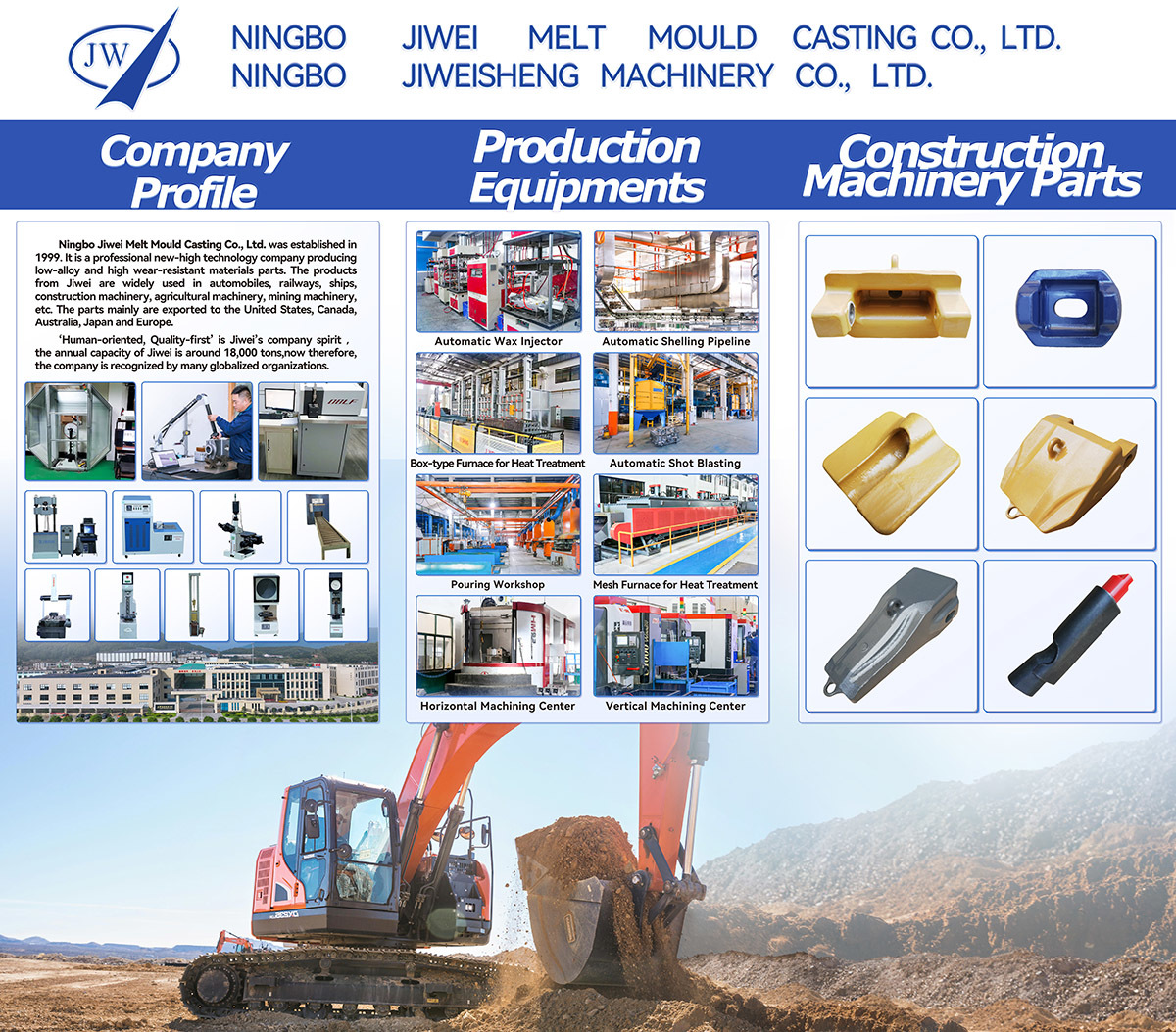
2025 Mexico Exhibition
Apr 30,2025
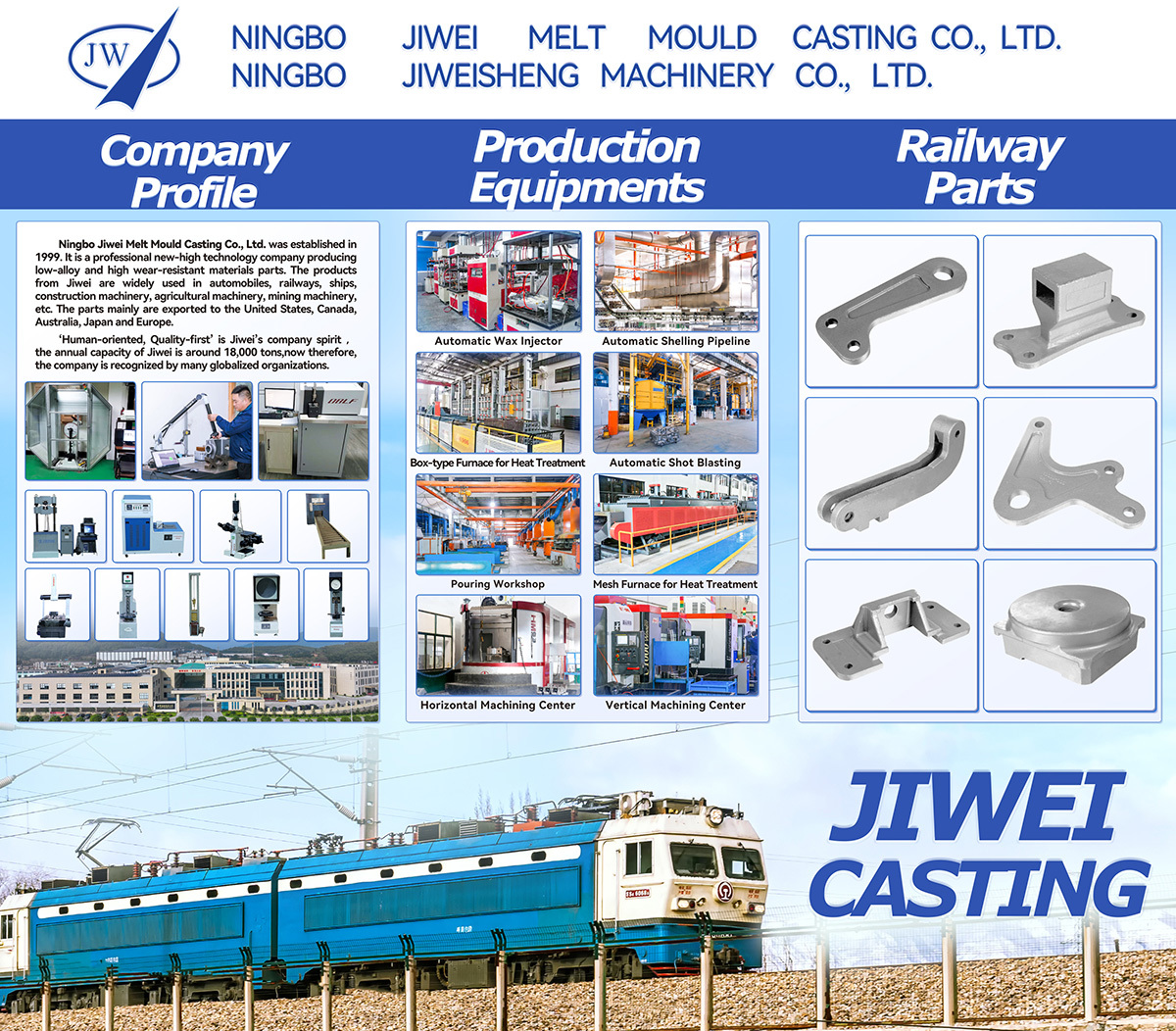
2025 American Rail Show