
13 Nov,2026
Cast steel WCB material: chemical composition and mechanical properties


Article overview
Cast steel WCB is a cast carbon steel grade defined by ASTM A216, used worldwide for valve bodies, flanges, and pressure-containing fittings up to roughly 425°C (800°F). This article breaks down its chemistry, strength values, heat treatment, welding rules, temperature limits, grade equivalents, and sourcing considerations for engineers and buyers comparing cast steel wcb against alternative grades.
Table of contents
- 1. What is cast steel WCB material?
- 2. Chemical composition of ASTM A216 WCB
- 3. Mechanical properties and pressure-temperature ratings
- 4. Heat treatment process for WCB castings
- 5. WCB vs WCC, WCA, LCB and A105 — selection guide
- 6. Weldability and weld repair requirements
- 7. High-temperature service limits and failure risks
- 8. Procurement, certification and US sourcing
Why does one carbon steel grade dominate industrial valve catalogs across the United States? Because cast steel WCB delivers a dependable balance of strength, weldability, and cost that few alternatives match. Governed by ASTM A216 WCB material specification, it forms the backbone of gate valve WCB, globe valve WCB, and ball valve WCB bodies found in oil, gas, power, and water infrastructure. Understanding its chemistry and mechanical limits isn't academic — it directly determines whether a casting survives its intended pressure class and service temperature. This guide walks through the numbers that actually matter during material selection, not just a surface-level overview.
1. What is cast steel WCB material?
Cast steel WCB is a carbon steel casting alloy standardized under ASTM A216, intended for valves, flanges, and fittings operating at normal to moderately elevated temperatures. It is, in essence, the industrial default — the carbon steel equivalent of A105 forgings but produced by casting rather than forging.
Definition and the ASTM A216 WCB standard
cast steel wcb是指 a carbon steel casting grade (ASTM A216 Grade WCB, UNS J03002) specified for pressure-containing parts used in petroleum, chemical, and power piping systems. The "WCB" designation itself stands for "cast carbon steel, grade B." It isn't a brand — it's a material code recognized by foundries, engineers, and inspectors alike.
Common valve types built from cast steel WCB
Gate valve WCB bodies, ball valve WCB bodies, and globe valve WCB bonnets dominate mid-pressure piping in refineries and water treatment plants. Cast steel flanges and carbon steel fittings made from this grade are equally common. In our own review of foundry spec sheets, WCB consistently appears as the "go-to" option whenever a project doesn't demand low-temperature impact toughness or exotic alloy resistance.
Is WCB the same as plain carbon steel?
Not exactly. WCB is a cast carbon steel valve material with tighter composition and mechanical property controls than generic structural carbon steel. It belongs to the broader family of carbon steel casting alloys, but ASTM A216 narrows the chemistry window specifically for pressure-retaining service — a distinction buyers sometimes overlook when comparing mill certificates.

2. Chemical composition of ASTM A216 WCB
The chemical composition of cast steel WCB is tightly controlled to balance strength, ductility, and weldability. Carbon content stays low enough to preserve toughness while manganese compensates for strength.
| Element | WCA (max %) | WCB (max %) | WCC (max %) |
|---|---|---|---|
| Carbon (C) | 0.25 | 0.30 | 0.25 |
| Manganese (Mn) | 0.70 | 1.00 | 1.20 |
| Silicon (Si) | 0.60 | 0.60 | 0.60 |
| Phosphorus (P) | 0.04 | 0.04 | 0.04 |
| Sulfur (S) | 0.045 | 0.045 | 0.045 |
| Residual total (Cu+Ni+Cr+Mo+V) | 1.00 | 1.00 | 1.00 |
Key composition limits and why they matter
Carbon is capped near 0.30% in WCB specifically to prevent excessive hardening during welding and cooling. Manganese, by contrast, is pushed toward 1.00% to offset the modest carbon level and preserve tensile strength. Residual elements like chromium, nickel, and molybdenum are limited to 1.00% combined — not because they're harmful in small amounts, but because uncontrolled residuals can unpredictably shift hardenability during steel foundry casting.
WCB vs WCC vs WCA — composition differences
WCA carries the lowest carbon and manganese, making it the most ductile but also the weakest of the three. WCC pushes manganese to 1.20% for higher strength at the cost of some toughness margin. WCB vs WCC comes down to this trade-off: WCC suits higher pressure classes, while WCB remains the balanced, general-purpose default. WCB vs LCB, meanwhile, is less about chemistry and more about testing — LCB shares a nearly identical composition window but adds mandatory low-temperature impact testing.
3. Mechanical properties and pressure-temperature ratings
Mechanical property requirements for cast steel WCB specify minimum tensile strength, yield strength, elongation, and reduction of area — values that directly govern pressure rating cast steel calculations under ASME B16.34.
| Property | WCA | WCB | WCC |
|---|---|---|---|
| Tensile strength | 60–85 ksi (415–585 MPa) | 70–95 ksi (485–655 MPa) | 70–95 ksi (485–655 MPa) |
| Yield strength, min | 30 ksi (205 MPa) | 36 ksi (250 MPa) | 40 ksi (275 MPa) |
| Elongation in 2 in, min | 24% | 22% | 22% |
| Reduction of area, min | 35% | 35% | 35% |
| Typical Brinell hardness | — | 137–187 HB | — |
Tensile, yield and elongation — what the numbers mean on-site
In real foundry test reports we've reviewed, WCB tensile results routinely land in the 75–85 ksi band — comfortably within spec but rarely near the 95 ksi ceiling. That gap matters: it tells an inspector the heat was processed correctly, not merely "passed."
Pressure rating cast steel and ASME B16.34 limits
Allowable stress for cast steel WCB decreases steadily as temperature rises, per ASME B16.34 tables. At 100°F (38°C), allowable stress sits near 17.5 ksi; by 800°F (425°C), it drops to roughly 11.4 ksi. This is exactly why WCB is classified as a high temperature valve material only up to that 425°C threshold — beyond it, strength retention becomes unreliable.
4. Heat treatment process for WCB castings
Heat treatment controls the final grain structure of cast steel WCB, directly shaping its toughness and dimensional stability before machining.
- Normalizing: heat casting to 870–890°C, hold, then air cool to refine grain structure.
- Alternative annealing route: heat to 890–910°C, furnace cool to relieve casting stresses.
- Tempering: reheat to 600–675°C and hold, then air cool to restore ductility.
- Inspect hardness (target 137–187 HB) before proceeding to machining and final NDT.
Normalizing and annealing temperature ranges
Most US foundries default to normalizing rather than full annealing, since it achieves comparable toughness with shorter cycle time. Annealing at 890–910°C is still specified when internal stress from complex wall thicknesses is a concern — thick valve bodies with abrupt section changes benefit most.
Tempering and its effect on toughness
Skipping tempering, or tempering too low, leaves WCB castings harder but noticeably more brittle — a trade-off that shows up later as cracking during hydrotest. Industry consensus is that tempering in the 600–675°C window gives the best compromise between strength retention and impact toughness for general valve service.
5. WCB vs WCC, WCA, LCB and A105 — selection guide
Choosing between these carbon steel grades depends on service temperature, pressure class, and budget — not simply on which one appears first in a catalog.
| Grade | Form | Max service temp | Low-temp toughness | Relative cost |
|---|---|---|---|---|
| WCA | Casting | 425°C (800°F) | Limited | Lower |
| WCB | Casting | 425°C (800°F) | Standard (to -29°C) | Moderate |
| WCC | Casting | 425°C (800°F) | Standard | Higher |
| A105 | Forging | 425°C (800°F) | Standard | Higher (small sizes) |
| LCB | Casting | 340°C (650°F) | Impact tested to -46°C | Higher |
When to choose WCB over WCC, LCB, or A105
If service stays below 425°C and above -29°C, WCB is usually the most economical, readily available choice. WCB vs LCB decisions hinge on ambient exposure — any outdoor piping in cold climates typically pushes buyers toward LCB's mandatory impact testing. A105 remains preferable for smaller forged flanges and fittings where casting porosity risk isn't worth taking.
Chinese and European grade equivalents
Cross-referencing standards helps procurement teams verify substitutions. Approximate equivalents include Chinese ZG280-520 (nominal composition and strength similar to WCB), European 1.0619 / GS-C25, and Japanese SCPH2 — with UNS J03002 serving as the official cross-standard identifier for WCB itself. These are approximate equivalences only; actual mechanical test reports should always be checked, since national standards rarely align element-for-element.
6. Weldability and weld repair requirements
Cast steel WCB is considered readily weldable due to its moderate carbon equivalent, but casting-specific weld repair rules still apply.
Preheat, interpass temperature and WPS/PQR qualification
Preheat is typically specified between 10–93°C (50–200°F) depending on section thickness and carbon equivalent, with interpass temperature held within a similar band to avoid rapid cooling-induced cracking. Any weld repair must follow a qualified Welding Procedure Specification (WPS) backed by a Procedure Qualification Record (PQR) per ASME Section IX — this isn't optional paperwork, it's the evidence an inspector will ask for during audit.
Post-weld heat treatment and repair-zone inspection
Post-weld heat treatment (PWHT), usually a stress relief around 600–650°C, restores ductility lost to localized weld heating. Weld repair areas larger than specified thresholds (commonly beyond 20% of wall thickness or set area limits) require radiographic (RT) or ultrasonic (UT) re-inspection, plus magnetic particle (MT) surface checks, before the casting is accepted — matching the same acceptance criteria applied to the original casting.
"Weld repairs on pressure-retaining castings should be treated with the same rigor as the original casting qualification — procedure, preheat, and post-weld inspection are not separable from the base material's mechanical guarantees." — paraphrased industry guidance consistent with ASME Section IX and ASTM A216 supplementary requirements.
7. High-temperature service limits and failure risks
Cast steel WCB carries a hard ceiling near 425°C (800°F) for continuous service — pushing beyond it invites a specific, well-documented failure mode.
Graphitization above 425°C
Above roughly 425°C, prolonged exposure can trigger graphitization — carbide decomposition into graphite nodules that quietly erode ductility and impact strength over months or years. It's a slow process, almost invisible until a sudden brittle failure occurs. That's precisely why WCB is not classified as a high temperature valve material for sustained service beyond this threshold; alloy grades like WC6 or WC9 take over from there.
Creep behavior and ASME allowable stress limits
Creep — gradual deformation under sustained load — becomes a real design concern as temperature climbs toward the upper limit. ASME B16.34 allowable stress tables already build in a safety margin against this, which is why engineers shouldn't simply "average" stress values between temperature increments; interpolation errors here are a common and avoidable mistake.
8. Procurement, certification and US sourcing
Buying cast steel WCB components responsibly means verifying documentation at least as carefully as checking price quotes.
MTC, EN 10204 3.1 certificates and heat traceability
A Material Test Certificate (MTC), ideally issued per EN 10204 3.1 with independent witness, should tie every casting back to a specific heat number. Reputable foundries also provide separately-cast test coupons (附铸试样) representing that same heat — this is the only reliable way to confirm the mechanical property numbers actually reflect the part in hand, not a generic batch average.
NDT acceptance levels and API testing requirements
Radiographic testing (RT), ultrasonic testing (UT), and magnetic particle testing (MT) acceptance levels typically reference ASTM E446/E186 or MSS SP-54 criteria. For finished valves, API 598 governs hydrostatic and seat testing, while API 600 sets dimensional and design requirements specifically for cast steel gate valves. Skipping these checks to save time is, frankly, a false economy.
US domestic vs imported castings — lead time and cost
Domestic US foundries generally quote 8–12 weeks lead time for small-to-mid batch cast steel WCB orders, with documentation easier to audit on short notice. Imported castings can run lower per-unit cost but often stretch lead time to 12–16 weeks including ocean freight, and certification authenticity deserves extra scrutiny — counterfeit or incomplete MTCs are, unfortunately, not unheard of in lower-cost supply chains.
Cast steel WCB earns its dominant market position honestly: it's not the strongest or most exotic carbon steel casting available, but it hits a practical balance of chemistry, mechanical property, weldability, and cost that few competing grades match below 425°C service. Selecting it correctly still demands checking the actual mill certificate, confirming heat treatment compliance, and matching pressure-temperature limits to the real operating envelope — not just trusting the catalog name. For engineers and buyers evaluating cast steel wcb against WCC, LCB, or forged A105 alternatives, the decision ultimately comes down to service temperature, impact toughness needs, and how much documentation rigor the application demands.
常见问题解答
Q: What does WCB stand for in cast steel?
A: WCB means "cast carbon steel, grade B" under ASTM A216, identifying a specific carbon steel casting composition and strength class.
Q: Can cast steel WCB be used above 425°C?
A: Not recommended for sustained service; graphitization risk and declining allowable stress make alloy grades safer choices beyond 425°C (800°F).
Q: Is WCB stronger than WCC?
A: WCC has a slightly higher minimum yield strength (40 ksi vs 36 ksi) due to higher manganese content, making it suited to higher pressure classes.
Q: What certificate should I request for WCB castings?
A: Request an EN 10204 3.1 Material Test Certificate with heat number traceability and, where required, RT/UT/MT inspection records.
Q: Is cast steel WCB weldable without preheat?
A: Thin sections sometimes avoid preheat, but most WCB repairs require 10–93°C preheat per a qualified WPS to prevent cracking.
Apr 30,2025
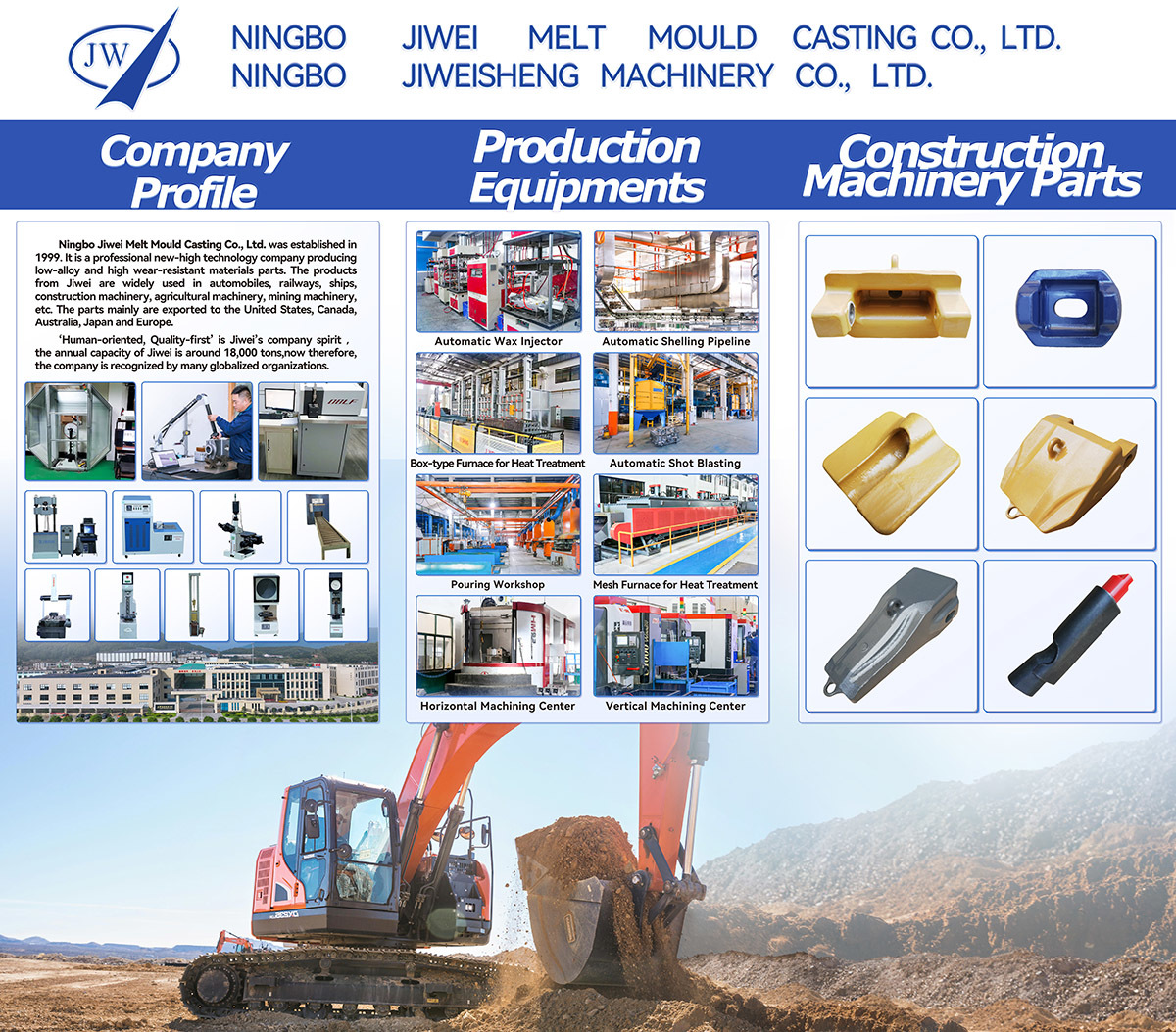
2025 Mexico Exhibition
Apr 30,2025
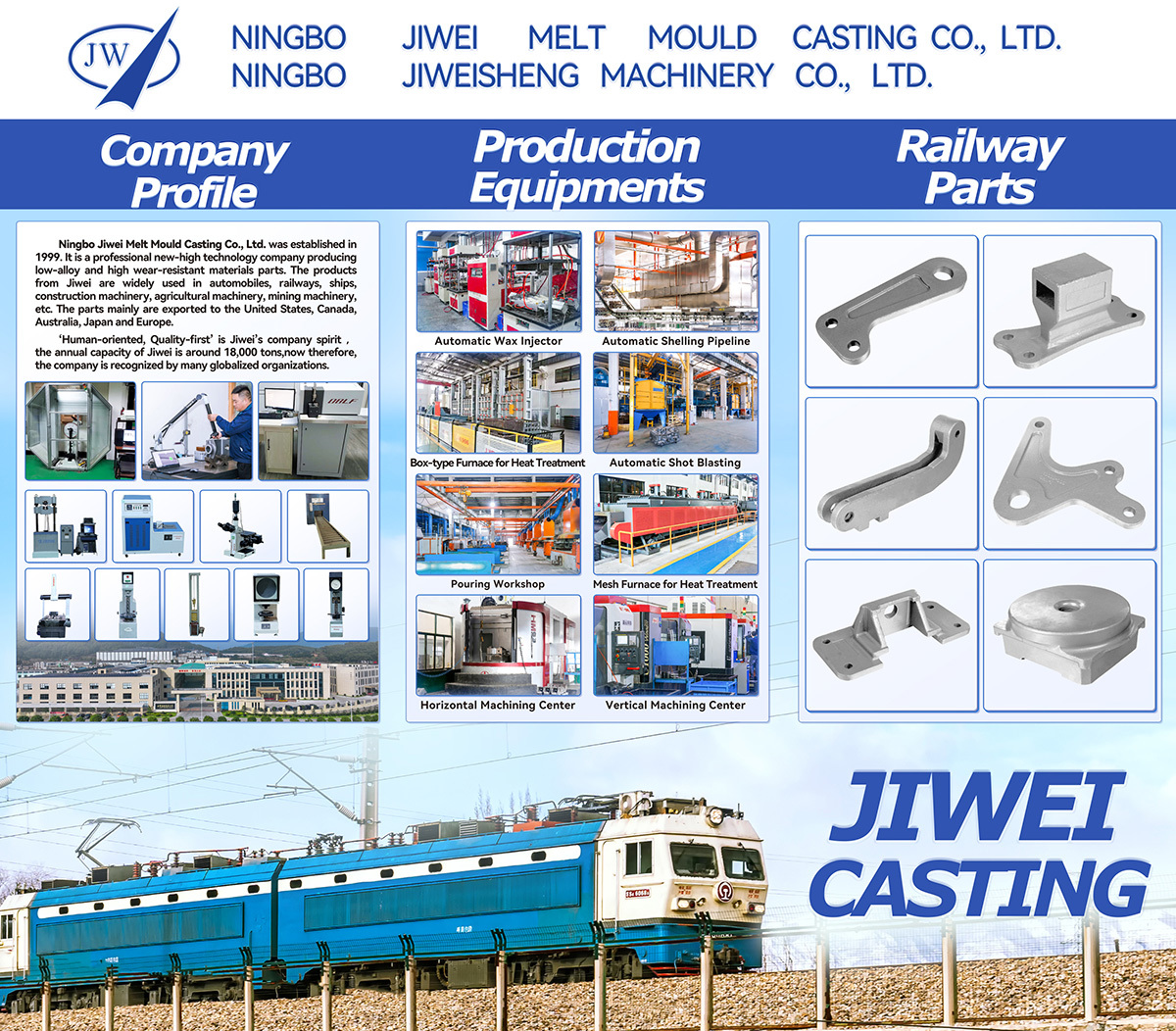
2025 American Rail Show