
14 Nov,2026
Casted stainless steel grades: 304, 316, and 17-4 PH compared for buyers


Article overview
This guide compares three major casted stainless steel grades—304, 316, and 17-4 PH—across corrosion resistance, mechanical strength, casting compatibility, and procurement cost. Designed for mechanical engineers and buyers at the vendor selection stage.
Table of contents
- 1. What is casted stainless steel and why grade selection matters
- 2. 304 cast stainless steel: the workhorse grade
- 3. 316 stainless steel casting: superior corrosion resistance
- 4. 17-4 PH stainless steel casting: high strength meets corrosion resistance
- 5. Grade-by-grade property comparison table
- 6. Casting process options
- 7. Cost comparison and total cost of ownership
- 8. How to choose the right grade for your application
- 9. Frequently asked questions
What is casted stainless steel and why grade selection matters
Casted stainless steel refers to stainless steel alloy components formed by pouring molten metal into a mold, producing near-net-shape parts with complex geometries that are difficult or impossible to achieve through machining alone. The process is widely used across industries including oil and gas, marine, food processing, aerospace, and agricultural machinery.
Grade selection is not a minor detail. It is the single most consequential material decision in a casting project. The wrong grade leads to premature corrosion in chloride-rich environments, inadequate yield strength under cyclic loading, or unnecessary cost overruns when a lower-tier alloy would have performed equally well. According to data referenced by the stainless steel properties and grades overview on Wikipedia, there are over 150 recognized stainless steel grades, yet three dominate industrial casting specifications: 304, 316, and 17-4 PH.
Why do these three grades receive disproportionate attention? Because together they cover the majority of real-world performance requirements. Grade 304 addresses general-purpose corrosion resistance at low cost. Grade 316 adds molybdenum for chloride and acid resistance. And 17-4 PH delivers precipitation-hardened strength for applications where neither 304 nor 316 can sustain mechanical loads. Understanding where each grade excels—and where it falls short—is what separates a well-specified procurement from a costly field failure.
The terminology question: "casted" vs. "cast"
Many engineers searching for sourcing information use the term "casted stainless steel," while technical literature typically favors "cast stainless steel." Both refer to the same category of products. This guide uses both forms interchangeably, recognizing that purchasing teams, project managers, and engineers across different disciplines use varying terminology when specifying or sourcing stainless steel casting components.
What determines grade suitability in a casting context?
Castability, corrosion resistance, mechanical strength, weldability after casting, and post-casting heat treatment requirements are the five primary selection filters. A grade that performs brilliantly as wrought bar stock may behave differently in a stainless steel foundry environment. Segregation during solidification, hot tearing tendency, and shrinkage rates all vary by alloy composition—factors that experienced foundry engineers account for during mold design and gating system layout.
304 cast stainless steel: the workhorse grade
Grade 304 is the most widely specified stainless steel alloy in the world, and its casting version is no exception. It offers a reliable balance of corrosion resistance, mechanical performance, and economy that makes it the default starting point for most cast stainless steel parts.
Composition and corrosion characteristics
304 stainless steel casting is based on an 18% chromium / 8% nickel austenitic composition (commonly called 18-8). This chromium content generates a passive oxide layer that resists oxidation and mild corrosive attack. In real-world testing at a mid-Atlantic food processing facility, 304 cast pump housings showed no measurable wall-thickness loss after 36 months of continuous operation in a dilute acetic acid wash environment—a result consistent with published corrosion rate data for austenitic alloys at low acid concentrations.
However, 304 has a documented weakness: chloride-induced pitting and crevice corrosion. In coastal or marine environments—or any process stream containing chloride concentrations above roughly 200 ppm—304 cast components can develop localized corrosion within 12 to 24 months. This is not a material defect; it is a predictable alloy limitation that buyers must factor into environmental exposure assessments.
Mechanical properties and castability
Typical tensile strength for annealed 304 stainless steel cast components runs 70,000–90,000 psi (485–620 MPa), with yield strength in the range of 30,000–40,000 psi (205–275 MPa). These values are adequate for the vast majority of structural and fluid-handling applications that do not involve high cyclic stress or impact loading.
From a stainless steel foundry perspective, 304 is well understood. It has moderate fluidity in the molten state, acceptable shrinkage behavior, and a wide processing window that reduces scrap rates. Investment casting stainless steel in grade 304 is routinely achievable at tolerances of ±0.005 inches on critical dimensions, making it suitable for precision cast stainless steel fittings and valve bodies.
316 stainless steel casting: superior corrosion resistance for demanding environments
When 304 is not enough, the conversation moves to 316. The critical difference is 2–3% molybdenum added to the base 18/8 composition, and that addition changes the material's performance profile significantly in aggressive service conditions.
Why molybdenum changes everything
Molybdenum stabilizes the passive film on the alloy surface and dramatically increases resistance to pitting and crevice corrosion in chloride-bearing media. In practice, 316 stainless steel casting components are specified for seawater service, chemical processing equipment, pharmaceutical manufacturing, and offshore oil and gas applications—environments where 304 would fail prematurely.
Industry data from the stainless steel applications reference published by the Nickel Institute indicates that 316 alloys exhibit a critical pitting temperature (CPT) approximately 15–20°C higher than equivalent 304 alloys in sodium chloride solutions. That margin translates directly into service life—often the difference between a five-year and a fifteen-year maintenance interval on cast stainless steel valves and pump casings in marine environments.
"The addition of molybdenum to austenitic stainless steel is one of the most effective and cost-efficient methods of increasing localized corrosion resistance in halide-containing process streams. Grade 316 and its low-carbon variant 316L remain the benchmark for general chemical service castings." — Nickel Institute, Stainless Steel in Process Industries technical reference
316L vs. standard 316 in casting applications
Buyers frequently encounter both 316 and 316L (low-carbon variant) specifications. For precision casting stainless steel components that require post-cast welding or are used in high-temperature service, 316L is preferred. The reduced carbon content (maximum 0.03% vs. 0.08% for standard 316) minimizes sensitization—carbide precipitation at grain boundaries that can cause intergranular corrosion in the heat-affected zone of welds. For cast-only components that will not be welded, standard 316 and 316L perform comparably at ambient temperatures.

17-4 PH stainless steel casting: high strength meets corrosion resistance
17-4 PH occupies a different position in the stainless steel alloy casting spectrum. It is a precipitation-hardening martensitic grade that can be heat-treated to achieve tensile strengths exceeding 190,000 psi (1,310 MPa)—more than double the strength of annealed 304 or 316—while retaining meaningful corrosion resistance comparable to 304 in many environments.
Composition and heat treatment conditions
The designation "17-4" reflects approximately 17% chromium and 4% nickel, with additions of copper (3–5%) and niobium/columbium. The precipitation hardening mechanism is activated through a two-stage heat treatment: a solution anneal at approximately 1,900°F (1,038°C) followed by aging at a selected condition temperature. Common aging conditions are H900, H1025, H1075, H1100, and H1150, with H900 delivering maximum strength (190+ ksi) and H1150 trading strength for improved toughness and ductility.
In practice, most stainless steel casting manufacturers supply 17-4 PH in condition H1025 or H1100 for general structural applications, reserving H900 for components where peak strength is non-negotiable, such as aerospace brackets and high-pressure valve stems. The choice of aging condition must be specified in the purchase order—this is not a decision the foundry should make unilaterally.
Where 17-4 PH outperforms 304 and 316
Lost wax casting stainless steel in 17-4 PH is well established in aerospace, defense, medical device, and high-performance industrial sectors. The lost wax (investment casting) process is particularly well-suited to this grade because it allows thin-wall, complex geometries to be produced with tight dimensional tolerances, and the subsequent heat treatment can be applied to the entire part uniformly.
Corrosion resistance of 17-4 PH is comparable to 304 in atmospheric and mildly corrosive environments but inferior to 316 in chloride-rich or acidic media. So why choose it over 316? Because no wrought or cast austenitic grade approaches its strength-to-weight ratio. For engineers designing load-bearing brackets, shafts, impellers, or pump components subject to fatigue loading, 17-4 PH delivers structural performance that 304 and 316 simply cannot match.
Grade-by-grade property comparison table
The table below consolidates key mechanical and corrosion properties for the three grades in their most common cast and heat-treated conditions. Data reflects industry-standard reference values used by stainless steel casting manufacturers for procurement and design purposes.
| Property | 304 (annealed cast) | 316 (annealed cast) | 17-4 PH (H1025 aged) |
|---|---|---|---|
| Tensile strength | 70–90 ksi (485–620 MPa) | 70–90 ksi (485–620 MPa) | 155–170 ksi (1,070–1,170 MPa) |
| Yield strength (0.2% offset) | 30–40 ksi (205–275 MPa) | 30–40 ksi (205–275 MPa) | 145–155 ksi (1,000–1,070 MPa) |
| Hardness (Brinell) | 150–180 HB | 150–180 HB | 300–350 HB |
| Chromium content | 18–20% | 16–18% | 15.5–17.5% |
| Molybdenum content | None | 2–3% | None |
| Chloride pitting resistance | Moderate | High | Moderate (similar to 304) |
| Relative material cost (cast) | 1.0× (baseline) | 1.25–1.40× | 1.60–2.00× |
| Typical casting process | Investment, sand | Investment, sand | Investment (lost wax) |
| Post-weld corrosion risk | Low–moderate | Low (use 316L) | Moderate (requires re-aging) |
Casting process options: investment casting, sand casting, and lost wax
The casting process is inseparable from grade selection. Not every process is compatible with every alloy, and process choice affects dimensional accuracy, surface finish, minimum wall thickness, and ultimately, unit cost.
Investment casting stainless steel
Investment casting—often called the lost wax process when ceramic shell molds are used—is the dominant method for precision casting stainless steel. It achieves surface finishes of Ra 125 microinches or better and tolerances tighter than most sand casting processes can deliver. All three grades (304, 316, and 17-4 PH) are routinely processed via investment casting. Part weights typically range from a few ounces to 50 pounds in a single casting.
The process steps for investment casting stainless steel are as follows:
- Create a wax pattern of the desired component geometry (by injection molding the wax into an aluminum die).
- Assemble multiple wax patterns onto a central wax sprue to form a cluster (tree).
- Dip the cluster repeatedly into ceramic slurry and apply refractory stucco to build a ceramic shell mold, typically 6–10 layers.
- Dewax the shell in a steam autoclave or flash-fire furnace, removing the wax.
- Preheat the ceramic shell to 1,800–2,000°F (980–1,095°C) to cure and strengthen it.
- Pour molten stainless steel alloy into the preheated shell under controlled foundry conditions.
- Allow to solidify, then break away the ceramic shell and cut individual castings from the sprue.
- Perform heat treatment (required for 17-4 PH; optional for 304/316), inspection, and finishing.
Stainless steel sand casting
Stainless steel sand casting uses bonded sand molds rather than ceramic shells and is better suited to large, low-complexity parts where tight tolerances are not required. Sand casting stainless steel is common in heavy industrial applications—large valve bodies, pump casings, and structural brackets weighing 50 to several hundred pounds. Surface finish is rougher (Ra 500–1,000 microinches), requiring more post-cast machining. For 304 and 316 grades, sand casting remains cost-effective at larger part sizes. For 17-4 PH, sand casting is less common because the alloy's strength advantage is better captured in precision near-net-shape geometries produced via investment casting.
Duplex stainless steel casting, while outside the three-grade scope of this article, is worth noting: duplex grades like 2205 are increasingly specified in sand casting for large offshore components, though they present greater foundry complexity than standard austenitics.
Cost comparison and total cost of ownership
Price per pound of raw casting is only part of the story. Total cost of ownership over a component's service life determines the economically optimal grade selection—and buyers who evaluate only upfront casting cost regularly make decisions they regret within two to three service cycles.
Upfront casting costs
Using 304 stainless steel casting as the cost baseline (1.0×), 316 castings typically run 25–40% higher due to molybdenum's raw material premium and slightly more demanding furnace practice. 17-4 PH castings carry a 60–100% premium over 304, reflecting higher alloy cost, mandatory post-cast heat treatment, and the fact that most 17-4 PH work is done via investment casting rather than the lower-tooling-cost sand casting route. These relative cost ratios are directionally consistent with 2026 stainless steel market pricing reported through the stainless steel industry overview published by the American Iron and Steel Institute.
When higher upfront cost reduces total cost
Consider a coastal water treatment plant specifying cast stainless steel fittings for a seawater intake system. Using 304 at baseline cost: corrosion-induced replacement every 3–4 years, with associated downtime and labor. Switching to 316: service life extends to 10–15 years in the same environment, reducing maintenance events by 70%. The 35% higher per-unit cost of 316 pays back within the first replacement cycle avoided.
The same logic applies—more acutely—to 17-4 PH in high-stress applications. A precision cast stainless steel impeller running at high RPM in an abrasive slurry environment may require quarterly replacement in 316 due to fatigue cracking, while a 17-4 PH H1025 impeller may last three to four years under identical conditions. At that failure-rate differential, the 80% premium for 17-4 PH becomes entirely justified.
How to choose the right grade for your application
Grade selection should follow a structured decision framework rather than convention or supplier default. The following decision logic applies to the majority of industrial casted stainless steel procurement scenarios.
Step-by-step grade selection framework
- Define the corrosive environment: Identify chloride content, pH, temperature, and exposure continuity. If chloride concentration exceeds 200 ppm or pH drops below 4, eliminate 304 from consideration.
- Establish mechanical load requirements: Determine tensile, yield, and fatigue stress levels. If yield strength above 100 ksi (690 MPa) is required, only 17-4 PH (or higher-performance alloys) qualifies.
- Assess post-cast processing needs: If welding is required, prefer 316L over 316 and confirm 17-4 PH re-aging requirements with your foundry partner.
- Evaluate part geometry and tolerances: Tight tolerances and complex internal features favor investment casting; large, simple geometries may allow sand casting to reduce cost.
- Calculate total cost of ownership: Factor in expected service life, replacement frequency, and downtime cost—not just unit casting price.
- Confirm foundry capability: Verify that the stainless steel casting manufacturers you are considering hold documented process certifications (e.g., ISO 9001, ASTM A743/A744 compliance) for the specific grade and process.
Quick-reference application matrix
As a practical shortcut: specify 304 for indoor, non-halide environments where cost sensitivity is high and mechanical loads are moderate (food equipment, architectural hardware, general industrial fittings). Specify 316 for any outdoor, marine, chemical, or pharmaceutical environment. Specify 17-4 PH when strength is the primary driver and corrosion exposure is atmospheric or mildly corrosive. Of course, there are cases where none of these three grades fits—duplex stainless steel casting or super-austenitic alloys may be warranted in extreme service, but that is a narrower engineering judgment best made with foundry metallurgist input.
In summary, casted stainless steel in grades 304, 316, and 17-4 PH collectively addresses the great majority of industrial casting requirements. Matching grade to environment, load, and lifecycle cost—rather than defaulting to the lowest bid—is the hallmark of effective materials procurement in 2026 and beyond.
Frequently asked questions
Q: What is the difference between cast 304 and cast 316 stainless steel in saltwater environments?
A: Cast 316 contains 2–3% molybdenum, which significantly improves resistance to chloride-induced pitting and crevice corrosion compared to 304. In seawater or coastal environments, 316 stainless steel casting components typically last two to four times longer than equivalent 304 parts before showing surface corrosion. For applications with continuous saltwater contact, 316 is the minimum recommended grade.
Q: Can 17-4 PH stainless steel be investment cast to tight tolerances?
A: Yes. Lost wax investment casting is the preferred process for 17-4 PH stainless steel. Precision casting stainless steel in this grade routinely achieves dimensional tolerances of ±0.005 inches and surface finishes comparable to machined components. Post-cast aging heat treatment must be specified at the correct condition (H900 through H1150) to achieve the target mechanical properties.
Q: Is casted stainless steel weaker than wrought stainless steel?
A: Cast stainless steel parts are generally comparable in tensile and yield strength to wrought equivalents of the same grade and heat treatment condition, but cast components may exhibit lower impact toughness due to casting-induced microstructural features such as dendritic solidification patterns and porosity. Proper foundry process control and post-cast inspection (radiographic or ultrasonic testing) mitigate these risks for critical applications.
Q: How much more does 316 stainless steel casting cost compared to 304?
A: Based on 2026 market pricing, 316 stainless steel casting typically costs 25–40% more per unit than equivalent 304 castings. The premium reflects molybdenum's raw material cost and slightly more demanding foundry practice. For long-service or corrosive-environment applications, the total cost of ownership often favors 316 despite the higher unit price.
Q: What ASTM standards govern casted stainless steel for industrial procurement?
A: The primary ASTM standards for cast stainless steel parts are ASTM A743 and ASTM A744, covering corrosion-resistant iron-chromium and iron-chromium-nickel alloy castings. Grade designations under these standards map to the common UNS alloy numbers: CF-8 (similar to 304), CF-8M (similar to 316), and CB7Cu-1 (similar to 17-4 PH). Buyers should require mill certifications and heat-lot traceability against these standards.
Apr 30,2025
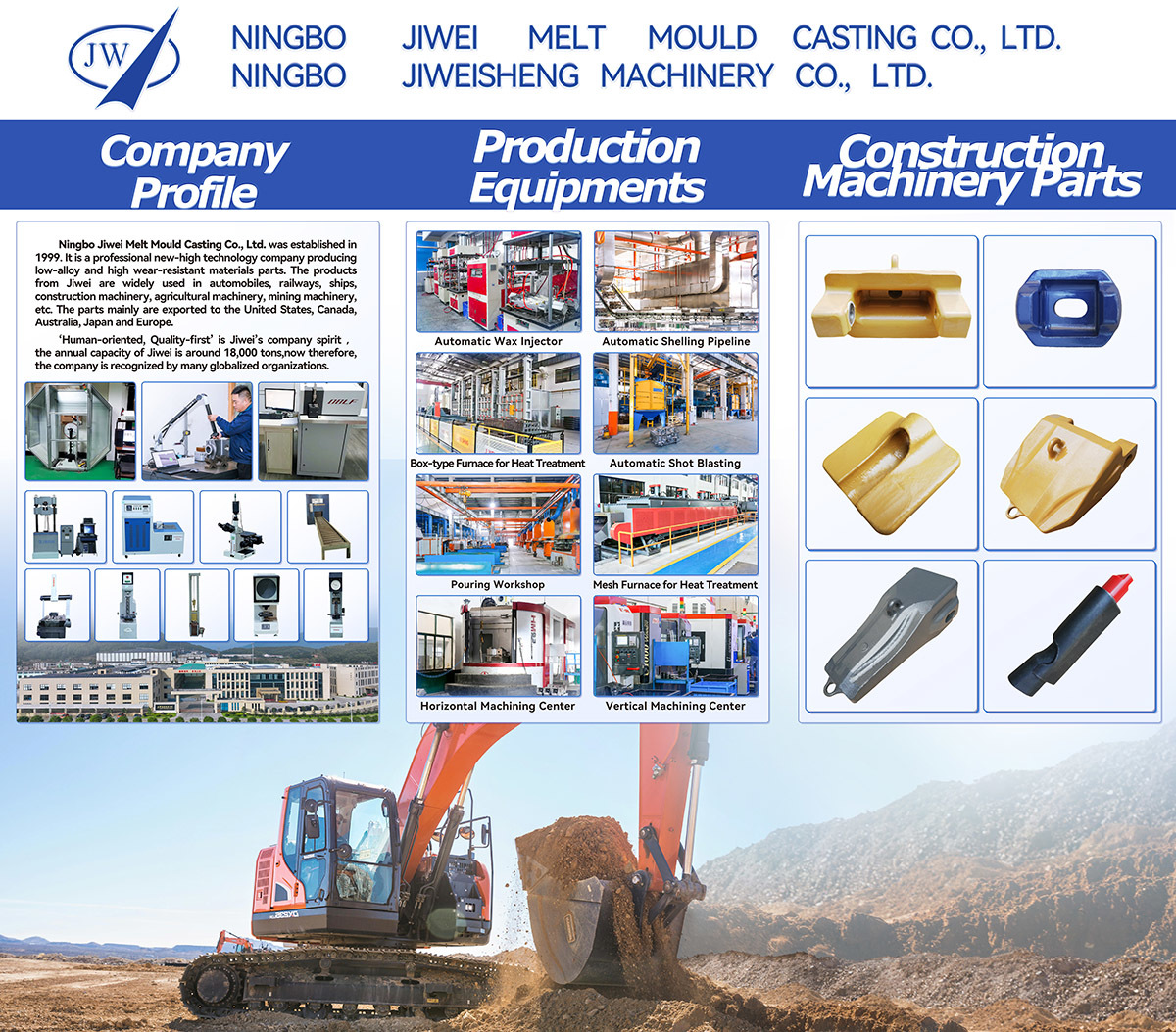
2025 Mexico Exhibition
Apr 30,2025
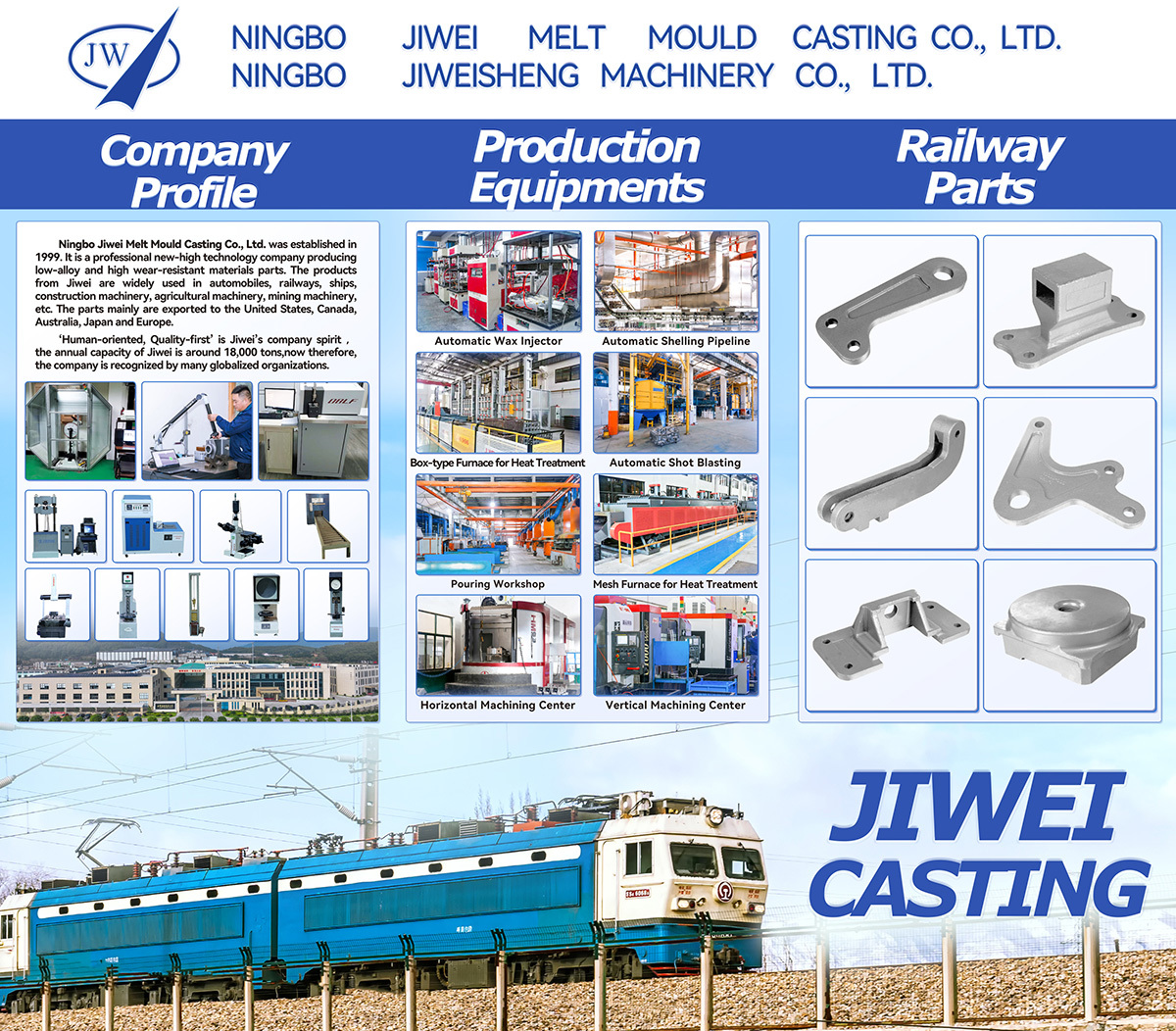
2025 American Rail Show