
21 Nov,2026
China casting factory red flags: warning signs every procurement manager should recognize


Article overview
This article helps procurement managers and sourcing engineers identify the most critical warning signs when evaluating suppliers in China's stainless steel casting industry. It covers total cost traps, certification fraud, documentation gaps, casting defects, factory identity risks, and a practical supplier scoring checklist — all grounded in 2026 market realities.
Table of contents
- 1. What is a china stainless steel casting parts factory — and why red flags matter
- 2. Red flag #1: Pricing that ignores total landed cost
- 3. Red flag #2: Certification claims that don't hold up
- 4. Red flag #3: No verifiable quality documentation
- 5. Red flag #4: Process capability gaps and common casting defects
- 6. Red flag #5: Factory identity confusion — trader vs. real manufacturer
- 7. Red flag #6: Communication, lead time, and compliance failures
- 8. How to score and select a supplier: audit checklist and scorecard
- 9. Frequently asked questions
What is a china stainless steel casting parts factory — and why red flags matter
A china stainless steel casting parts factory is a manufacturing facility that produces 304, 316, duplex, or precipitation-hardening stainless steel cast components — using processes such as lost wax investment casting, sand casting, or centrifugal casting — primarily for OEM export markets. These factories range from small workshops with a single induction furnace to large ISO-certified foundries running silicon sol investment casting lines for aerospace and marine clients.
The global stainless steel castings market was valued at approximately $20.97 billion in 2024 and is projected to reach $37.21 billion by 2035, growing at a CAGR of 5.35% (Market Research Future, 2026). China accounts for a substantial share of that supply base. For American procurement managers, that scale is both an opportunity and a minefield.
Why do red flags matter so acutely here? Because the gap between a well-run stainless steel investment casting manufacturer and a low-grade operation is not always visible in a catalog or a quotation. Defects like internal porosity, shrinkage cavities, and incorrect alloy chemistry can pass initial visual inspection only to cause field failures worth multiples of the original part cost. A valve body casting that fails in a chemical plant, or a pump impeller casting that corrodes after six months in a marine environment — these are not theoretical risks. They are recurring outcomes when due diligence is skipped.
This guide systematically identifies the warning signs. Each section gives you a direct answer to a specific risk category, followed by supporting data and actionable criteria you can apply before placing your next order.
Red flag #1: Pricing that ignores total landed cost
The single most common trap in bulk stainless steel parts sourcing is confusing ex-factory price with what you will actually pay after the goods land at your dock. A supplier quoting $3.80/kg for a 316 stainless steel valve body casting sounds attractive — until you add import duties, freight, and compliance costs that can more than double that figure.
The 2026 tariff reality for U.S. buyers
As of 2026, U.S. importers sourcing from China face a layered tariff burden. Section 232 steel and aluminum tariffs stand at 50%, and Section 301 List 3/4 surcharges add another 7.5–25% depending on HTS classification. For stainless steel cast parts, the relevant HTS codes typically fall under Chapter 73 (articles of iron or steel) or Chapter 84/85 for assembled components. A procurement manager who receives only an FOB Ningbo price is working with an incomplete picture.
| Grade / weight range | Typical FOB unit price (USD/kg) | Est. tooling (USD) | MOQ (pcs) | Est. DDP landed cost (USD/kg) |
|---|---|---|---|---|
| 304 / <0.5 kg | $4.20–$5.80 | $800–$2,000 | 200–500 | $9.50–$13.50 |
| 316 / 0.5–5 kg | $5.50–$8.00 | $1,500–$4,500 | 100–300 | $12.00–$18.50 |
| CF8M / 5–20 kg | $6.80–$9.50 | $3,000–$8,000 | 50–150 | $15.00–$22.00 |
| 17-4PH / any weight | $9.00–$14.00 | $4,000–$10,000 | 50–100 | $20.00–$32.00 |
| 2205 duplex / any weight | $10.50–$16.00 | $5,000–$12,000 | 30–80 | $24.00–$37.00 |
Note: DDP estimates include Section 232 (50%) + Section 301 (7.5–25%) tariffs, ocean LCL freight, marine insurance, and standard customs brokerage fees. Figures are indicative ranges based on 2026 market conditions; actual costs vary by HTS classification and shipment terms.
What to ask before accepting any quote
Always request a DDP (Delivered Duty Paid) breakdown, not just an FOB price. Ask the supplier to confirm the HTS code they intend to use on the commercial invoice — misclassification is a compliance risk that can trigger CBP penalties. If the supplier cannot or will not provide this, treat it as a red flag. LCL (less-than-container-load) consolidation is often the most cost-effective shipping mode for mid-volume orders of industrial casting parts wholesale; ask whether the factory has a freight consolidation partner near a major export hub like Ningbo, Shanghai, or Tianjin.
Red flag #2: Certification claims that don't hold up
Certification logos on a supplier's website mean nothing without verification. This is not a hypothetical concern — procurement teams regularly discover that the ISO 9001 or PED certificate displayed in a brochure expired two years ago, was issued to a different legal entity, or covers a scope that excludes the specific casting process being quoted.
How to verify an ISO certified casting manufacturer
- Request the full certificate PDF, not a logo or scan. Check the issuing body, certificate number, scope description, and expiry date.
- Go directly to the certification body's online registry (e.g., BSI, Bureau Veritas, TÜV) and search the certificate number independently.
- Confirm the scope covers the specific process — silicon sol investment casting, sand casting, or CNC machined cast components — not just generic "manufacturing."
- For food-grade stainless steel casting (FDA 21 CFR, 3-A Sanitary Standards) or marine grade cast stainless parts (ABS, DNV, Lloyd's Register), request the specific third-party type approval documents, not ISO alone.
- For ASTM stainless steel castings (A351/A743/A744), verify that the foundry has ASTM-compliant chemical composition and mechanical property test reports from an accredited lab — not self-issued documents.
"The most dangerous supplier is not the one with no certifications — it's the one with expired or misrepresented certifications, because they signal a culture of compliance theater rather than genuine quality discipline." — Based on assessments conducted by third-party foundry auditors, as reported in industry quality management reviews, 2025.
Which certifications actually matter by application
Not every application requires the same certification stack. A stainless steel pump impeller casting for a water treatment plant has different compliance needs than a stainless steel valve body casting destined for an oil-and-gas pressure boundary. Know which standards apply to your end use before evaluating suppliers — otherwise you may accept a certificate that is technically valid but entirely irrelevant to your specification.

Red flag #3: No verifiable quality documentation
A precision casting components supplier that cannot produce a complete documentation package before shipment is not a supplier — it is a risk. The documentation issue is where more deals unravel than any other single factor, and it is entirely preventable if you define requirements contractually at the RFQ stage.
The minimum documentation package for stainless steel castings
Based on actual cases observed in 2026 procurement audits, the following documents should be treated as non-negotiable for any shipment of ASTM stainless steel castings or custom metal casting fabrication destined for the U.S. market:
- Material test certificate (MTC / Mill cert): Chemical composition (C, Si, Mn, P, S, Cr, Ni, Mo at minimum) and mechanical properties (UTS, yield strength, elongation, hardness), traceable to heat number.
- Dimensional inspection report: Key dimensions verified against drawing revision, with actual measured values — not just "pass/fail" stamps.
- Non-destructive testing (NDT) reports: Radiographic testing (RT), ultrasonic testing (UT), or liquid penetrant testing (PT) results, depending on the criticality class specified.
- Visual and surface finish report: Photographs of representative parts from each heat, plus roughness measurement if Ra is specified.
- Heat treatment records: Time-temperature charts for solution annealing or age hardening (applicable to 17-4PH and duplex grades).
Why do so many suppliers fail here? Often it is not inability — it is habit. Factories accustomed to domestic Chinese customers who do not demand documentation simply never built those systems. Asking for the full documentation package in writing, before order placement, filters these suppliers out quickly. It also signals to capable foundries that you are a serious, long-term customer worth prioritizing.
Third-party inspection: when and how to use it
For orders above roughly $15,000 in value, or for safety-critical parts, engage a third-party inspection agency (SGS, Bureau Veritas, Intertek) to conduct pre-shipment inspection at the factory. The cost — typically $300–$600 per inspection day — is negligible relative to the cost of receiving a non-conforming shipment. Instruct the inspector to pull samples for independent chemical analysis at an accredited lab; this is the only way to definitively verify that a part labeled "316L" actually meets the ASTM A351 CF3M chemistry specification and is not a downgraded 304 substitution.
Red flag #4: Process capability gaps and common casting defects
Choosing the wrong casting process for a given part geometry and volume is a red flag in itself — and it often signals that a supplier is quoting beyond their actual capability. Each process has distinct cost, tolerance, and batch-size characteristics that must align with your application.
Process comparison: investment casting vs. sand casting vs. water glass
| Process | Typical tolerance (mm) | Surface finish (Ra, µm) | Economic batch size | Relative unit cost |
|---|---|---|---|---|
| Silicon sol investment casting (lost wax) | ±0.10–0.25 | 1.6–6.3 | 100–10,000+ | High |
| Water glass investment casting | ±0.30–0.50 | 6.3–12.5 | 50–5,000 | Medium |
| Sand casting | ±0.80–2.00 | 12.5–25 | 1–500 | Low |
The investment casting process — particularly silicon sol (silica sol) — delivers the tightest dimensional tolerances and best surface finish of any gravity casting route. It is the preferred method for stainless steel foundry OEM production of complex geometries like impeller blades, valve internals, and turbine components. Water glass investment casting is cheaper but yields rougher surfaces and looser tolerances; it is acceptable for simpler geometries where post-machining is planned. Sand casting suits low-volume, large, or simple shapes where dimensional precision is less critical.
The defects that factories don't volunteer to tell you about
Porosity and shrinkage cavities are the two most prevalent defects in stainless steel castings. Porosity — gas bubbles trapped during solidification — typically appears as internal voids detectable only by RT or UT. Shrinkage cavities form at the last-to-solidify regions of a casting and can compromise structural integrity. Both defects can be minimized through proper gating design, feeding system optimization, and controlled pouring temperature — which is precisely where lower-tier foundries cut corners. Ask any candidate supplier: do they use simulation software (e.g., Magmasoft, ProCAST) for solidification analysis during DFM? A factory that answers "no" for medium-to-complex parts is accepting defect risk by default.
Red flag #5: Factory identity confusion — trader vs. real manufacturer
This is perhaps the most underappreciated red flag in bulk stainless steel parts sourcing. A significant portion of Chinese "factories" listed on B2B platforms are trading companies or intermediaries — sometimes with their own workshop, often without. The distinction matters enormously for quality control, lead time reliability, and pricing transparency.
How to distinguish a real stainless steel foundry from a trading company
Start with business license verification. In China, manufacturers hold a "生产许可证" (production license) and their business scope explicitly includes manufacturing. Request the company's unified social credit code and verify it through the National Enterprise Credit Information Publicity System. A trading company's license typically lists "wholesale" or "trade" as its primary scope. This is not fraud — trading companies serve a legitimate role — but you need to know whom you are contracting with and where the parts are actually made.
Beyond the license, look for these indicators of a genuine lost wax casting factory in China:
- Furnace capacity and type documented (induction furnace size, number of units, annual tonnage)
- In-house spectrometer for alloy verification (PMI testing capability)
- Wax injection room and investment shell-making area visible in factory photos or video tours
- In-house heat treatment furnace (critical for 17-4PH and 2205 duplex)
- CNC machining capability for CNC machined cast components, or a documented sub-contractor with traceable quality records
In 2026, digital factory audits via live video walk-throughs are increasingly standard. If a supplier refuses a live video audit or consistently reschedules it, that is a clear red flag. Legitimate manufacturers welcome the transparency — it differentiates them from competitors.
Why "cheap" sometimes signals subcontracting risk
Just like a general contractor who bids low by planning to subcontract all the skilled work, a trading company quoting below market rates is often planning to source from the lowest-cost foundry available at the time of your order — not a vetted, consistent partner. Batch-to-batch consistency in stainless steel properties depends heavily on process control at a fixed production facility. When the actual foundry changes order to order, so does your quality baseline.
Red flag #6: Communication, lead time, and compliance failures
Operational red flags are quieter than quality red flags, but they compound over time into serious supply chain disruptions. Procurement managers who have worked with multiple China casting factory partners over several years consistently identify three operational failure patterns that signal deeper problems.
Communication patterns that predict downstream problems
A supplier that takes more than 48 hours to respond to a technical RFQ, provides templated answers that do not address your specific drawing notes, or cannot name the specific alloy standard (ASTM, EN, GB) their material conforms to — these are not minor inconveniences. They reveal the absence of an application engineering capability. For custom metal casting fabrication, technical alignment at the quoting stage is the only way to prevent costly design-for-manufacturability (DFM) iterations after tooling is cut.
When was the last time you audited your supplier's production schedule visibility? Many procurement managers discover, only when a shipment is delayed, that their supplier has no MRP system and no way to give them meaningful lead time updates. Ask upfront: what is your production planning system, and how do you communicate schedule changes? The answer is revealing.
Environmental and social compliance — an emerging risk
By 2026, U.S. importers face increasing ESG audit requirements from their own customers and financial institutions. A china stainless steel casting parts factory that cannot provide environmental permits, wastewater treatment records, or basic social compliance documentation (working hours, wage records) is becoming a supply chain liability — not just an ethical concern. This is worth including in your initial supplier questionnaire, before it becomes a problem in a customer audit.
How to score and select a supplier: audit checklist and scorecard
The most effective way to apply everything covered in this guide is a structured supplier scoring framework. Use this before shortlisting any precision casting components supplier for your approved vendor list.
Supplier evaluation scorecard
| Evaluation category | Key criteria | Max score | Disqualifier threshold |
|---|---|---|---|
| Legal identity & factory verification | Production license confirmed, live video audit completed | 20 | <12 = disqualify |
| Certifications (valid & in-scope) | ISO 9001 current; application-specific certs verified | 20 | <10 = disqualify |
| Documentation capability | MTC, dimensional report, NDT reports provided on request | 20 | <14 = disqualify |
| Process capability & DFM | Simulation software used; defect history disclosed | 20 | <10 = flag for review |
| Commercial transparency | DDP breakdown provided; HTS code confirmed | 10 | <6 = flag for review |
| Operational & ESG compliance | Lead time visibility, environmental permits available | 10 | <6 = flag for review |
The dual-source strategy in 2026
Given the ongoing tariff uncertainty and logistics volatility affecting China-based supply chains, an increasing number of U.S. procurement teams are adopting a "China + Mexico" or "China + Vietnam" dual-source model for industrial casting parts wholesale. This is not about abandoning China's manufacturing depth — it is about risk mitigation. The practical approach is to qualify a primary Chinese supplier for cost-sensitive, technically complex parts (where China's foundry ecosystem has genuine advantages), while qualifying a near-shore or Southeast Asian secondary supplier for smaller volumes or delivery-critical components. Of course, there are situations where a single well-audited Chinese foundry partner remains the most practical solution — particularly for very specialized alloys or geometries where alternative supply is thin.
Frequently asked questions
Q: How can I verify that a China casting factory is a real manufacturer and not a trading company?
A: Request the supplier's unified social credit code and verify their business scope on China's National Enterprise Credit Information Publicity System. Confirm that their license lists manufacturing (not just trade) as the primary activity, and conduct a live video walk-through of their foundry to visually confirm furnaces, shell-making areas, and in-house testing equipment.
Q: What is the total import cost for stainless steel cast parts from China to the U.S. in 2026?
A: U.S. buyers face Section 232 tariffs (50%) plus Section 301 surcharges (7.5–25%) on top of the FOB price, plus ocean freight, insurance, and brokerage. For most grades, total DDP landed cost runs approximately 2.2–2.8× the ex-factory price. Always request a full DDP breakdown and confirm the HTS classification before finalizing any sourcing decision.
Q: What quality documents should I require from a stainless steel investment casting manufacturer?
A: At minimum, require a material test certificate (MTC) traceable to heat number, dimensional inspection report with actual measured values, NDT reports (RT/UT/PT as applicable), and heat treatment records for precipitation-hardening or duplex grades. For food-grade or marine applications, additionally require the relevant third-party type approval documentation.
Q: What are the most common defects in Chinese stainless steel castings, and how are they prevented?
A: Porosity (gas bubbles) and shrinkage cavities are the two most prevalent defects. They are minimized through proper gating and feeding system design, controlled pouring temperature, and solidification simulation software during DFM. Ask suppliers directly whether they use simulation tools; factories that do not are accepting avoidable defect risk.
Q: When should I choose silicon sol investment casting over water glass or sand casting for my parts?
A: Choose silicon sol investment casting when your part requires tolerances tighter than ±0.30 mm, a surface finish better than Ra 6.3 µm, or complex internal geometry that cannot be easily machined. Water glass casting suits simpler geometries with planned post-machining. Sand casting is best for low-volume, large, or simple shapes where dimensional precision is secondary to cost.
Summary: Identifying red flags in a china stainless steel casting parts factory requires systematic evaluation across six dimensions: total landed cost transparency, certification validity, documentation completeness, process capability, factory identity, and operational compliance. Procurement managers who apply a structured audit approach — combined with third-party inspection and clear contractual documentation requirements — consistently achieve better quality outcomes, fewer shipment delays, and stronger long-term supplier relationships than those who evaluate on price alone.
Apr 30,2025
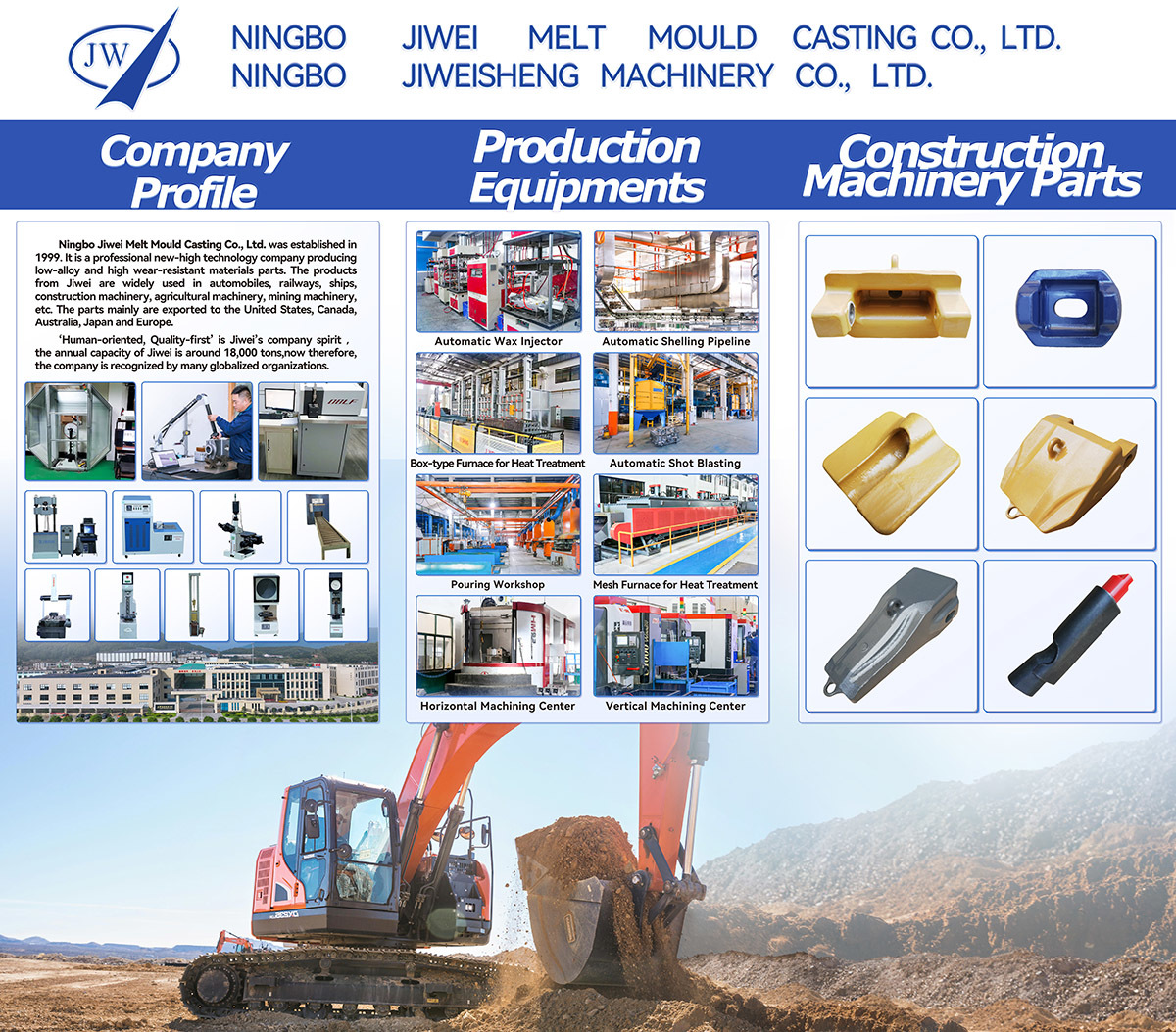
2025 Mexico Exhibition
Apr 30,2025
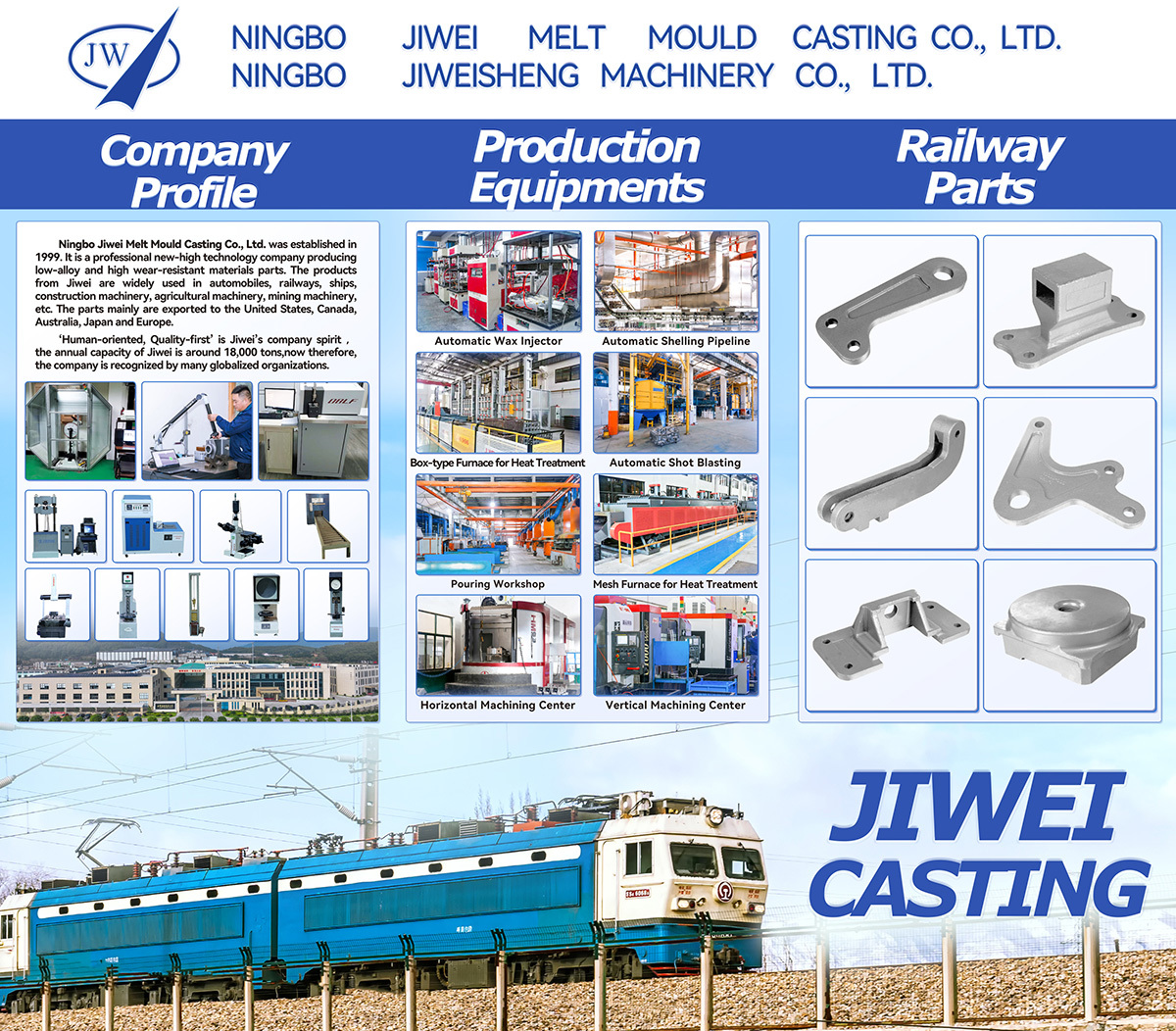
2025 American Rail Show