
22 Nov,2026
China stainless steel precision casting certifications: ISO, PED & ASTM explained


Article overview
This guide explains the three certification frameworks — ISO, PED, and ASTM — that govern China stainless steel precision casting exports to the US market. It covers standard requirements, verification steps, real cost data, and 2026 regulatory updates so procurement engineers can qualify suppliers with confidence.
Table of contents
- 1. What certifications matter for China stainless steel precision casting?
- 2. ISO 9001 and ISO 13485: quality management in Chinese foundries
- 3. PED 2014/68/EU: when does it apply to stainless steel castings?
- 4. ASTM standards for stainless steel investment casting
- 5. How to verify supplier certifications: a step-by-step process
- 6. Total landed cost for US buyers: beyond the unit price
- 7. 2026 trends shaping the precision casting certification landscape
- 8. Frequently asked questions
What certifications matter for China stainless steel precision casting?
China stainless steel precision casting refers to the production of dimensionally accurate, near-net-shape stainless steel components — primarily through the lost wax investment casting process — in Chinese foundries certified to internationally recognized quality and material standards. For US buyers, three frameworks dominate the conversation: ISO quality management standards, the EU Pressure Equipment Directive (PED), and ASTM material specifications.
Why do certifications matter so much in this category? Because the gap between a casting that looks correct and one that performs correctly under pressure, corrosion, or cyclic load can be invisible to the naked eye. A stainless steel casting supplier may deliver parts that pass a simple dimensional check but fail spectacularly under ASTM A351 Grade CF8M tensile requirements — the kind of failure that triggers product liability claims, not just re-orders.
The three certification layers serve different purposes. ISO 9001 governs the process — does the foundry have documented, repeatable quality controls? PED governs the application — if the casting ends up inside pressure-bearing equipment sold in Europe, specific conformity requirements apply. ASTM governs the material — does the alloy chemistry and mechanical performance meet published engineering specifications? A precision metal casting manufacturer targeting US industrial buyers typically needs all three working in concert.
Why US buyers often overlook PED compliance
Many American procurement teams focus exclusively on ISO and ASTM, assuming PED is a European concern. In practice, a significant share of stainless steel investment casting produced in China is dual-routed — components destined for US OEM assemblies that are subsequently exported to EU end customers. If your downstream customer sells into Germany or France, PED compliance at the casting level is not optional. Discovering this mid-production is expensive. The smart move is to establish PED traceability requirements upfront, even if your immediate ship-to address is in Ohio.
The difference between certification and consistent quality
Here is a point the industry underemphasizes: holding ISO 9001 does not guarantee batch-to-batch dimensional stability. Real-world audits of Chinese foundries — including factories producing 304 stainless steel precision parts and 316 stainless steel casting for valve bodies — reveal that porosity rates, surface finish variation, and spectral composition drift are the most common nonconformances, regardless of ISO status. Certification sets a baseline. It does not replace incoming inspection on critical components.

ISO 9001 and ISO 13485: quality management in Chinese foundries
ISO 9001:2015 is the foundational quality management system (QMS) certification for any stainless steel casting manufacturer China operation targeting international markets. It defines requirements for process documentation, corrective action, management review, and continual improvement — not product specifications. ISO 13485:2016 is the medical-device variant and applies when custom stainless steel parts are destined for surgical instruments, implant housings, or diagnostic equipment.
What ISO 9001 actually requires at a casting foundry
At a stainless steel foundry in China, ISO 9001 certification means the facility must maintain documented wax injection parameters, shell-building layer counts, dewaxing and burnout cycle records, heat number traceability to raw material certificates, and dimensional inspection reports per drawing revision. The standard mandates that nonconforming castings are identified, quarantined, and dispositioned — not quietly reworked and shipped. During a 2025 supplier audit of a silica-sol investment casting facility in Ningbo, the audit team found that corrective actions for porosity were systematically documented but lacked root-cause verification steps. This is a common gap: the paperwork exists, the fix does not always stick.
How to read a Chinese foundry's ISO certificate
When a stainless steel casting supplier presents an ISO 9001 certificate, check four things immediately. First, confirm the issuing body is accredited by IAF (International Accreditation Forum) — look for the IAF MLA mark on the certificate. Second, verify the certificate scope covers casting production, not just administrative operations. Third, confirm the expiry date and that a surveillance audit was completed within the last 12 months. Fourth, cross-check the certificate number on the certifying body's public registry. Certificates issued by non-IAF-accredited bodies — a genuinely common practice among smaller Chinese foundries — carry limited commercial weight with US tier-1 manufacturers.
"ISO 9001 certification should be treated as a minimum entry requirement, not a differentiator. The foundries that consistently deliver precision cast alloy components within CT5 tolerances are the ones that invest in process engineering beyond the standard's baseline requirements." — Industry consensus among US procurement engineers sourcing from Asian foundries, 2026.
PED 2014/68/EU: when does it apply to stainless steel castings?
The EU Pressure Equipment Directive 2014/68/EU applies when industrial stainless steel components — including valve bodies, pump housings, and pipeline fittings produced via lost wax casting stainless steel processes — are incorporated into pressure equipment with a maximum allowable pressure above 0.5 bar and sold within the European Economic Area. It does not apply to the casting itself in isolation; it applies when the casting becomes part of a pressure-bearing assembly.
Category I through IV: what level applies to your casting?
PED classifies equipment into four risk categories based on fluid type (gas vs. liquid), hazard group, pressure, and volume. A 316L stainless steel casting used as a steam valve body in a Category III assembly requires a Notified Body (NB) to issue an EU Declaration of Conformity with full material traceability — including mill certificates, casting procedure qualifications, and NDE (non-destructive examination) reports. For US OEM manufacturers supplying European end-users, the practical implication is that the Chinese stainless steel casting supplier must be able to provide EN 10204 Type 3.1 material certificates, not just generic mill reports. Many suppliers offer Type 2.2 by default; upgrading to 3.1 requires pre-agreement and usually adds 3–5% to the unit cost.
Material approval under PED: European material standards vs. ASTM
PED mandates that pressure-bearing materials either conform to harmonized European standards (EN 10213 for steel castings) or receive a specific Particular Material Appraisal (PMA) from a Notified Body. This creates a friction point: most Chinese foundries quote against ASTM A351 or ASTM A743 by default, since the US market dominates their order book. If your application is PED-governed, the foundry must demonstrate equivalency or obtain PMA approval — a process that typically takes 8–16 weeks and costs $3,000–$8,000 per alloy grade. Plan for this during the product development phase, not after first article inspection.
ASTM standards for stainless steel investment casting
ASTM International publishes the material specifications that US engineers write directly into drawing notes and purchase orders for OEM metal casting services. For stainless steel investment casting, four standards are most frequently invoked.
| ASTM standard | Alloy grades covered | Key requirements | Typical application |
|---|---|---|---|
| ASTM A351 | CF8, CF8M, CF3M | Tensile, yield, elongation, hardness, hydrostatic test | Valves, flanges, pump bodies |
| ASTM A743 | CA-6NM, CF-8, CN-7M | Chemistry limits, tensile properties, corrosion resistance | General corrosion-resistant castings |
| ASTM A744 | CF-8C, CN-7M | Severe corrosion service, intergranular corrosion test | Chemical processing, marine |
| ASTM A890 | 4A, 5A, 6A (duplex) | Ferrite content, pitting resistance, impact at −40°F | Offshore, subsea, desalination |
How Chinese foundries certify to ASTM
Compliance with ASTM standards requires the stainless steel foundry China to perform heat analysis (chemistry) and product analysis (finished casting) for each heat lot, conduct mechanical testing on representative test bars cast from the same heat, and issue a certified material test report (CMTR) signed by a qualified metallurgist. For CNC machined castings where post-casting machining alters surface geometry, the CMTR must accompany the casting, not the machined part. Buyers should require that CMTRs reference the specific heat number, casting order number, and test bar casting date — a triad that enables genuine traceability. Reports listing only grade designations without heat numbers are not ASTM-compliant, regardless of what a supplier claims.
Stainless steel casting tolerances under ASTM
ASTM itself does not define dimensional tolerances for investment castings — that function belongs to the Investment Casting Institute (ICI) tolerance standards and, ultimately, the engineering drawing. What ASTM governs is material performance. Stainless steel casting tolerances in Chinese precision foundries typically follow CT4 to CT6 per ISO 8062 for investment cast parts before machining, achieving linear tolerances of ±0.3 mm to ±0.8 mm on dimensions up to 100 mm. For tighter requirements, CNC machined castings bring critical features to IT7 or better. Understanding this two-stage tolerance reality prevents specification mismatches that cause rejection at incoming inspection.
How to verify supplier certifications: a step-by-step process
Verifying that a precision metal casting manufacturer genuinely holds the certifications it claims takes roughly two to three hours of focused desk research — time that eliminates months of downstream quality problems. The following process is used by experienced US sourcing engineers when qualifying a new stainless steel casting supplier for critical applications.
- Request the full certificate, not a logo. Ask for a PDF of the ISO 9001 certificate showing the issuing body's name, accreditation mark, certificate number, scope, issue date, and expiry date.
- Verify on the certifying body's public registry. Major IAF-accredited bodies — Bureau Veritas, TÜV Rheinland, SGS, DNV — maintain searchable online registries. Enter the certificate number and confirm it matches the foundry's legal entity name, not a parent company.
- Check accreditation status of the certifying body. Visit the IAF CertSearch database (iaf.nu) or the specific national accreditation body (CNAS in China) to confirm the certifier itself is accredited for casting-scope audits.
- Request surveillance audit dates. ISO 9001 requires annual surveillance audits between three-year re-certification cycles. A foundry unable to provide the date of its last surveillance audit is a red flag.
- For ASTM compliance, request sample CMTRs from recent production. Review for heat number, chemistry results against the specified grade's table, and mechanical test results with actual values — not just "passes."
- For PED-applicable components, request the EU Declaration of Conformity and Notified Body number. Cross-reference the NB number on the European Commission's NANDO database to confirm active designation.
- Conduct a virtual or in-person factory audit. No document review replaces seeing the foundry's shell room, dewaxing equipment, spectrometer, and CMM coordinate measuring machine. A 316 stainless steel casting operation capable of CT5 tolerances will have dedicated shell-building climate control and a calibrated CMM with current calibration stickers.
Of course, there are situations where a thorough audit is not possible before the first sample order. In those cases, requiring third-party inspection at the source — through SGS, Intertek, or Bureau Veritas — adds a credible checkpoint without requiring travel.
Common red flags in supplier certification claims
Watch for certificates issued by bodies with names that sound authoritative but are not IAF-accredited. Watch also for ISO scope statements that read "management consulting services" rather than "manufacturing of precision castings." And be cautious when a supplier presents a PED CE marking certificate for the casting itself — CE marking attaches to the assembly, not the casting component. A foundry claiming its castings carry CE marking is either confused about the directive or deliberately misleading you.
Total landed cost for US buyers: beyond the unit price
The most persistent gap in competitor content around china stainless steel precision casting is a frank discussion of landed costs. Unit price from a Chinese stainless steel foundry is only the starting point. For US procurement teams building a business case, the following cost components must be modeled.
Tooling, unit price, and MOQ reality
Investment casting tooling (wax injection dies) for a moderately complex stainless steel component typically costs $800–$3,500 per tool at a Chinese foundry, depending on part complexity and cavity count. This is a one-time cost amortized over production volume. Unit prices for 316L stainless steel casting components in the 50–500 gram range run approximately $4–$18 per piece at quantities of 500–2,000 pieces per order, based on 2026 market inquiries. Minimum order quantities (MOQs) vary: most foundries set 100–300 pieces for investment castings, though some accept lower quantities for established customers. Requesting samples below MOQ typically incurs a 30–50% unit price premium.
Tariffs, duties, and Section 232 impact in 2026
This is where many sourcing models break down. As of 2026, stainless steel castings imported from China face a layered tariff structure. The base Section 301 tariff on HTS Chapter 73 steel articles is 25%. Section 232 tariffs on steel derivative products — which include precision cast components classified as steel articles — were expanded in April 2026, adding up to 50% on the full customs value of fully steel content items, with mandatory declaration of the country of melt and pour. Combined effective tariff rates for many china stainless steel precision casting product categories now reach 50–75% of the customs value. For a $10 unit price casting, the landed duty cost alone can reach $5–$7.50 per piece before freight. Any sourcing model that does not front-load this calculation is producing a fiction.
| Cost component | Typical range (2026) | Notes |
|---|---|---|
| Ex-works unit price (316L, ~200g) | $6–$18 | Varies with complexity, finish, quantity |
| Tooling (amortized per piece at 1,000 pcs) | $0.80–$3.50 | One-time die cost $800–$3,500 |
| Ocean freight (FCL, per piece estimate) | $0.30–$1.20 | Depends on shipment volume and routing |
| Section 301 tariff (25%) | $1.50–$4.50 | Applied on customs value |
| Section 232 surcharge (up to 50%) | $3.00–$9.00 | Melt/pour country declaration required |
| Third-party inspection (source) | $300–$600 per visit | Amortized over shipment size |
The landed cost math forces a strategic question: does the unit-price advantage of China stainless steel precision casting still hold after full tariff loading? For many commodity-grade components — simple flanges, brackets, pipe fittings — alternative supply in India, Vietnam, or Mexico is now cost-competitive on a landed basis. For highly complex investment cast geometries requiring the deep silica-sol process expertise concentrated in China's Yangtze Delta foundry clusters, Chinese sourcing often remains the best technical and economic choice. The honest answer depends entirely on part complexity and volume.
2026 trends shaping the precision casting certification landscape
The investment casting process itself is evolving rapidly. Two technology shifts are directly affecting how Chinese foundries approach certification and quality assurance for stainless steel investment casting in 2026.
3D printed wax patterns and digital traceability
Leading Chinese foundries are replacing conventional aluminum wax dies with 3D-printed wax patterns for prototyping and low-volume runs. This reduces tooling lead time from 4–6 weeks to 5–10 days and allows geometric iterations without die re-cutting cost. From a certification standpoint, it creates a traceability question: the digital file becomes the design record, and ISO 9001 document control requirements must extend to CAD version management. Foundries that have updated their QMS to explicitly cover additive pattern production are ahead of the certification curve. Those that haven't present a document-control gap during audits.
AI visual inspection and CT6 to CT4 capability claims
AI-powered vision systems are being deployed for surface defect detection — porosity, cold shuts, misruns — at inspection rates that manual visual inspection cannot match. Several Zhejiang-based stainless steel foundries reported in 2025–2026 that AI inspection reduced escape rates for surface defects by 40–60% compared to manual methods alone. The stainless steel properties that make this alloy family attractive — corrosion resistance, strength, cleanability — also make surface integrity critical in applications like food machinery and medical devices. When evaluating a supplier's CT grade capability claims, ask specifically whether AI inspection is integrated into the production line or only used for sampling. The answer reveals a great deal about process maturity.
China+1 and dual-source strategies
The tariff environment is accelerating China+1 sourcing strategies among US industrial buyers. In practice, this means qualifying a second source in India, Vietnam, or Mexico for simpler stainless steel casting geometries while retaining Chinese suppliers for complex, tight-tolerance precision cast alloy components where the technical capability gap is real. Certification compatibility is a key factor: an Indian foundry transitioning from IS standards to ASTM compliance needs 12–18 months of process qualification. Building that parallel capability now — before a tariff shock or supply disruption forces the issue — is the strategic recommendation from US procurement consultants in 2026.
Frequently asked questions
Q: What is the difference between ISO 9001 and ASTM certification for stainless steel castings?
A: ISO 9001 certifies the foundry's quality management process — documentation, corrective actions, and continual improvement. ASTM certification (via a certified material test report) verifies that the specific casting batch meets defined alloy chemistry and mechanical performance requirements. Both are necessary for critical industrial applications; neither substitutes for the other.
Q: Does PED apply to castings exported from China to US customers?
A: PED 2014/68/EU applies when the final assembly is sold within the European Economic Area, regardless of where individual components originate. If your US assembly is subsequently exported to EU markets, PED traceability requirements — including EN 10204 Type 3.1 material certificates — apply at the casting level. Coordinate this requirement with your Chinese supplier before production begins.
Q: What tolerances can I expect from a Chinese stainless steel investment casting foundry?
A: Quality Chinese foundries achieve CT4 to CT6 per ISO 8062 for as-cast investment castings, equating to ±0.3–0.8 mm on dimensions up to 100 mm. Post-casting CNC machining of critical features can achieve IT7 or tighter. Always specify required tolerances on your engineering drawing; do not rely on verbal assurances.
Q: How do I verify that a Chinese foundry's ISO certificate is genuine?
A: Request the full certificate PDF and cross-reference the certificate number on the issuing body's public online registry. Confirm the certifying body itself carries IAF accreditation for manufacturing audits. Check that the certificate scope explicitly covers casting production — not just administrative or trading activities — and verify the most recent surveillance audit date.
Q: What is the realistic total landed cost per piece for 316L stainless steel castings from China in 2026?
A: For a ~200g 316L investment casting at 1,000-piece quantities, expect an ex-works unit price of $6–$18, plus amortized tooling, ocean freight, and combined Section 301 and Section 232 tariffs that can add $4.50–$13.50 per piece depending on HTS classification. A full landed cost model is essential — the tariff layer alone can double the effective unit cost for steel-content components.
Summary: Navigating certifications for china stainless steel precision casting requires understanding three distinct frameworks — ISO 9001 for process quality, PED for pressure equipment applications in EU markets, and ASTM for alloy and mechanical performance. Verification goes beyond accepting a certificate at face value; it requires cross-referencing accreditation bodies, reviewing actual CMTRs with heat numbers, and conducting process-level audits. Equally important in 2026 is a rigorous landed cost model that accounts for Section 232 and Section 301 tariff stacking — the difference between a competitive sourcing decision and a costly surprise at the port of entry.
Apr 30,2025
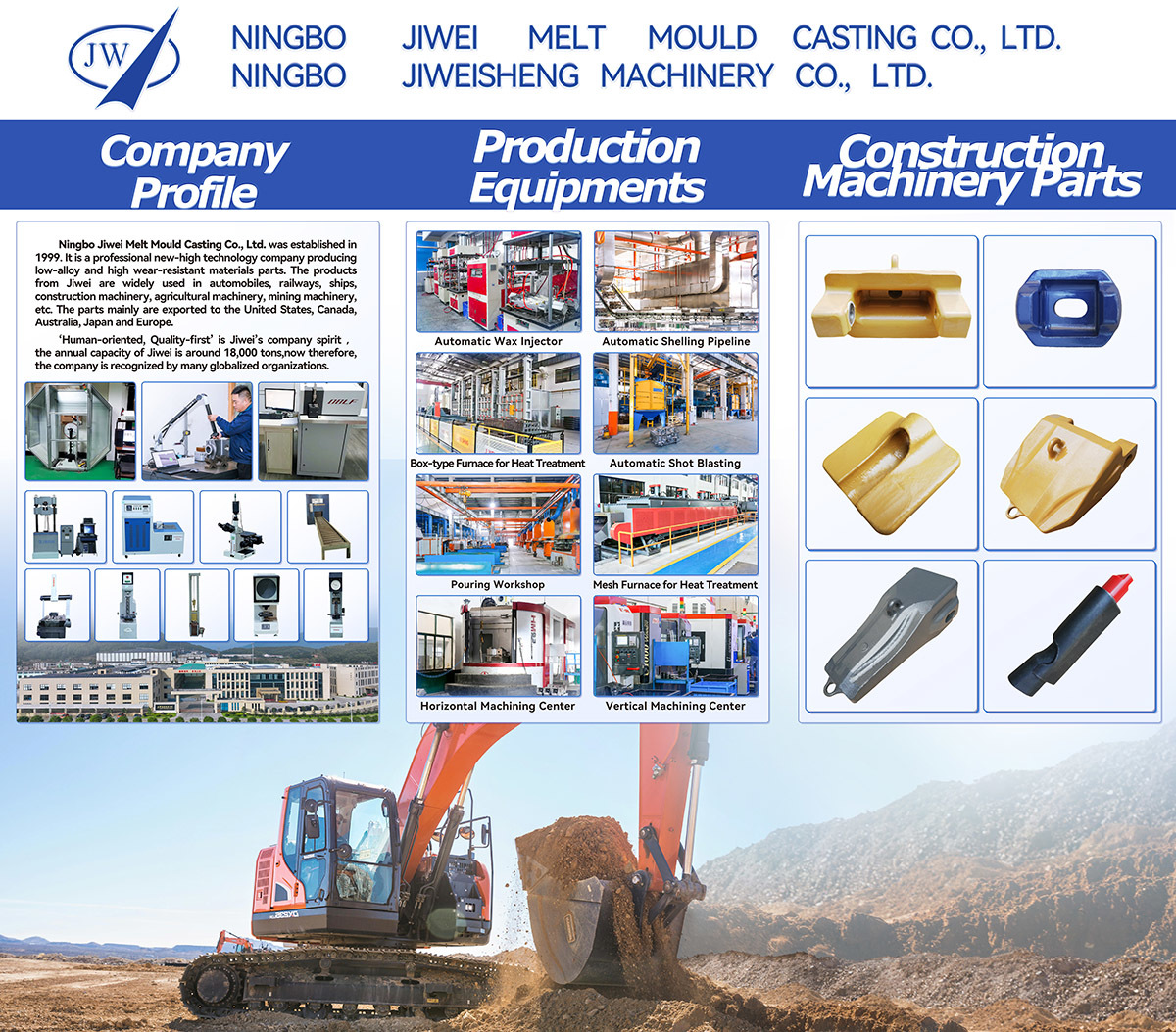
2025 Mexico Exhibition
Apr 30,2025
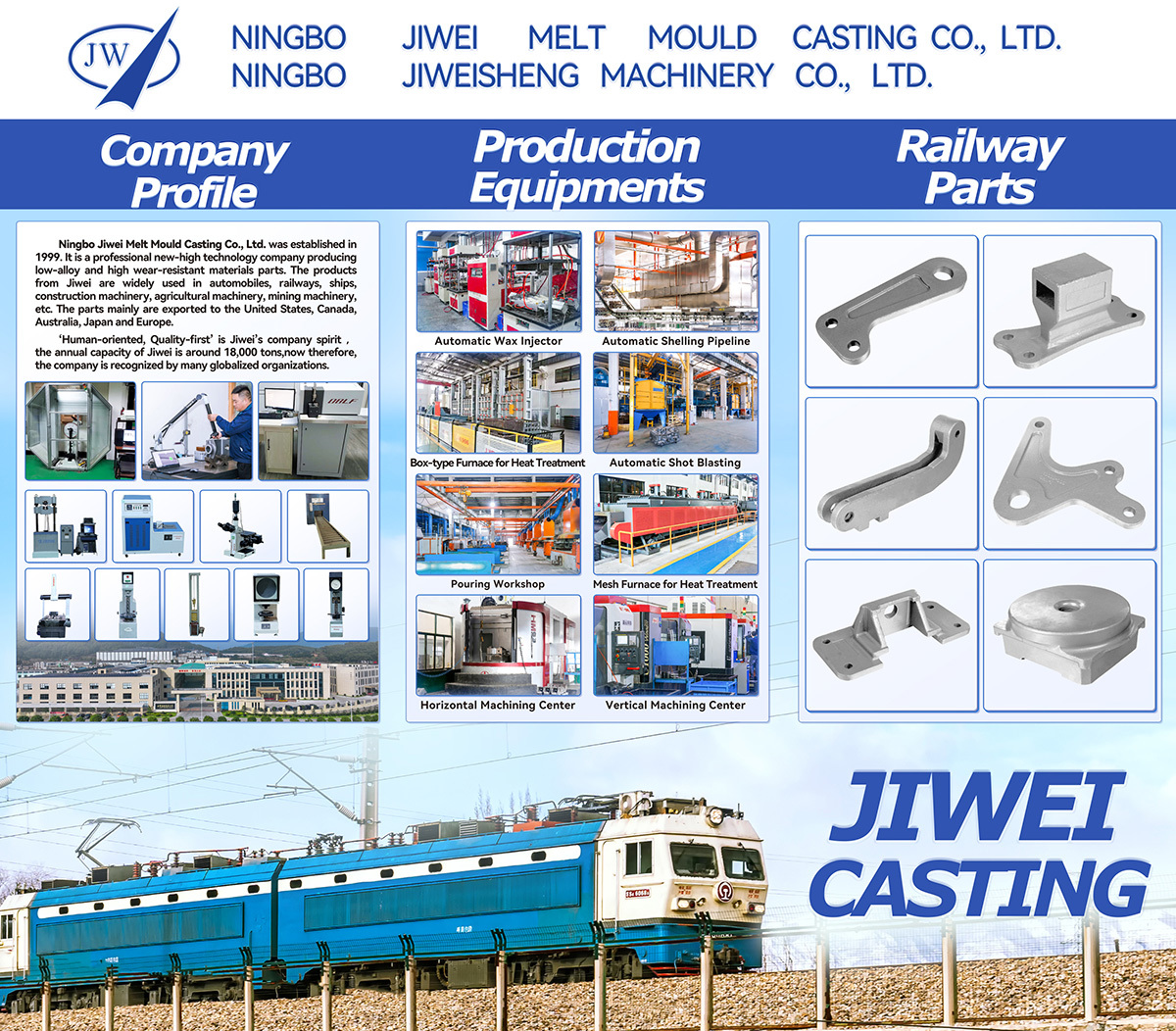
2025 American Rail Show