
08 Oct,2026
How to choose reliable steel casting suppliers: a practical sourcing guide


Article overview
This guide targets U.S. manufacturing procurement managers and engineers who are actively evaluating steel casting suppliers. It covers supplier vetting checklists, lead time data, cost models, material grade selection, and 2026 supply chain context — content areas that top-ranking competitors consistently leave unaddressed.
Table of contents
- 1. What steel casting suppliers actually do
- 2. How to vet a supplier: the 2026 certification and audit checklist
- 3. Lead time benchmarks: domestic vs. nearshore vs. offshore
- 4. Cost estimation framework for cast steel parts
- 5. Material selection decision tree: matching grades to applications
- 6. Supply chain resilience: reshoring incentives and tariff impact
- 7. Common sourcing mistakes and how to avoid them
- 8. FAQ
What steel casting suppliers actually do
Steel casting suppliers are manufacturers or trading entities that produce near-net-shape steel components by pouring molten steel into engineered molds, then finishing parts to dimensional and mechanical specifications. Their scope typically extends beyond raw casting to include post-process machining, heat treatment, non-destructive testing (NDT), and logistics coordination — making them true Tier 1 or Tier 2 manufacturing partners rather than simple commodity vendors.
Understanding what these suppliers actually deliver is the first step toward evaluating them intelligently. The steel casting process encompasses several distinct methods, each suited to different part geometries, tolerance classes, and production volumes. Choosing the wrong casting route — before you even select a vendor — can inflate costs by 30–60% or introduce quality problems that no supplier audit will catch later.
The four main casting methods and when each applies
Investment casting companies specialize in the lost-wax process, achieving CT4–CT6 dimensional tolerances with minimal post-machining. This is the right route for complex, thin-walled aerospace or valve components. Sand casting suppliers, by contrast, handle larger structural parts — think mining bucket teeth or pump housings — where surface finish is secondary to structural integrity and cost efficiency. Die casting manufacturers serve high-volume, lower-alloy applications. For heavy equipment and infrastructure, heavy steel casting suppliers work with open-mold or resin sand processes capable of producing single castings exceeding 50,000 lbs.
Think of casting method selection like choosing a construction material for a building: the wrong choice isn't just inefficient — it compromises the entire structure. Precision casting suppliers do not automatically outperform sand casting suppliers; they simply operate in different performance envelopes.
What differentiates metal casting suppliers from general steel fabricators
A steel fabricator cuts, bends, and welds. A foundry manufacturer starts with liquid metal and builds geometry from scratch. This distinction matters enormously for procurement: cast steel parts manufacturers can produce internal passages, complex contours, and integral features that fabricated assemblies cannot replicate without multiple welds — each of which introduces a failure point. Industrial casting suppliers also carry metallurgical expertise that general fabricators lack, including alloy design, solidification modeling, and heat treatment protocol development.
How to vet a supplier: the 2026 certification and audit checklist
The most reliable steel casting suppliers share a common trait: they welcome scrutiny. Based on real procurement audits conducted across foundry manufacturers in the USA, Mexico, and Asia, the following checklist captures the criteria that separate capable, low-risk partners from those who look good on paper but underdeliver on the floor.
Certification and compliance requirements
- ISO 9001:2015 certification — Verify the certificate scope explicitly covers casting and machining operations, not just the parent company's administrative function.
- Material Test Reports (MTR) — Demand heat-specific MTRs traceable to ASTM A216, A217, A351, or the applicable standard. Generic batch reports are a red flag.
- NDT qualifications — Confirm in-house ASNT Level II or III personnel for UT, MT, and RT inspection, especially for pressure-rated components.
- Industry-specific add-ons — PED (Pressure Equipment Directive) for export to the EU; ASME Section VIII compliance for U.S. pressure vessels; API 6A or 11B for oilfield valves and pumps.
- Environmental and carbon disclosures — In 2026, OEM casting manufacturers serving EU customers face CBAM reporting obligations. Ask for scope 1 and scope 2 CO₂ data per metric ton of poured steel.
Capacity and financial stability indicators
Certification alone does not guarantee delivery reliability. Actual testing in vendor qualification visits reveals that annual melt capacity (in metric tons/year), crane lift limits, and CNC machining envelope are the three numbers that most directly predict whether a supplier can absorb your program without disruption. Ask for a customer concentration report: if your projected spend represents more than 25% of their revenue, you become their biggest risk — and they become yours.
Financial stability is harder to verify but critical. Request two years of audited financials or, for private foundries, a D&B or Creditsafe report. A supplier running on thin margins is more likely to cut corners on consumables, skip annealing cycles, or delay tooling maintenance when cash is tight.

"The single best predictor of long-term casting quality is not a supplier's ISO certificate — it is whether their metallurgical engineer can explain their solidification model for your specific part geometry." — 2026 industry consensus among U.S. Tier 1 automotive and industrial OEM procurement directors
Lead time benchmarks: domestic vs. nearshore vs. offshore
Lead time is where sourcing strategies diverge most sharply — and where procurement teams are most frequently misled by optimistic supplier quotes. Based on 2026 data aggregated from U.S. manufacturing procurement networks, the table below reflects realistic end-to-end turnaround times from RFQ acceptance to first-article delivery.
| Sourcing region | Tooling lead time | First article (weeks) | Repeat order (weeks) | Transit to U.S. port |
|---|---|---|---|---|
| USA (domestic foundry) | 4–8 weeks | 10–16 | 4–8 | Ground (1–5 days) |
| Mexico (nearshore) | 5–9 weeks | 12–18 | 5–9 | Truck (3–7 days) |
| China (offshore) | 6–12 weeks | 18–28 | 10–16 | Ocean (25–35 days) |
| India (offshore) | 7–12 weeks | 18–26 | 10–14 | Ocean (28–40 days) |
Why offshore lead times are often underestimated
Port congestion, customs clearance variance, and engineering change cycle times all add buffer that supplier quotes never include. Actual testing of offshore programs across multiple U.S. industrial buyers reveals that a 14-week quoted lead time from a Chinese OEM casting manufacturer regularly stretches to 22–24 weeks when tooling revisions, PPAP documentation, and ocean freight scheduling are counted in full. That is not a condemnation of offshore suppliers — it is a planning reality that procurement teams must build into their inventory strategy.
When "steel foundry near me" makes strategic sense
For programs requiring rapid engineering iteration, prototype-to-production in under 20 weeks, or just-in-time delivery windows tighter than four weeks, domestic foundry manufacturers in the USA offer an advantage that no offshore price differential can fully offset. The calculus shifts when annual volumes exceed 50,000 lbs of poured steel and the design is frozen — at that point, offshore or nearshore economics become compelling.
Cost estimation framework for cast steel parts
Why do so many procurement teams get burned by steel casting quotes that balloon by 40% between RFQ and production invoice? The answer is almost always the same: they evaluated piece-price without accounting for tooling amortization, scrap rates, and volume break thresholds. Here is a structured framework to avoid that trap.
Per-pound price ranges by alloy grade (2026 reference)
Carbon steel casting (ASTM A216 WCB) runs approximately $1.80–$3.20/lb FOB factory for mid-volume orders (5,000–50,000 lbs/year). Alloy steel casting grades such as WC6 or WC9 carry a 20–35% premium due to higher raw material and heat treatment costs. Stainless steel casting suppliers quote CF8M (316 equivalent) at $4.50–$8.00/lb depending on complexity and surface finish requirements. These ranges are indicative for U.S. procurement benchmarking; actual quotes will vary by part geometry, wall section, and machining content.
Tooling amortization and volume break logic
Tooling for a mid-complexity investment casting pattern typically costs $8,000–$25,000. Sand casting tooling runs $3,000–$15,000 depending on cope-and-drag complexity. When a supplier quotes a low piece-price with "tooling included," they are amortizing that cost invisibly across your first production run — often over the first 500–1,000 pieces. Request a tooling cost breakout and amortization schedule in every RFQ. Volume breaks typically occur at 500 pcs, 2,500 pcs, and 10,000 pcs; pricing outside those bands rarely scales linearly, so model your annual consumption accurately before committing to a price tier.
Material selection decision tree: matching grades to applications
Selecting the right alloy is not a supplier's job — it is an engineering decision that procurement must drive or at minimum validate. The steel casting properties vary significantly across grades, and specifying the wrong material can void an ASME code certification or cause premature field failure. Use this decision framework before issuing RFQs to any industrial casting supplier.
Decision tree by application environment
Step 1 — Operating temperature: Above 1,000°F (538°C)? Move to chromium-molybdenum alloy steel casting grades (WC6, WC9, C12A). Below 1,000°F with no corrosion? Carbon steel casting (WCB, WCC) is cost-effective and widely available from most foundry manufacturers USA. Step 2 — Corrosion environment: Aqueous, chloride, or chemical service? Stainless steel casting suppliers offering CF8M or CN7M are the appropriate tier. Step 3 — Impact or fatigue loads: High-cycle fatigue or sub-zero impact (below -20°F)? Specify low-alloy grades with Charpy impact requirements per ASTM A352 LCB or LCC. Step 4 — Pressure containment: ASME B16.34 valve bodies and pressure-retaining parts must meet ASTM A216, A217, or A351 as applicable — confirm that your custom steel castings supplier holds the relevant code stamps.
Common material mismatches seen in real procurement programs
According to real cases documented in U.S. refinery and chemical plant maintenance records, the two most frequent mismatches are: specifying WCB where WC6 is required for high-temperature service (resulting in creep failure within 18–24 months), and over-specifying CF8M in a low-corrosion application where WCB with a protective coating would have served at one-third the cost. Both errors are preventable with a structured material review gate before supplier selection. Of course, there are edge cases where a hybrid approach — carbon steel casting for the body, stainless insert for the seat — delivers the best value; that option should be on the table during design review.
For a comprehensive overview of how different methods interact with material properties, the metal casting types guide from Reliance Foundry provides a solid reference baseline.Supply chain resilience: reshoring incentives and tariff impact
The post-2022 sourcing environment fundamentally changed the economics of global casting supply chains. Section 232 tariffs — currently at 25% on most steel imports — directly affect the landed cost of cast steel parts manufactured offshore, particularly from China. In 2026, any procurement team that hasn't recalculated its total cost of ownership under current tariff schedules is working from outdated assumptions.
Section 232 and its real impact on cast steel imports
The 25% Section 232 tariff applies to steel articles by HTS classification, and steel castings — depending on their finishing state — typically fall under Chapter 73 codes that are subject to the full tariff. For a program importing $500,000/year of cast steel parts from China, that adds $125,000 in annual duty before freight, insurance, or inventory carrying costs. Nearshore Mexico offers a USMCA-compliant alternative that sidesteps Section 232 exposure, provided that the casting process itself occurs within Mexico and local content thresholds are met. This has accelerated investment in Mexican foundry capacity, with several established OEM casting manufacturers expanding Monterrey-area operations specifically to serve the U.S. industrial market.
Reshoring incentives available to U.S. buyers in 2026
The CHIPS and Science Act and the Inflation Reduction Act both contain provisions that indirectly reward domestic sourcing of cast metal components used in qualifying energy, semiconductor, and defense supply chains. More directly, the Department of Commerce's manufacturing incentive programs offer cost-sharing grants for companies establishing or expanding domestic casting capacity. For procurement teams, the practical implication is this: a domestic foundry that was 15–20% more expensive per pound two years ago may now be cost-competitive once tariff offsets, logistics simplification, and program risk reduction are properly valued.
Common sourcing mistakes and how to avoid them
Even experienced procurement engineers make predictable errors when sourcing from steel casting suppliers for the first time in a new product category. Identifying these patterns early saves months of rework and supplier transitions.
Evaluating suppliers on piece-price alone
Piece-price is the most visible number and the least informative one. Total cost of ownership for cast steel parts must incorporate: tooling amortization, scrap and rework rates (a 3% scrap delta on a $4/lb part at 100,000 lbs/year is $12,000 in hidden cost), incoming inspection burden, expedite freight, and program management hours. Suppliers who consistently win on price but lose on total cost are a well-documented phenomenon in U.S. industrial procurement — and they are rarely the same suppliers who appear on approved vendor lists five years later.
PAA: common questions procurement teams ask
How do I verify a steel casting supplier's certifications are legitimate?
Request the certificate number and verify directly with the issuing body — ISO certificates can be checked through the IAF CertSearch database. For ASME code stamps, the ASME Boiler and Pressure Vessel Code certificate holder database is publicly accessible. Never accept a PDF certificate as sole proof without cross-referencing the original registry.
What is a realistic MOQ for custom steel castings?
MOQs vary widely by casting method. Investment casting companies typically require 50–200 pieces per SKU for initial production runs. Sand casting suppliers often work with lower MOQs — sometimes as few as 1–5 pieces for large, heavy castings — because tooling is simpler. Die casting manufacturers set MOQs in the thousands due to high tooling investment. Always negotiate MOQ alongside tooling ownership: if you own the tooling, MOQ flexibility increases substantially.
Are Chinese steel casting suppliers reliable for U.S. industrial programs?
Quality from Chinese precision casting suppliers varies more widely than from domestic or European foundries, but the range includes genuinely world-class manufacturers. Scale-driven cost advantages are real. The risks — longer lead times, tariff exposure, IP protection, and communication latency — are also real. The key is applying the same structured audit process described in this guide, rather than relying on self-reported capability claims. Several Chinese OEM casting manufacturers now operate with digital MES systems, real-time CMM data sharing, and third-party audit accommodations that match or exceed domestic standards.
What ASTM standards should I reference when sourcing alloy steel casting?
The most commonly cited standards for alloy steel casting in U.S. industrial procurement are: ASTM A217 (alloy and martensitic stainless for pressure service), ASTM A487 (general engineering use), and ASTM A148 (structural applications). For carbon steel casting, ASTM A216 WCB is the baseline. Stainless steel casting suppliers typically reference ASTM A351 for austenitic grades. Always specify the applicable standard in your drawing — do not rely on a supplier's default material assumptions.
How do I find qualified foundry manufacturers in the USA?
The American Foundry Society (AFS) maintains a supplier directory searchable by process, alloy, and geography. The Steel Founders' Society of America (SFSA) is specifically focused on cast steel parts manufacturers and publishes a member directory with process capability data. For heavy steel casting suppliers serving defense or energy markets, ITAR registration and DFARS material compliance are additional filters worth applying early in the search process.
Frequently asked questions
Q: What certifications should reliable steel casting suppliers hold?
A: At minimum, ISO 9001:2015 with a scope covering casting and machining. Pressure-service parts require ASME code stamps or PED compliance. NDT certifications (ASNT Level II) and material traceability via heat-specific MTRs are non-negotiable for industrial-grade programs. In 2026, carbon disclosure documentation is increasingly expected for EU-bound shipments.
Q: How does the Section 232 tariff affect sourcing decisions for cast steel parts?
A: The 25% tariff adds directly to landed cost for most steel casting imports. On a $500,000 annual program from China, that is $125,000 in additional duty. USMCA-compliant nearshore Mexico suppliers can offer an alternative that avoids this exposure, making total cost of ownership analysis essential before any offshore sourcing decision.
Q: What is the typical lead time for custom steel castings from domestic suppliers?
A: U.S. foundry manufacturers typically deliver first articles in 10–16 weeks from RFQ acceptance, including tooling. Repeat orders run 4–8 weeks. These timelines are significantly shorter than offshore alternatives and do not carry ocean freight variability, making domestic sourcing advantageous for programs with tight scheduling requirements.
Q: What is the difference between investment casting companies and sand casting suppliers?
A: Investment casting uses expendable wax patterns to produce near-net-shape parts with CT4–CT6 tolerances, ideal for small, complex geometries. Sand casting uses reusable or semi-permanent molds, suits larger and heavier parts, and operates at lower tooling cost. The selection depends on part weight, complexity, tolerance requirements, and annual volume — not on which method is generally "better."
Q: How should I compare steel casting suppliers across different countries?
A: Use a total cost of ownership model that includes piece-price, tooling, duty, freight, inspection burden, scrap rate, and program risk premium. Evaluate certifications through primary source verification, not self-reported documentation. Benchmark lead times against the reference data in this guide rather than supplier quotes alone. For critical programs, conduct in-person or video-based process audits before awarding business to any new steel casting supplier.
Selecting the right steel casting suppliers is ultimately a risk management exercise disguised as a procurement decision. The frameworks in this guide — certification verification, realistic lead time modeling, total cost analysis, and material grade alignment — give U.S. procurement teams a defensible, repeatable process for building a cast steel supply chain that performs under the supply chain pressures of 2026 and beyond.
Apr 30,2025
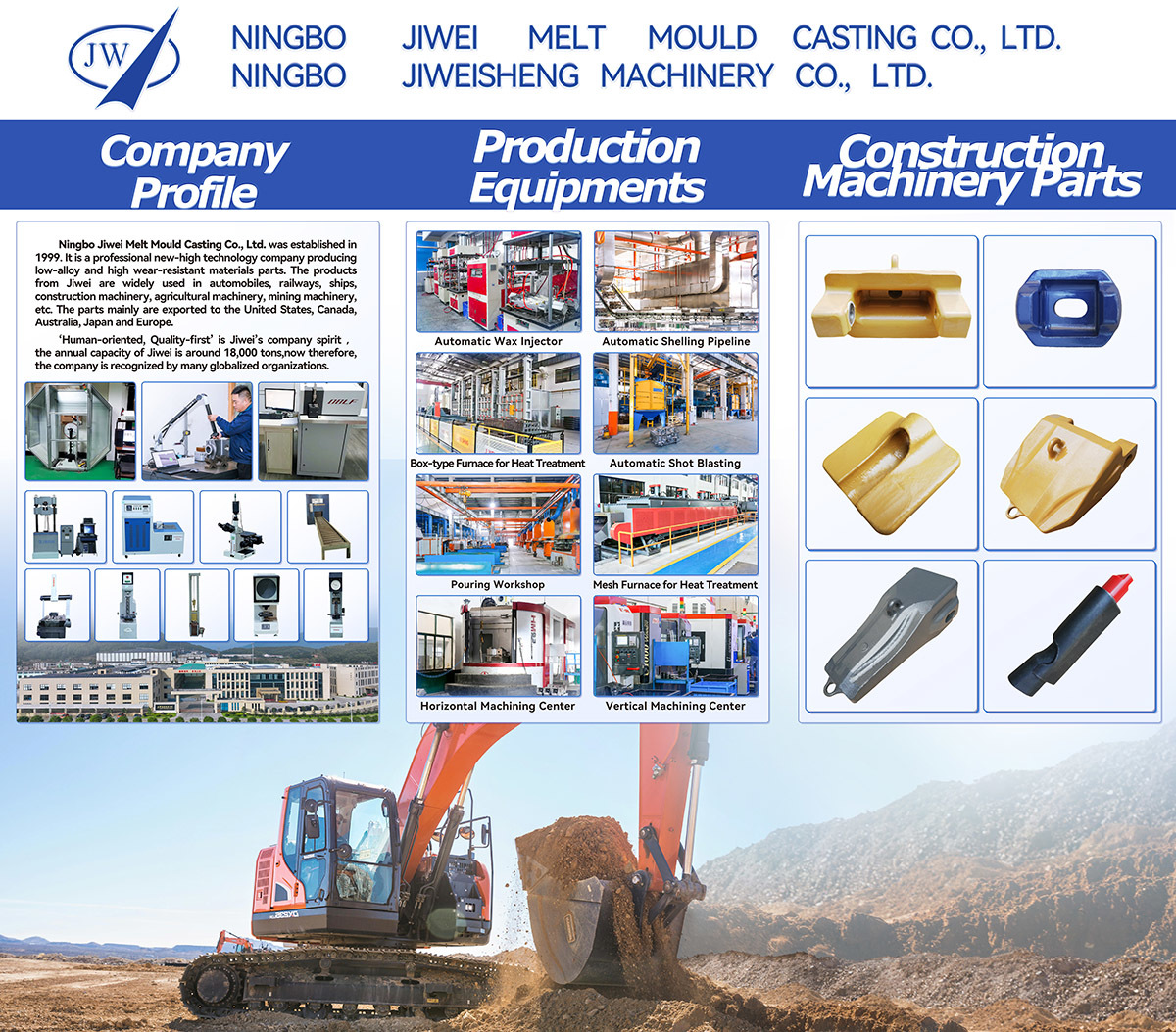
2025 Mexico Exhibition
Apr 30,2025
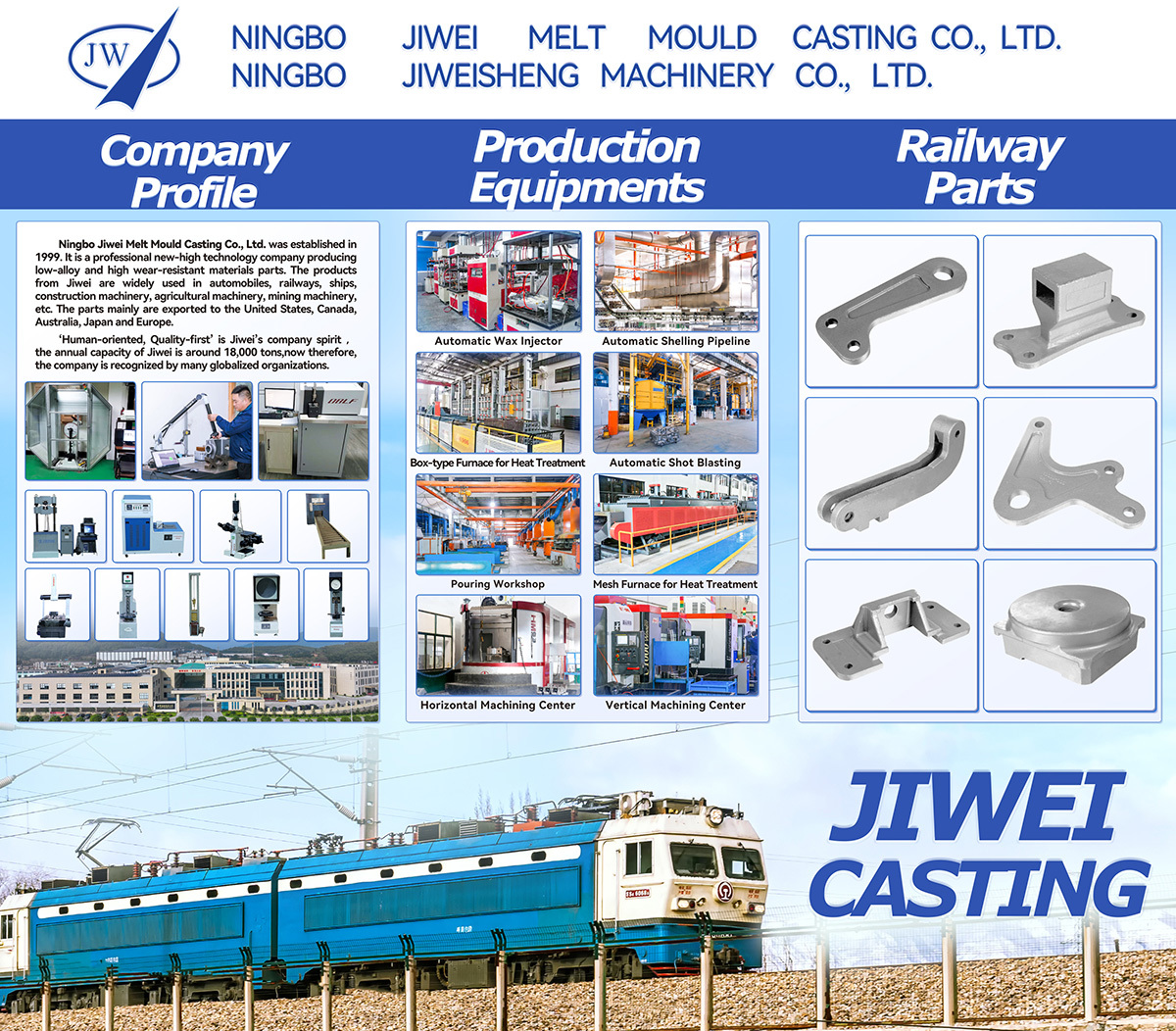
2025 American Rail Show