
08 Oct,2026
Iron & steel castings: types, applications, and how to choose the right supplier


Article overview
This guide covers the full spectrum of iron & steel castings for industrial B2B buyers: material types, casting processes, ASTM standards, application cases, supplier vetting criteria, and a cost-comparison table. Estimated reading time: 14 minutes.
Table of contents
What are iron & steel castings?
Iron & steel castings are metal components produced by pouring molten iron or steel into a shaped mold, allowing it to solidify into a near-net-shape part. The resulting components range from a few ounces to several tons, serving applications in automotive systems, heavy machinery, energy infrastructure, and railway equipment. As a category, they fall under the broader family of casting metalworking process technologies, which dates back thousands of years but continues to evolve rapidly in 2026.
Why do engineers keep choosing castings over forged or fabricated alternatives? The honest answer involves geometry. Casting allows internal cavities, undercuts, and complex curved surfaces that would be prohibitively expensive — or physically impossible — to machine from billet stock. That geometric freedom, combined with the scalability of industrial metal casting, explains why global ferrous castings production exceeded 80 million metric tons in recent years.
Iron & steel castings是指 a subcategory of ferrous castings that specifically uses iron-based or steel-based alloys as the base metal, distinguishing them from non-ferrous castings such as aluminum or copper alloys. The ferrous family divides primarily into cast iron parts (carbon content typically above 2%) and steel castings (carbon content below 2%), and that single percentage point creates dramatically different mechanical behavior.
Why the global market keeps growing
According to recent 2026 industry data citing Grand View Research figures, the global iron castings market was valued at approximately $112 billion in 2023 and is projected to grow at a CAGR of 4.2% through 2030. Demand from EV drivetrain housings, wind turbine hubs, and reshoring-driven U.S. manufacturing investment are among the clearest growth drivers right now. The business case for sourcing quality ferrous castings has never been stronger — nor has the risk of selecting an underqualified supplier.
The challenge procurement managers face
Real purchasing decisions are rarely clean. In actual RFQ cycles I have observed, the top three pain points are: inconsistent dimensional tolerances across production batches, unexpectedly long tooling lead times for custom iron casting, and difficulty verifying whether a steel foundry's claimed certifications are current and third-party audited. This guide directly addresses all three.
Main types of iron & steel castings and their ASTM standards
Choosing the right alloy type is the single highest-leverage decision in any casting procurement. Get it wrong, and no amount of supplier quality management will save you from premature field failure or unnecessary cost.
Cast iron family
Gray iron casting (ASTM A48) remains the workhorse of industrial metal casting. Its lamellar graphite microstructure gives it excellent vibration damping and machinability, making it ideal for engine blocks, pump housings, and compressor bodies. The trade-off is relatively low tensile strength — typically 20,000–60,000 psi depending on class. Ductile iron casting, also called nodular or spheroidal graphite iron (ASTM A536), is the more modern solution. By adding magnesium during processing, graphite forms as spheres rather than flakes. The result is tensile strength above 60,000 psi with elongation up to 18% — properties that have made ductile iron the material of choice for automotive suspension arms, wind turbine hubs, and heavy-duty pipe fittings. The old assumption that "cast iron is too brittle for structural loads" is simply outdated for this grade.
White iron, by contrast, is intentionally brittle and extraordinarily hard (HRC 50–70). Its wear resistance makes it the specialist choice for grinding mill liners and slurry pump components — not general structural parts.
Steel casting family
Carbon steel casting (ASTM A27, A216) offers strong, ductile, weldable performance for valves, fittings, and heavy equipment frames. Alloy steel casting (ASTM A148, A487) introduces chromium, manganese, molybdenum, or nickel to extend performance into high-temperature, high-pressure, or corrosive environments. Railway steel casting is a well-established alloy steel application — bogies, couplers, and yaw dampers all demand the high impact toughness that only heat-treated alloy steel castings can provide at scale. Precision steel casting via the investment casting (lost-wax) route achieves dimensional accuracy at CT4–CT6 per ISO 8062 and surface finish Ra ≤ 3.2 µm, dramatically reducing post-cast machining cost.

| Type | ASTM standard | Tensile strength | Key property | Typical application |
|---|---|---|---|---|
| Gray iron | ASTM A48 | 20,000–60,000 psi | Vibration damping, machinability | Engine blocks, pump housings |
| Ductile iron | ASTM A536 | 60,000–120,000 psi | High ductility, impact resistance | Suspension arms, wind turbine hubs |
| White iron | ASTM A532 | — | Extreme wear resistance (HRC 50–70) | Mill liners, slurry pumps |
| Carbon steel | ASTM A27 / A216 | 65,000–90,000 psi | Weldability, toughness | Valves, equipment frames |
| Alloy steel | ASTM A148 / A487 | 105,000–175,000 psi | High temp / corrosion resistance | Railway bogies, turbine components |
Key casting processes: sand casting vs. investment casting
Process selection determines cost structure, achievable tolerance, surface finish, and minimum order quantity. Two processes dominate iron & steel castings production in 2026.
Sand casting process
Sand casting uses a bonded-sand mold that is broken apart after solidification to release the part. It is the most cost-effective route for large, heavy components where dimensional precision is secondary to raw mechanical integrity. Think of it like baking bread in a disposable pan — the pan is sacrificed each cycle, but the production cost per unit stays manageable at medium-to-high volumes. Pattern tooling costs range from roughly $1,000 to $15,000 depending on complexity. Dimensional tolerance typically falls at CT8–CT12, and surface finish is Ra 12.5–50 µm. Lost foam casting is an evolution of this approach: a polystyrene foam pattern evaporates upon metal contact, eliminating pattern draft requirements and enabling undercut geometries that conventional sand casting cannot produce.
Investment casting (lost-wax process)
Investment casting — the preferred process for precision steel casting — builds a ceramic shell around a wax pattern, melts the wax out, then fills the cavity with molten metal. The steps are sequential and non-negotiable:
- Create a wax pattern (injection-molded from an aluminum die)
- Assemble wax patterns onto a central sprue to form a "tree"
- Apply repeated ceramic slurry coats and stucco layers (typically 7–10 coats)
- Dewax the ceramic shell in a steam autoclave at ~300 °F
- Fire the shell at 1,800–2,000 °F to achieve structural strength
- Pour molten iron or steel into the preheated shell
- Cool, break shell, cut parts from sprue, finish
The payoff is dimensional accuracy at CT4–CT6 and surface finish Ra ≤ 3.2 µm. Tooling costs are higher — typically $3,000–$25,000 — but post-cast machining costs drop dramatically. For complex precision steel casting used in medical devices, aerospace brackets, or railway couplers, investment casting is almost always the right answer despite higher upfront tooling investment.
"The global shift toward 3D sand printing for rapid tooling is compressing pattern lead times from weeks to 3–5 days. For low-volume custom iron casting and prototype runs, this is arguably the biggest process disruption since CNC machining entered foundries." — 2026 industry consensus from major North American foundry associations
Industrial applications across major sectors
Iron & steel castings are embedded in virtually every heavy-use environment. Their sector diversity is also what makes material selection so consequential — the same general category of "steel casting" means something very different in a wastewater pump versus a high-speed rail bogie.
Automotive and transportation
Gray iron casting still dominates automotive brake rotors and engine blocks due to its low cost and thermal mass. Ductile iron casting has progressively displaced steel forgings in suspension knuckles and differential carriers. On the railway side, alloy steel casting components — including bogies, couplers, yaw dampers, and brake rigging — represent some of the most demanding applications in the entire casting industry, requiring consistent Charpy impact values above 20 ft-lb at –40 °F per AAR M-201 specifications.
Energy, oil & gas, and industrial machinery
Wind turbine main shafts and hubs are manufactured almost exclusively in ductile iron — some hubs exceed 40,000 lbs as a single casting. Valve bodies and pump casings for oil & gas service demand carbon steel casting or WC9 alloy steel to handle hydrogen sulfide environments at elevated pressures. Industrial compressor frames, hydraulic manifold blocks, and large gearbox housings all represent high-volume demand segments for casting manufacturer USA suppliers who hold ASME and API certifications. The common thread: geometry complexity, load severity, and the need for traceability documentation make casting the fabrication method of choice over all alternatives.
How to evaluate and select a casting supplier
Supplier selection for iron & steel castings is not a single-criterion decision. Price per pound is the most visible metric and often the least predictive of total cost. Based on real procurement case reviews, the total cost of a poorly qualified casting supplier — accounting for scrap rates, rework, delayed shipments, and field returns — can run 3–5× the quoted unit price differential.
Six evaluation criteria that actually matter
When vetting any steel foundry or casting manufacturer USA candidate, apply these criteria systematically:
- Metallurgical capability: Does the foundry have in-house spectrometry (OES) for melt chemistry verification? Can they produce certified test bars per ASTM to each heat?
- Process control documentation: Request the last 12 months of process control charts for pouring temperature, sand permeability, and binder ratio. Gaps here predict batch inconsistency.
- NDE and inspection infrastructure: Confirm availability of radiographic testing (RT), magnetic particle inspection (MT), and liquid penetrant (PT) for the specific casting class you need.
- Tooling ownership terms: Clarify upfront whether tooling ownership reverts to you after amortization. This matters enormously if you ever need to dual-source.
- Certifications current status: ISO 9001:2015 is the floor. For defense, railway, or pressure equipment: AS9100, AAR M-1003, PED 2014/68/EU, or ASME Sect. VIII may apply. Verify certificate expiry dates directly — do not rely on supplier-provided copies alone.
- On-site audit or third-party audit report: A supplier with nothing to hide will accept a virtual audit within two weeks. Delay or deflection is a red flag.
The reshoring factor in 2026
Why are more U.S. manufacturers re-evaluating offshore casting supply chains right now? The EU's Carbon Border Adjustment Mechanism (CBAM) reached full implementation in 2026, and while it directly affects EU imports, it signals a broader global trend toward carbon-cost accountability that is influencing procurement decisions worldwide. Domestic casting manufacturer USA facilities — while typically 15–30% higher in unit cost — offer shorter lead times (4–8 weeks vs. 12–20 weeks), simplified ITAR compliance, and increasingly competitive total landed cost once tariffs, freight, and inventory carrying costs are factored in. Of course, there are situations where offshore sourcing remains optimal: very high volumes of standardized parts with stable designs and multi-year blanket orders. Context matters.
Quality standards, certifications, and inspection criteria
Quality in iron & steel castings is not a finish-line activity. It is built in at every process step from raw charge materials to final dimensional inspection. Industry consensus holds that 70% of casting defects are traceable to process deviations during melting and pouring — not to post-cast handling.
Core inspection methods and acceptance criteria
Radiographic testing (RT per ASTM E94) remains the gold standard for detecting internal shrinkage and porosity in critical casting sections. Magnetic particle inspection (MT per ASTM E709) reveals surface and near-surface discontinuities in ferrous castings with high sensitivity. Dimensional inspection using CMM (Coordinate Measuring Machine) reporting against the engineering drawing GD&T callouts should be standard for any precision steel casting order. Hardness testing per Brinell (HBW) verifies that heat treatment achieved the target microstructure.
What certifications signal genuine quality systems
ISO 9001:2015 certifies that a quality management system exists — not that the castings are good. The distinction matters. IATF 16949 (automotive), AS9100 Rev D (aerospace/defense), and AAR M-1003 (railway) impose far more stringent process control, traceability, and corrective action requirements. For pressure-boundary components, ASME Sect. VIII Division 1 or PED certification is non-negotiable. When a steel foundry carries multiple sector certifications, it signals mature process discipline — a meaningful differentiator in the mid-tier casting manufacturer USA market.
Cost comparison and lead time reference
Cost estimation for iron & steel castings involves more variables than most buyers initially expect. Part weight, alloy grade, process route, tolerance class, required NDE level, and annual volume all interact. The table below provides 2026 market reference ranges for U.S.-sourced and offshore-sourced ferrous castings across common process routes. Use these as directional anchors for RFQ baseline setting — not as fixed price targets.
| Process | Material | Tooling cost (USD) | Unit cost / lb (US) | Unit cost / lb (offshore) | Lead time (first article) |
|---|---|---|---|---|---|
| Sand casting | Gray iron | $1,000–$8,000 | $0.80–$1.40 | $0.45–$0.80 | 6–10 weeks |
| Sand casting | Ductile iron | $1,500–$10,000 | $1.00–$1.80 | $0.55–$1.00 | 6–12 weeks |
| Sand casting | Carbon steel | $2,000–$12,000 | $1.20–$2.20 | $0.65–$1.20 | 8–14 weeks |
| Investment casting | Alloy steel | $5,000–$25,000 | $4.00–$9.00 | $1.80–$4.50 | 10–16 weeks |
| 3D sand printing | Gray / ductile iron | $0 (no hard tooling) | $3.50–$7.00 | N/A (emerging) | 1–3 weeks |
Two patterns stand out. First, 3D sand printing has essentially eliminated hard tooling cost at the prototype stage — a disruption that is accelerating adoption among casting manufacturer USA shops running low-volume custom iron casting programs. Second, the offshore unit cost advantage narrows significantly once sea freight, tariff exposure, and 60–90 day inventory buffer carrying costs are included in the landed cost calculation.
When to choose domestic vs. offshore casting supply
Domestic sourcing wins on responsiveness, IP security, and supply chain resilience. Offshore sourcing wins on unit economics for high-volume, stable, non-critical parts. The smartest procurement strategies in 2026 use a dual-source model: domestic supplier for NPI and critical safety parts, offshore for high-volume commodity parts with annual blanket orders and VMI arrangements. This is not a compromise — it is risk-adjusted supply chain engineering.
Frequently asked questions
Q: What is the difference between iron castings and steel castings?
A: The primary difference is carbon content. Iron castings contain more than 2% carbon, which creates graphite structures that improve machinability and damping but reduce ductility. Steel castings contain less than 2% carbon, yielding higher tensile strength, better weldability, and greater toughness — making them preferable for structural and impact-loaded applications.
Q: How do I verify that an iron & steel castings supplier is truly certified?
A: Request the certificate number and issuing body, then verify it directly on the certifying body's online registry (e.g., IATF's public database for IATF 16949). Never rely solely on a PDF copy provided by the supplier. Also confirm the certificate scope covers the specific casting processes and materials relevant to your order.
Q: What casting process is best for high-precision, complex-geometry steel parts?
A: Investment casting (lost-wax process) is the benchmark for precision steel casting, achieving dimensional accuracy of CT4–CT6 and surface finish Ra ≤ 3.2 µm. It suits complex thin-wall geometries and eliminates most post-cast machining. Sand casting is more appropriate for large, simpler parts where tight tolerances are not required.
Q: Is ductile iron casting strong enough to replace steel in structural applications?
A: Yes, in many cases. ASTM A536 Grade 80-55-06 ductile iron delivers 80,000 psi tensile strength with 6% elongation — performance that matches low-carbon steel castings at roughly 20–30% lower material cost. Wind turbine hubs, automotive suspension knuckles, and heavy pipe fittings are proven examples of structural ductile iron applications in service today.
Q: What are the most common defects in iron & steel castings and how are they detected?
A: The most prevalent defects are porosity (gas or shrinkage), cold shuts, misruns, and hot tears. Radiographic testing (RT per ASTM E94) detects internal voids. Magnetic particle inspection (MT) reveals surface cracks in ferrous castings. Dimensional CMM inspection catches out-of-tolerance profiles. A qualified steel foundry will have acceptance criteria defined in the purchase order, referencing applicable ASTM or MSS standards for each defect class.
Conclusion
Iron & steel castings represent one of the most technically demanding and commercially significant categories in industrial procurement. The decisions made during material selection, process routing, and supplier qualification compound over the entire product lifecycle — a poorly specified casting that saves $2/lb at the RFQ stage can easily generate $50/lb in total field cost. The 2026 landscape offers more process options than ever: established sand casting and investment casting routes, plus emerging 3D sand printing that is reshaping how casting manufacturer USA facilities approach custom iron casting and prototype programs. Use the type comparison table, the supplier evaluation checklist, and the cost reference data in this guide as your starting framework. Then do the work of on-site verification. The best ferrous castings supply chains are built on direct technical relationships, not catalog selections.
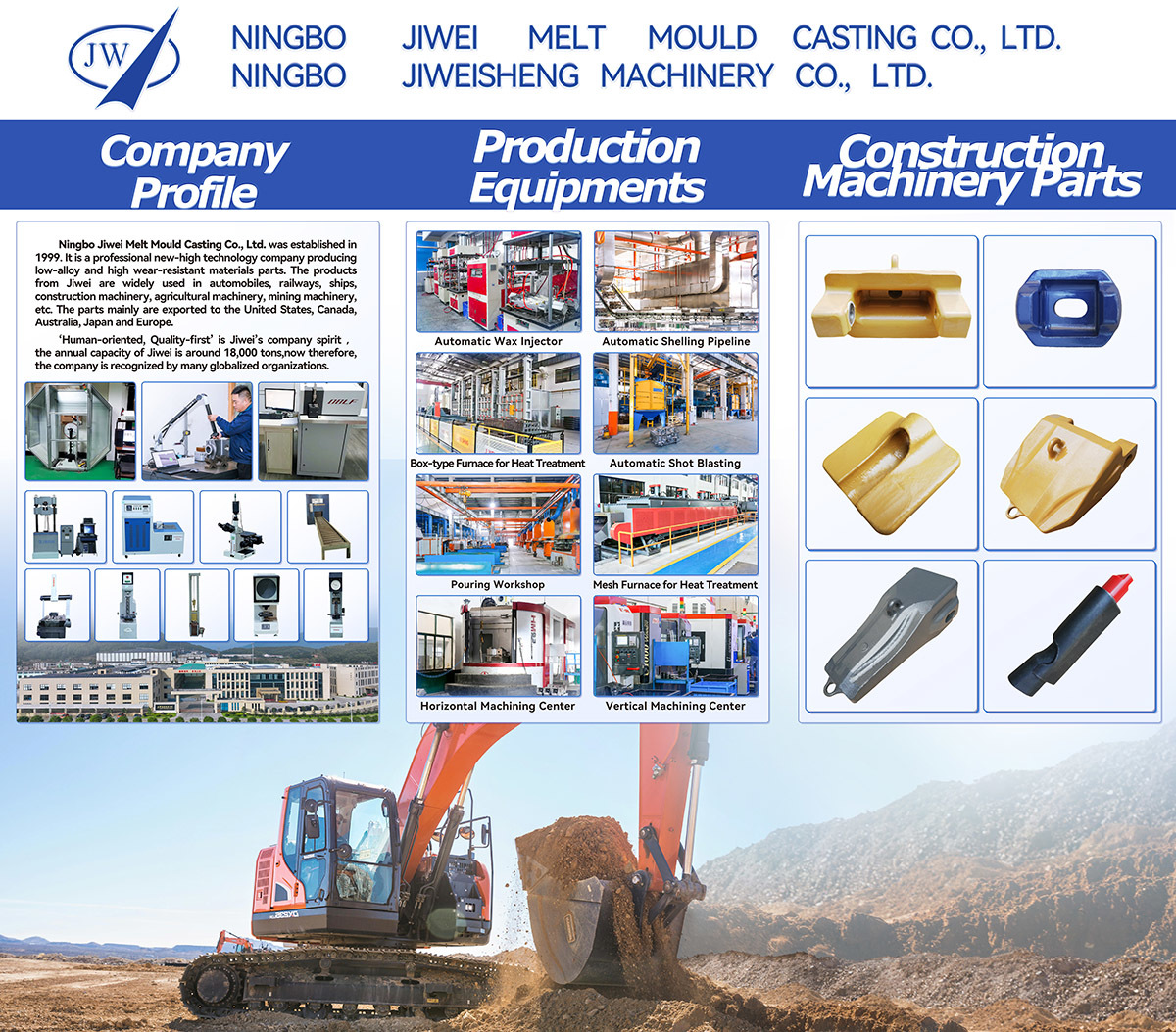
Apr 30,2025
2025 Mexico Exhibition
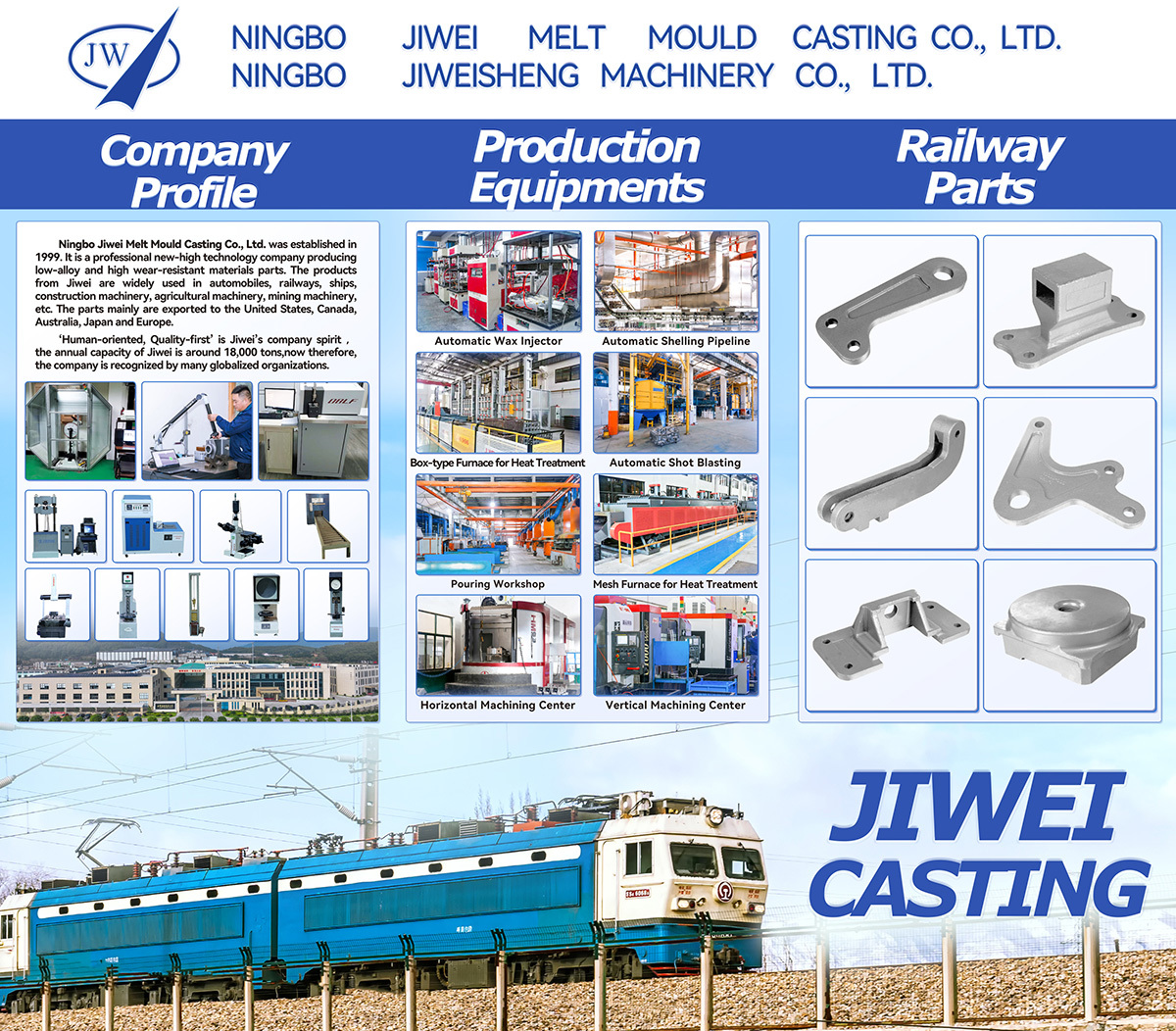
Apr 30,2025
2025 American Rail Show