
23 Oct,2026
How to compare quotes from multiple alloy cast steel manufacturers effectively


Article overview
This guide provides a structured framework for procurement engineers and design engineers to compare quotes from alloy cast steel manufacturers. It covers grade standards, process capabilities, certifications, cost structures, and application-specific selection criteria — all aligned with 2026 U.S. market practices.
Table of contents
- 1. Why quote comparison for alloy cast steel goes deeper than price
- 2. Understanding ASTM/ASME grades before you request a quote
- 3. How casting process affects tolerances, lead time, and MOQ
- 4. Certifications and third-party inspection capabilities to verify
- 5. Breaking down the cost structure in a manufacturer's quote
- 6. Industry application alignment: matching grades to working conditions
- 7. Red flags and failure case analysis when evaluating suppliers
- 8. FAQ
Comparing quotes from multiple alloy cast steel manufacturers is one of the most consequential decisions a procurement or design engineer makes in a project lifecycle. Get it right, and you lock in compliant parts at a defensible total cost. Get it wrong, and you face casting defects, regulatory non-conformance, and expensive rework. The challenge is that most quote sheets look similar on the surface — same unit price range, same delivery week estimate — yet hide enormous differences in material traceability, process capability, and post-cast inspection rigor.
An alloy cast steel manufacturer is defined as a production facility that melts alloying elements — such as chromium, molybdenum, nickel, or vanadium — into a carbon steel base, pours the molten metal into a mold, and delivers a near-net-shape structural component meeting specified mechanical and chemical standards.
In 2026, the U.S. market includes both domestic steel foundry USA operations and import-qualified overseas suppliers, making systematic quote comparison more important than ever.Why quote comparison for alloy cast steel goes deeper than price
The single most common procurement mistake is treating an alloy cast steel quote as a commodity bid. It is not. Every line item in a quote reflects upstream decisions about melt practice, mold design, heat treatment, and inspection — decisions that directly affect part performance in service. Real-world sourcing experience confirms this: two quotes within 5% of each other in unit price can represent a 40% difference in total cost of ownership once scrap rate, dimensional rework, and field failure risk are factored in.
Why procurement engineers consistently undervalue technical depth in quotes
Why do so many buyers focus purely on price? Partly because RFQ templates rarely prompt for process data. Partly because lead time pressure creates shortcuts. But the industry consensus is clear: a quote without documented heat treatment protocol, mold tooling ownership terms, and inspection plan is an incomplete quote — regardless of how competitive the number looks. Asking for these documents upfront is not bureaucratic overhead; it is basic risk management.
Establishing a weighted scoring matrix before you compare
Before sending a single RFQ, define your evaluation criteria and assign weights. A practical starting framework used by industrial steel casting buyers in 2026 allocates roughly 30% to technical compliance, 25% to price and tooling cost, 20% to delivery and lead time, 15% to quality certifications, and 10% to commercial terms such as payment, MOQ, and warranty. Applying this matrix to every responding alloy steel casting company ensures you are comparing the same dimensions — not just the bottom line.
Understanding ASTM/ASME grades before you request a quote
Specifying the correct ASTM or ASME grade is the foundation of any meaningful quote comparison. A steel casting supplier quoting against the wrong grade — or a vague "low alloy steel" description — will deliver numbers that are impossible to compare to a competitor quoting a precise UNS designation. Lock the grade first; then request quotes.
Key ASTM/ASME grades and their mechanical benchmarks
| ASTM/ASME grade | UNS No. | Tensile strength (min, ksi) | Yield strength (min, ksi) | Typical application |
|---|---|---|---|---|
| A216 WCB | J02502 | 70 | 36 | General-purpose valves, pumps (carbon steel casting) |
| A217 WC6 | J12072 | 70 | 40 | High-temp service, 1–1¼Cr–½Mo, power generation |
| A217 WC9 | J21890 | 70 | 40 | 2¼Cr–1Mo, heat resistant steel casting, high-pressure steam |
| A352 LCB | J03003 | 65 | 35 | Low alloy steel casting, cryogenic / low-temp service |
| A351 CF8M | J92900 | 70 | 30 | Stainless steel casting, corrosive service (316 SS equiv.) |
| A128 Gr. B-4 | — | Variable | Variable | High alloy steel casting, manganese wear parts, mining |
How to confirm grade compliance in a quote document
Any reputable alloy cast steel manufacturer should cite the full ASTM designation — including grade suffix — on the face of the quote, not just "carbon steel" or "chrome-moly." Request that the mill certificate (MTR) format be included as a deliverable. If a supplier cannot commit to MTR format at the quoting stage, that is an early signal worth noting. Cross-reference the UNS number with your design drawing before final approval; mismatches between quoted and specified grades have caused costly field failures in oil and gas service.
How casting process affects tolerances, lead time, and MOQ
Not every cast steel foundry uses the same process, and process choice has direct consequences for your tolerance stack-up, part weight range, and minimum order quantity. Comparing quotes without knowing which process was assumed is like comparing flight prices without knowing if the quote includes baggage.

Process comparison: tolerances, weight, MOQ, and lead time
| Process | Dimensional tolerance | Part weight range | Typical MOQ | Lead time (production) |
|---|---|---|---|---|
| Sand casting | CT10–CT13 (ISO 8062) | 1 lb – 50,000 lb | 1 pc (pattern cost applies) | 4–10 weeks |
| Investment casting (precision steel casting) | CT4–CT7 | 0.01 lb – 220 lb | 25–100 pcs | 6–12 weeks |
| Shell mold casting | CT8–CT10 | 0.5 lb – 440 lb | 50–200 pcs | 5–9 weeks |
| Centrifugal casting | CT8–CT11 | 5 lb – 6,600 lb | 5–50 pcs | 4–8 weeks |
Tooling cost and amortization — a detail many quotes obscure
Sand casting patterns for custom steel castings can range from $800 to over $25,000 depending on part complexity and material. Investment casting tooling for precision steel casting typically runs $1,500–$8,000 per die. Some alloy steel casting companies amortize tooling into unit price; others invoice it separately. Always ask: "Is tooling included in this quote, and who owns the tooling after first article approval?" Tooling ownership affects your ability to move the job to a second source if quality issues arise.
Certifications and third-party inspection capabilities to verify
Certifications are not decorative logos on a website. They represent audited, documented process controls that reduce your risk as a buyer. When comparing multiple suppliers, a certified steel casting plant and an uncertified one are simply not equivalent — even if their quoted prices are identical.
Core certifications to require from any serious supplier
The baseline is ISO 9001:2015 — without it, a supplier has no third-party-verified quality management system. For pressure-containing components destined for the U.S. market, also verify:
- PED (Pressure Equipment Directive) if the part will be re-exported to EU-market customers
- API 6A / API 600 for oil and gas valve bodies
- Nadcap for aerospace-adjacent heat treatment and NDT processes
- ASME Section IX welder/weld procedure qualification if weld repairs are anticipated
- ITAR registration for any defense-related custom steel castings
"A casting that meets chemistry and tensile requirements but has not been inspected with UT or RT is an unverified casting. In high-pressure, high-cycle applications, that distinction is the difference between a successful installation and a catastrophic failure."
— Adapted from ASTM International technical guidance on casting inspection, 2026 edition
Non-destructive testing capabilities: what to ask each supplier
Ask each competing industrial steel casting supplier to confirm in writing which NDT methods they perform in-house vs. outsource to a third-party lab. The four primary methods are:
- UT (Ultrasonic Testing) — subsurface volumetric discontinuities
- RT (Radiographic Testing) — internal shrinkage, porosity; required per ASTM E94/E1032
- MT (Magnetic Particle Testing) — surface and near-surface cracks in ferromagnetic castings
- PT (Liquid Penetrant Testing) — surface-breaking defects in non-ferromagnetic alloys
In-house NDT capability generally means faster turnaround and clearer accountability. When a cast steel foundry outsources all NDT, inspect their subcontractor approval records. The added logistics time can also affect lead time commitments in the quote.
Breaking down the cost structure in a manufacturer's quote
A quote from an alloy cast steel manufacturer is never just "price per pound." Understanding the cost architecture lets you negotiate intelligently, identify where the real savings exist, and avoid the trap of accepting an artificially low headline price that inflates through extras.
The seven cost layers in a steel casting quote
- Raw material and scrap surcharge — tied to LME (London Metal Exchange) or AMM (American Metal Market) indices; confirm if the quote is fixed or index-linked.
- Melt and pour cost — electric arc furnace (EAF) energy cost is a significant variable; ask for the pricing basis date.
- Molding and coremaking — per-piece cost amortized over run quantity; lower at higher volumes.
- Heat treatment — normalize, temper, and quench cycles add $0.08–$0.45/lb depending on furnace cycle time.
- Machining and fabrication (steel casting fabrication) — often quoted separately; confirm if drawings require as-cast or finish-machined dimensions.
- Inspection and testing — RT, UT, MT, PT, and CMM inspection fees; itemize these so you can compare apples to apples.
- Packaging, freight, and import duties — for overseas suppliers, include HS code 7325.10 duty rate (currently 25% Section 232 tariff on steel articles as of 2026) and ocean freight when calculating total landed cost.
Domestic vs. overseas supplier: total landed cost comparison
A steel foundry USA typically quotes 15–30% higher ex-works unit price than an equivalent overseas steel casting supplier. However, once the Section 232 steel tariff (25%), ocean freight ($0.12–$0.20/lb average for castings), port handling, and lead time carrying cost are added, the landed cost gap often narrows to under 8%. In 2026, supply chain disruption risk and reshoring incentives under the CHIPS and Science Act's downstream effects have further tilted the TCO calculation toward domestic sourcing for critical-path components. Of course, there are situations where imported castings remain the most cost-effective choice — particularly for non-critical, high-volume, long-lead items where duty drawback programs can recover a portion of tariff cost.
Industry application alignment: matching grades to working conditions
The "best" alloy cast steel manufacturer for a pump body in water treatment is not necessarily the best choice for a turbine housing in a coal-fired power plant. Application context defines the grade, and grade compatibility should be the first filter in your supplier shortlist.
Application-to-grade matrix for U.S. industrial sectors
| Industry | Typical component | Recommended grade | Max service temp (°F) | Key alloy benefit |
|---|---|---|---|---|
| Pump & valve OEMs | Valve bodies, impellers | A216 WCB / CF8M | 800 | Cost-effective, wide availability |
| Power generation | Steam turbine casings, headers | A217 WC9 (heat resistant steel casting) | 1,100 | Cr–Mo creep resistance |
| Oil & gas upstream | Wellhead components, chokes | A217 WC6 / 4130 alloy | 750 | H₂S resistance, toughness |
| Mining & aggregate | Crusher jaws, liner plates | A128 Gr. B-4 (high alloy steel casting) | Ambient–300 | Work-hardening wear resistance |
| LNG / cryogenic | Valve bonnets, flanges | A352 LCB / LC3 | –150°F min | CVN impact toughness at low temp |
How to ask the right application questions during RFQ
When issuing an RFQ to a stainless steel casting manufacturer or a low alloy steel casting supplier, include a one-page "application data sheet" alongside the drawing. List: maximum operating temperature, pressure rating (ASME class), fluid or media type, cyclic load conditions, and any relevant regulatory codes (ASME B16.34, API 600, NACE MR0175). Suppliers who respond by confirming grade suitability or proposing an alternative with justification are demonstrating genuine application engineering competence — a strong differentiator versus those who simply quote what you specify without question.
Red flags and failure case analysis when evaluating suppliers
Experience in evaluating dozens of alloy steel casting companies reveals a consistent set of warning signals that almost always precede quality problems. Knowing these patterns saves significant qualification time.
Common casting defects and their supply-chain root causes
Three defect categories account for the majority of field rejections in alloy cast steel components:
- Porosity (gas porosity): Caused by excessive moisture in sand molds or dissolved hydrogen in the melt. Prevention requires controlled binder systems and degassing protocols. A supplier who cannot describe their degassing practice should be challenged.
- Hot cracking (hot tearing): Occurs when alloy composition or cooling rate creates thermal stress during solidification. Common in high alloy steel casting with elevated chromium content. Proper riser design and controlled cooling rate are critical mitigations.
- Shrinkage porosity: Inadequate feeding from risers during solidification. Visible on RT film as irregular dark areas. Any investment casting manufacturer or sand caster should have casting simulation software (e.g., MAGMA, ProCAST) to predict and eliminate shrinkage before tooling is cut.
Seven red flags in a supplier quote or audit response
Just like a structural fault hidden inside a wall, supplier deficiencies are rarely visible on the surface of a quote. Watch for these signals:
- Quote lists grade as "low alloy" or "chrome-moly" without a specific ASTM grade or UNS number.
- No mention of heat treatment cycle, cooling rate, or hardness target.
- NDT offered only as an "optional add-on" rather than a standard deliverable.
- Tooling ownership terms are absent or deliberately vague.
- Lead time is stated without a production capacity caveat or current backlog disclosure.
- ISO certificate is expired or scope does not cover the product category being quoted.
- No casting simulation or FMEA documentation available upon request.
Putting it all together: your quote comparison action plan
Effective quote comparison is a structured process, not a gut-check exercise. By the time you reach final supplier selection, you should have verified grade and UNS compliance, process capability against your tolerance requirements, certification scope, NDT plan, and total landed cost — not just ex-works unit price. The alloy cast steel manufacturer that wins your business on all these dimensions simultaneously is the right partner, not simply the cheapest one. In 2026, with material traceability requirements tightening and reshoring economics shifting, the buyers who invest in rigorous quote evaluation will achieve measurably lower total cost of ownership and fewer in-service surprises.
Frequently asked questions
Q: What is the minimum information needed on an RFQ to get an accurate quote from an alloy cast steel manufacturer?
A: At minimum, provide a dimensioned drawing (PDF or 3D step file), the specific ASTM grade and UNS number, required annual volume and target MOQ, applicable NDT level per ASTM E446, and delivery address. Without the grade and UNS number, any quote is essentially a rough estimate that will likely change after design review.
Q: How many suppliers should I request quotes from when sourcing custom steel castings?
A: Industry practice for critical industrial steel casting procurement is 3–5 qualified suppliers per RFQ cycle. This provides sufficient price competition while keeping evaluation workload manageable. For strategic or sole-source components, always qualify at least two suppliers to protect against supply chain disruption.
Q: Does Section 232 tariff apply to all steel castings imported into the United States?
A: As of 2026, the 25% Section 232 tariff applies broadly to steel mill products and derivative steel articles including most finished steel castings under HS 7325. Some country-specific exclusions and product exclusion requests exist. Always confirm the applicable HTS code and current exclusion status with a licensed customs broker before finalizing a landed-cost comparison.
Q: What certifications should a stainless steel casting manufacturer hold for food processing or pharmaceutical applications?
A: Beyond ISO 9001, look for 3-A Sanitary Standards compliance, surface roughness documentation (Ra ≤ 32 µin typically required), and full material traceability per FDA 21 CFR Part 110. Some applications also require compliance with ASME BPE (Bioprocessing Equipment) standard for weld and surface finish requirements.
Q: How do I verify that a cast steel foundry's ISO 9001 certificate is current and covers the relevant scope?
A: Request the actual certificate, not just a logo. Verify the certificate number directly through the issuing certification body's online registry (e.g., BSI, Bureau Veritas, Lloyd's Register). Check that the scope statement explicitly covers "production of steel castings" or equivalent — a certificate scoped only to "administrative processes" does not cover shop-floor production quality.
Apr 30,2025
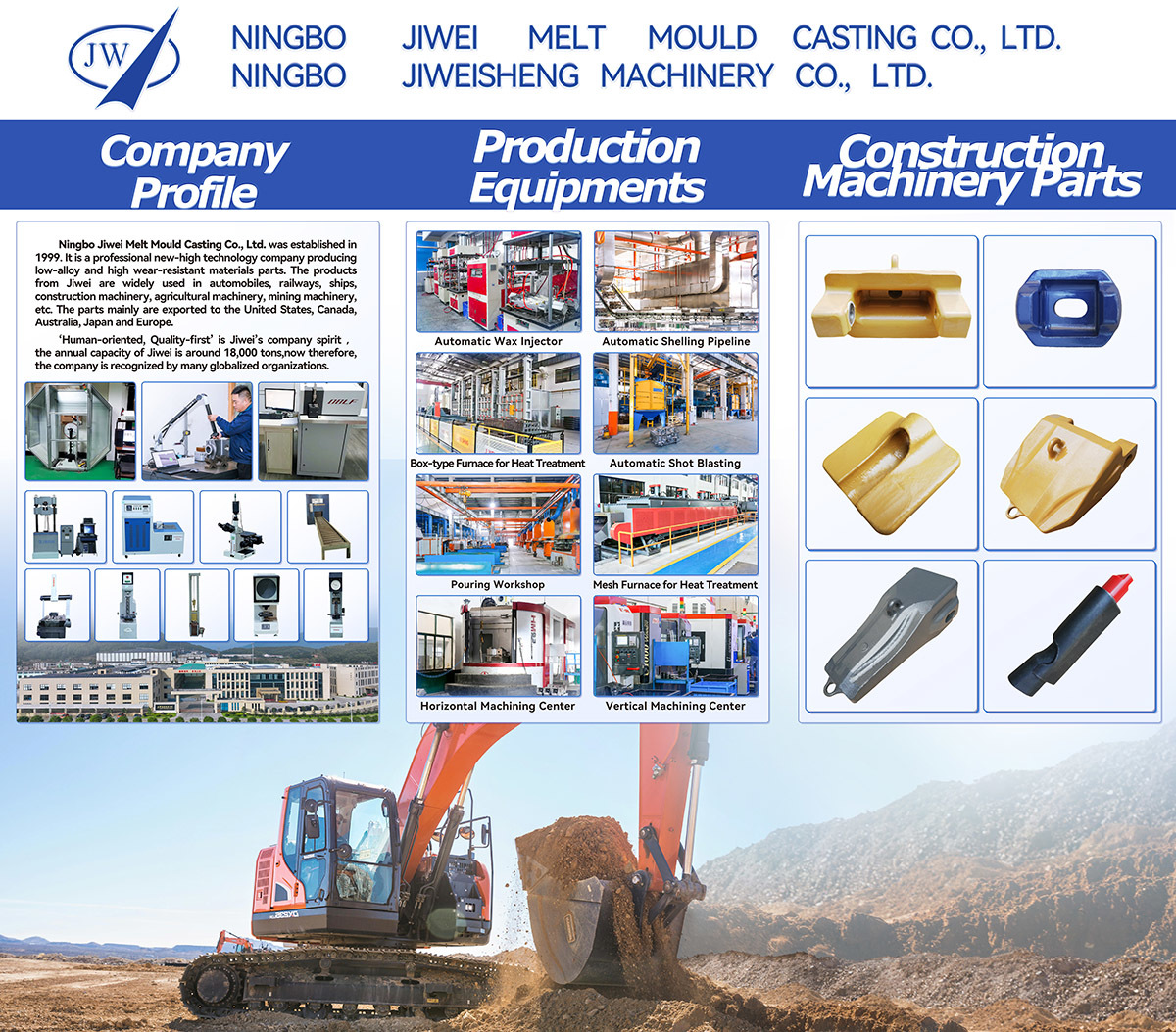
2025 Mexico Exhibition
Apr 30,2025
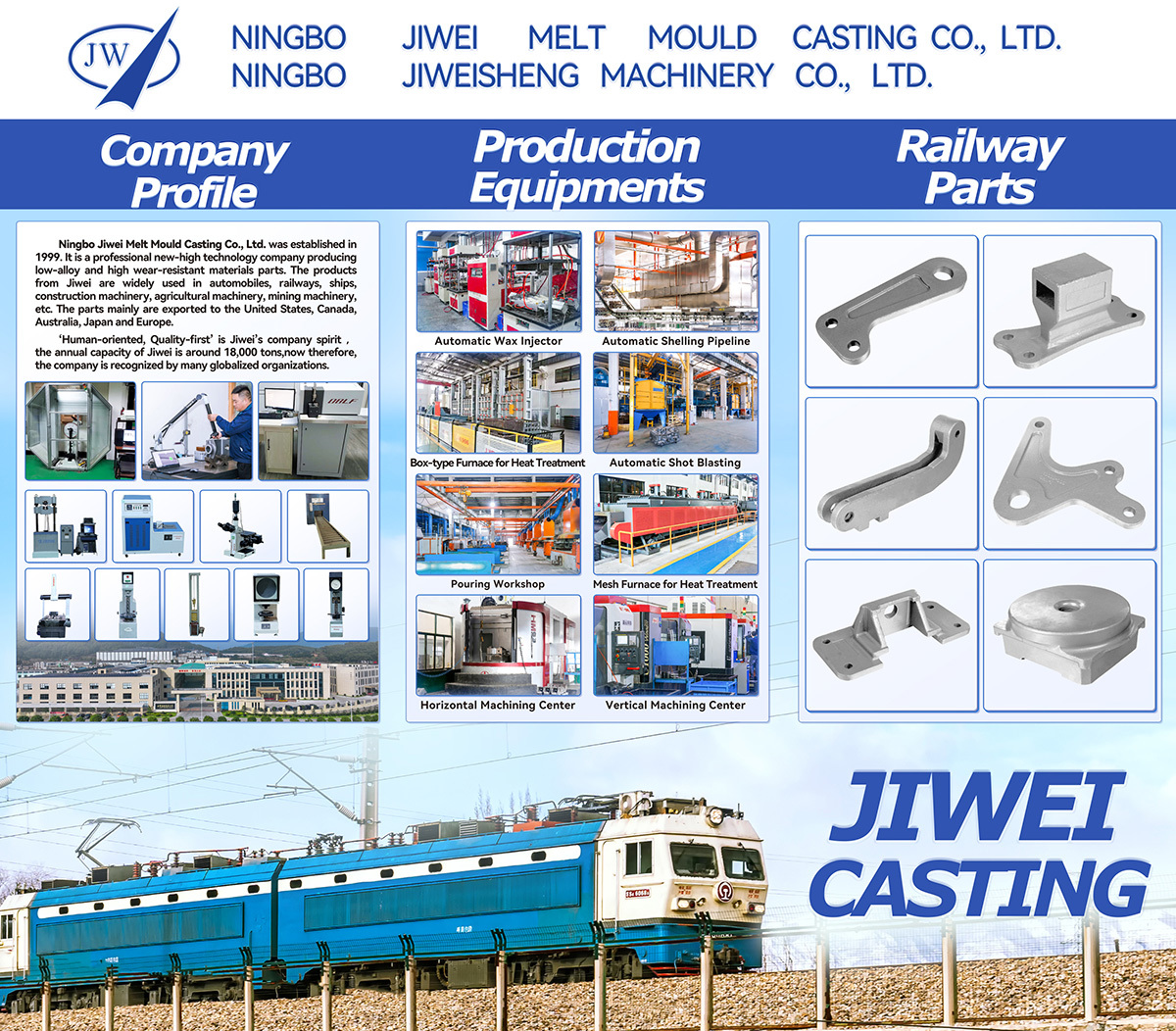
2025 American Rail Show