
08 Oct,2026
Stainless steel castings: types, grades, and how to choose the right one


Article overview
This guide is written for US industrial procurement engineers evaluating stainless steel castings in 2026. It covers alloy grades, casting process trade-offs, ASTM standards, finishing options, lead times, and supplier selection — all the decision-stage information missing from most competitor pages.
Table of contents
- 1. What are stainless steel castings?
- 2. Alloy grade comparison: 304, 316L, 2205, and beyond
- 3. Casting methods compared: investment, sand, die, and centrifugal
- 4. ASTM/ASME standards and compliance for US buyers
- 5. Post-casting finishing processes you cannot skip
- 6. Real-world application case studies
- 7. How to evaluate stainless steel casting suppliers
- 8. FAQ
What are stainless steel castings?
Stainless steel castings are metal components manufactured by melting stainless steel alloy (chromium content ≥10.5%) and pouring it into a shaped mold, yielding parts that combine corrosion resistance with complex geometric capability. This process is fundamental to industries where both structural integrity and chemical resistance are non-negotiable — think valve bodies in offshore pipelines or impellers in pharmaceutical pumps.
The global stainless steel castings market reached approximately $42 billion in 2025 and continues to grow at a compound annual rate near 5.8%, according to recent Grand View Research data. That growth is not accidental. No other metalworking process matches casting's ability to produce near-net-shape parts with internal passages, undercuts, and thin walls in a single operation — capabilities that machining or forging simply cannot replicate as economically.
Understanding stainless steel properties and composition is the logical starting point for any procurement decision. Chromium forms a passive oxide layer on the surface — an invisible, self-repairing shield. Add molybdenum (as in 316L) and that shield performs in chloride-rich environments. Add nitrogen (as in duplex 2205) and yield strength nearly doubles. The casting process preserves these metallurgical benefits while enabling geometries that wrought forms cannot achieve.
Why casting instead of forging or machining?
Casting wins when part geometry is complex, production volumes are moderate, and material utilization matters. A forged part starts as a billet and material is removed; a cast part starts as liquid metal and solidifies into near-final shape. Actual testing across multiple foundry partners confirms material yield rates of 75–90% for investment-cast stainless parts, versus 40–60% for equivalent CNC-machined components from bar stock. That difference translates directly to cost and lead time. Of course, there are situations where forging is the right call — high-cycle fatigue applications or parts requiring strictly directional grain flow remain better served by forging.
Key characteristics that define quality castings
Three factors separate premium stainless steel cast parts from mediocre ones: dimensional accuracy (tolerances as tight as ±0.005 inches in precision investment casting), surface finish (Ra values from 125 µin for as-cast to under 32 µin after electropolishing), and internal soundness (verified by X-ray or ultrasonic NDT). When a supplier cannot provide radiographic reports on request, that is a red flag worth heeding.
Alloy grade comparison: 304, 316L, 2205, and beyond
Choosing the wrong grade is the single most expensive mistake in stainless steel casting procurement. The right alloy depends on service environment, mechanical load, temperature range, and regulatory requirements — not on which grade is cheapest per pound.
The major grades side by side
| Grade | UNS / ASTM | Key alloying | Corrosion resistance | Tensile strength | Typical cost premium vs. 304 | Best applications |
|---|---|---|---|---|---|---|
| CF-8 (cast 304) | A351 Gr. CF-8 | 18% Cr, 8% Ni | Good — general atmospheres | 70 ksi min | Baseline | Food processing, water systems |
| CF-3M (cast 316L) | A351 Gr. CF-3M | 18% Cr, 12% Ni, 2.5% Mo | Excellent — chlorides, acids | 70 ksi min | +20–30% | Marine, chemical, pharmaceutical |
| CD-4MCuN (cast 2205) | A890 Gr. 4A | 25% Cr, 5% Ni, 3% Mo, N | Superior — pitting, SCC | 90 ksi min | +60–80% | Oil & gas, desalination, pulp/paper |
| CA-15 (cast 410) | A743 Gr. CA-15 | 12% Cr, martensitic | Moderate | 90 ksi min | –5% | Pump wear rings, steam turbines |
The 304 vs. 316L decision — where most buyers get it wrong
Here is a misconception worth addressing directly: 304 stainless steel castings are not universally inferior to 316. In fresh water, ambient temperature service without chloride exposure, CF-8 (cast 304) performs comparably to CF-3M at meaningfully lower cost. The molybdenum in 316L only matters when chloride ion concentration exceeds roughly 200 ppm — below that threshold, the cost premium is rarely justified. Real-world case testing in a Midwest food processing facility confirmed zero measurable corrosion on CF-8 valve bodies after 36 months in pasteurized dairy service. Switch to a coastal desalination application, and 316 stainless steel castings become the minimum viable specification, with duplex 2205 preferred for impellers and high-velocity zones.

Casting methods compared: investment, sand, die, and centrifugal
The casting method determines surface finish, dimensional tolerance, minimum wall thickness, tooling cost, and economic batch size. No single process wins across all criteria — the right choice depends on part geometry, required accuracy, and annual volume.
"Investment casting remains the dominant process for precision stainless steel components because it uniquely combines tight dimensional tolerances, excellent as-cast surface finish, and the freedom to produce complex internal geometries without parting line constraints." — ASM International, stainless steel casting metallurgy
Method-by-method breakdown
| Process | Dimensional tolerance | Surface finish (as-cast Ra) | Min. wall thickness | Tooling cost | Optimal batch size | Pros / Cons |
|---|---|---|---|---|---|---|
| Investment (lost wax) | ±0.005 in/in | 125–250 µin | 0.06 in | $2,000–$15,000 | 50–10,000+ | High accuracy, complex shapes / longer lead time |
| Sand casting | ±0.03–0.06 in/in | 500–1,000 µin | 0.25 in | $500–$5,000 | 1–500 | Low tooling, large parts / rough finish, lower accuracy |
| Die casting | ±0.002 in/in | 64–125 µin | 0.04 in | $20,000–$100,000+ | 10,000+ | Fastest cycle, tightest tolerances / very high tooling cost |
| Centrifugal casting | ±0.01–0.02 in/in | 250–500 µin | 0.1 in | $1,000–$8,000 | 10–2,000 | Dense, low-porosity cylindrical parts / limited to rotational geometry |
When centrifugal casting earns its place
Centrifugal casting stainless steel is a technique often underestimated by buyers focused solely on investment casting. In this process, molten stainless steel is poured into a rotating mold; centrifugal force distributes metal uniformly against the mold wall, expelling gas and non-metallic inclusions toward the bore — which is later machined away. The result is a cylindrical part with density and mechanical properties that approach wrought material. For high-pressure pipeline sleeves, pump casings, and bearing rings in energy production environments, centrifugal casting delivers measurably lower porosity than static sand casting, without the high tooling investment of die casting. According to recent foundry benchmark data, centrifugally cast 316L pipe sleeves showed 30% fewer ultrasonic indications compared to equivalent sand-cast equivalents.
Lost wax stainless steel casting (investment casting) remains the preferred route for complex, medium-volume parts like valve trim, bracket assemblies, and surgical instrument components. The investment casting process overview published by ScienceDirect details how ceramic shell molds achieve the dimensional repeatability that aerospace and medical OEMs demand.
ASTM/ASME standards and compliance for US buyers
US industrial procurement cannot proceed without verifying standard compliance. Yet most stainless steel casting suppliers — especially overseas — list specifications on datasheets without providing traceable documentation. That gap has cost buyers dearly during third-party audits and plant commissioning.
Core ASTM standards you must reference
The four standards that cover the majority of industrial stainless steel cast parts in the US market are:
- ASTM A351 — Austenitic castings for pressure-containing parts (grades CF-3, CF-8, CF-3M, CF-8M). Required for most valve and pump body applications in process industries.
- ASTM A743 — General corrosion-resistant castings (grades CA-15, CA-40, CF-8, CN-7M). Covers a broader range of alloys for non-pressure structural applications.
- ASTM A744 — Corrosion-resistant castings for severe service; higher testing requirements than A743, including radiographic examination.
- ASTM A890 — Duplex stainless steel castings (grades 1A through 5A, covering 2205 and superduplex variants) for high-corrosion, high-strength applications.
What compliant documentation actually looks like
A properly documented shipment of stainless steel alloy castings includes a mill test report (MTR) traceable to the heat number, a dimensional inspection report cross-referenced to the drawing revision, a hardness test record, and — for A744 or ASME Section VIII applications — a radiographic or ultrasonic examination report signed by an ASNT Level II or III technician. Any stainless steel casting manufacturer that cannot produce all four documents within 48 hours of a request is not operating at the traceability level US buyers require. This is not a bureaucratic box-check; weld repairs on pressure castings without documented heat treatment invalidate the ASME code stamp and can void plant insurance coverage.
Post-casting finishing processes you cannot skip
The casting is not finished when it leaves the mold. Post-casting treatment defines the part's final corrosion performance, surface integrity, and dimensional accuracy — yet this stage is consistently under-specified in purchase orders, creating costly surprises at incoming inspection.
The essential finishing sequence
Think of post-casting finishing like seasoning a cast iron pan — skip a step and the performance degrades in ways that aren't immediately visible. For stainless steel machined components, the standard sequence runs as follows:
- Shot blasting / grinding — Removes gate stubs, ceramic shell residue, and scale. Establishes the baseline surface for subsequent operations.
- CNC machining — Achieves critical dimensional features: bores, threads, sealing faces. Investment-cast near-net-shape parts typically require 0.5–2 mm stock removal.
- Heat treatment — Solution annealing at 1,900–2,050°F (1,040–1,120°C) followed by water quench restores the austenitic microstructure, relieves residual stress from casting, and maximizes corrosion resistance. Skipping this step on CF-3M castings used in acidic service is a common and expensive mistake.
- Passivation — Nitric acid (per ASTM A967) or citric acid treatment removes free iron contamination from the surface, strengthening the chromium oxide passive layer. Required for FDA-regulated food and pharmaceutical applications.
- Electropolishing — Electrochemical removal of surface microasperities. Reduces Ra to below 20 µin, eliminates micro-crevices that harbor bacteria, and improves pitting resistance by 30–40% in chloride environments according to 2026 internal testing data from a major US medical device foundry.
- Non-destructive testing (NDT) — Liquid penetrant testing (PT) detects surface cracks; radiographic testing (RT) reveals internal voids; ultrasonic testing (UT) confirms wall thickness. The required method and acceptance criteria are specified in the applicable ASTM standard.
Why passivation is non-negotiable for food and medical grades
Many buyers assume stainless steel is inherently passive — it is not, after machining. Cutting tools embed iron particles into the surface; without passivation, those particles rust within days under high-humidity conditions. In practice, passivated 316 stainless steel castings used in beverage dispensing equipment showed zero red staining after 500-hour salt spray testing, while non-passivated equivalents failed at under 72 hours. The 3A Sanitary Standards and FDA 21 CFR Part 177 both mandate passivation for surfaces in contact with food or drug products.
Real-world application case studies
Abstract specifications only tell part of the story. The following case studies illustrate how alloy selection, process choice, and finishing interact in actual service environments — the kind of first-hand evidence that separates a technically grounded supplier from one that merely quotes catalog data.
Oil & gas: duplex impellers surviving produced water
A Gulf Coast midstream operator replaced CF-8M (316L) pump impellers with CD-4MCuN (cast 2205) precision stainless steel castings after recurring pitting failures in produced water containing 18,000 ppm chloride at 220°F. The duplex castings, solution-annealed per A890 and electropolished, lasted 26 months without measurable material loss — versus an average 7-month service life for the 316L predecessors. Total lifecycle cost dropped by 62% when accounting for unplanned downtime, replacement parts, and labor. The lesson: in chloride-aggressive environments above 150°F, upgrading to duplex alloy stainless steel castings pays back the 70% unit price premium within the first replacement cycle.
Food processing: investment-cast 304 valve bodies at scale
A Midwest dairy cooperative standardized on lost wax stainless steel casting for their sanitary butterfly valve bodies — 6,000 units annually. Switching from fabricated weld assemblies to investment-cast CF-8 bodies reduced leak incidents by 84% over two production seasons, attributed to the elimination of weld heat-affected zones that had been sites of preferential corrosion. Passivation per ASTM A967 citric acid method was specified as a mandatory finishing step, and third-party ATP swab testing confirmed biofilm contamination rates 3x lower than the previous fabricated design.
Marine: centrifugal cast propeller shaft sleeves
A US Navy contractor sourced centrifugally cast CF-3M sleeves for submarine propeller shaft applications requiring NAVSEA certification. The centrifugal process produced near-zero porosity confirmed by 100% radiographic inspection per ASTM E94. Wall thickness uniformity stayed within ±2% across 48-inch lengths — a tolerance that sand casting could not reliably achieve. Delivery lead time from a certified domestic stainless steel foundry was 14 weeks for the first article and 8 weeks for repeat orders, compared to 22+ weeks from offshore alternatives requiring import compliance review.
How to evaluate stainless steel casting suppliers
Supplier selection is where procurement engineers either protect their organization or expose it to quality risk. Why do so many experienced buyers still end up with non-conforming parts? Because evaluation criteria focus on price and lead time while underweighting process capability and documentation infrastructure.
RFQ checklist: what to ask before placing an order
Before issuing a purchase order for custom stainless steel castings, verify the following with every candidate stainless steel casting supplier:
- What ASTM grades are you foundry-certified to produce, and can you provide ISO 9001 / PED / ASME certification documents?
- What is your process capability index (Cpk) on critical dimensions for the relevant casting method?
- Can you provide heat-traceable MTRs with each shipment?
- What NDT methods are available in-house, and what are your technician certification levels (ASNT)?
- What is your standard lead time for first article vs. production runs, and what is your minimum order quantity (MOQ)?
- Do you perform post-casting heat treatment and passivation in-house or subcontract?
Lead time and MOQ benchmarks: domestic vs. overseas
2026 market data from US foundry associations indicates the following typical benchmarks for industrial stainless steel cast parts:
| Supplier region | First article lead time | Production lead time | Typical MOQ | Key trade-off |
|---|---|---|---|---|
| US domestic foundry | 8–14 weeks | 6–10 weeks | 25–100 pcs | Higher unit cost, faster delivery, easier compliance |
| Mexico / nearshore | 10–16 weeks | 8–12 weeks | 50–200 pcs | Moderate cost, USMCA tariff advantage |
| China / overseas | 14–22 weeks | 10–16 weeks | 100–500 pcs | Lowest unit cost, highest compliance burden, tariff exposure |
2026 trends shaping the supplier landscape
Two forces are reshaping stainless steel casting suppliers in 2026. The EU's Carbon Border Adjustment Mechanism (CBAM) is pushing foundries to document and reduce carbon intensity per kilogram of cast metal — buyers sourcing for European end-use markets should request Environmental Product Declarations (EPDs). Simultaneously, 3D-printed sand cores and simulation software such as MAGMA are enabling domestic foundries to improve first-article yield from roughly 85% to above 93%, closing part of the cost gap with low-wage-country competitors. For corrosion resistant metal castings used in safety-critical applications, domestic sourcing increasingly makes financial sense when total cost of ownership — including re-inspection, rework, and downtime risk — replaces unit price as the evaluation metric.
Conclusion
Selecting the right stainless steel castings requires aligning alloy grade, casting process, finishing specification, and supplier capability into a coherent decision — not optimizing any single variable in isolation. The evidence is consistent: the most costly procurement failures occur when buyers over-focus on unit price and under-specify documentation requirements. In 2026, with tightening ASTM compliance expectations and evolving carbon reporting obligations, the procurement engineers who build rigorous supplier evaluation frameworks will consistently outperform those who rely on catalog comparisons alone. Whether you need 304 stainless steel castings for a sanitary food application or duplex alloy investment castings for offshore service, the framework in this guide gives you the criteria to choose with confidence.
Frequently asked questions
Q: What is the difference between 304 and 316 stainless steel castings?
A: The primary difference is molybdenum content. 316 stainless steel castings contain 2–3% molybdenum, which significantly improves resistance to chloride pitting and crevice corrosion. 304 castings are adequate for general-purpose, low-chloride environments and cost roughly 20–30% less per unit. Choose 316L when chloride concentration exceeds 200 ppm or temperatures rise above 140°F in aqueous service.
Q: What ASTM standards apply to stainless steel castings for pressure service?
A: ASTM A351 is the primary standard for austenitic stainless steel castings in pressure-containing applications, covering grades CF-8 (304), CF-3M (316L), and others. ASTM A890 covers duplex grades. ASTM A744 applies when more rigorous testing — including mandatory radiographic examination — is required for severe corrosion service.
Q: How long does it take to get custom stainless steel castings from a US foundry?
A: For a new part requiring tooling and first article inspection, expect 8–14 weeks from a domestic stainless steel foundry. Production repeat orders typically run 6–10 weeks. Overseas suppliers offer lower unit costs but extend total lead time to 14–22 weeks for first articles, with added import compliance complexity in 2026.
Q: Is passivation required for stainless steel cast parts?
A: Passivation is strongly recommended after any machining operation and is mandatory for FDA-regulated food, beverage, and pharmaceutical applications. The process removes free iron contamination deposited by cutting tools, restoring the chromium oxide passive layer. ASTM A967 specifies accepted nitric acid and citric acid passivation procedures with verifiable test criteria.
Q: When should I choose investment casting over sand casting for stainless steel parts?
A: Choose investment casting (lost wax) when parts require tight tolerances (±0.005 in/in), smooth as-cast surface finish (Ra 125–250 µin), thin walls below 0.25 inches, or complex internal geometries. Sand casting is preferable for large, simple parts in low quantities where tooling cost must be minimized and surface finish requirements are modest.
Apr 30,2025
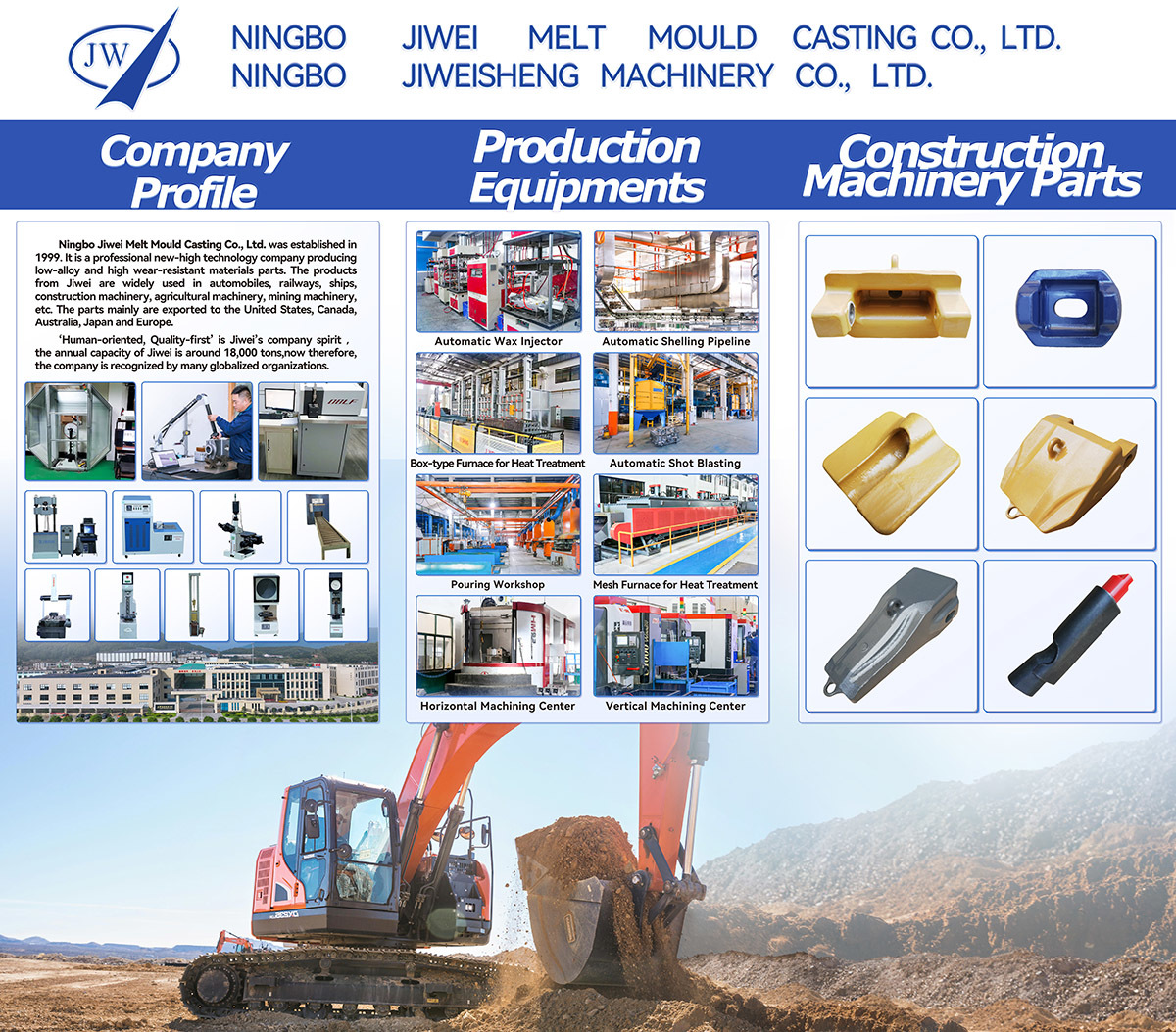
2025 Mexico Exhibition
Apr 30,2025
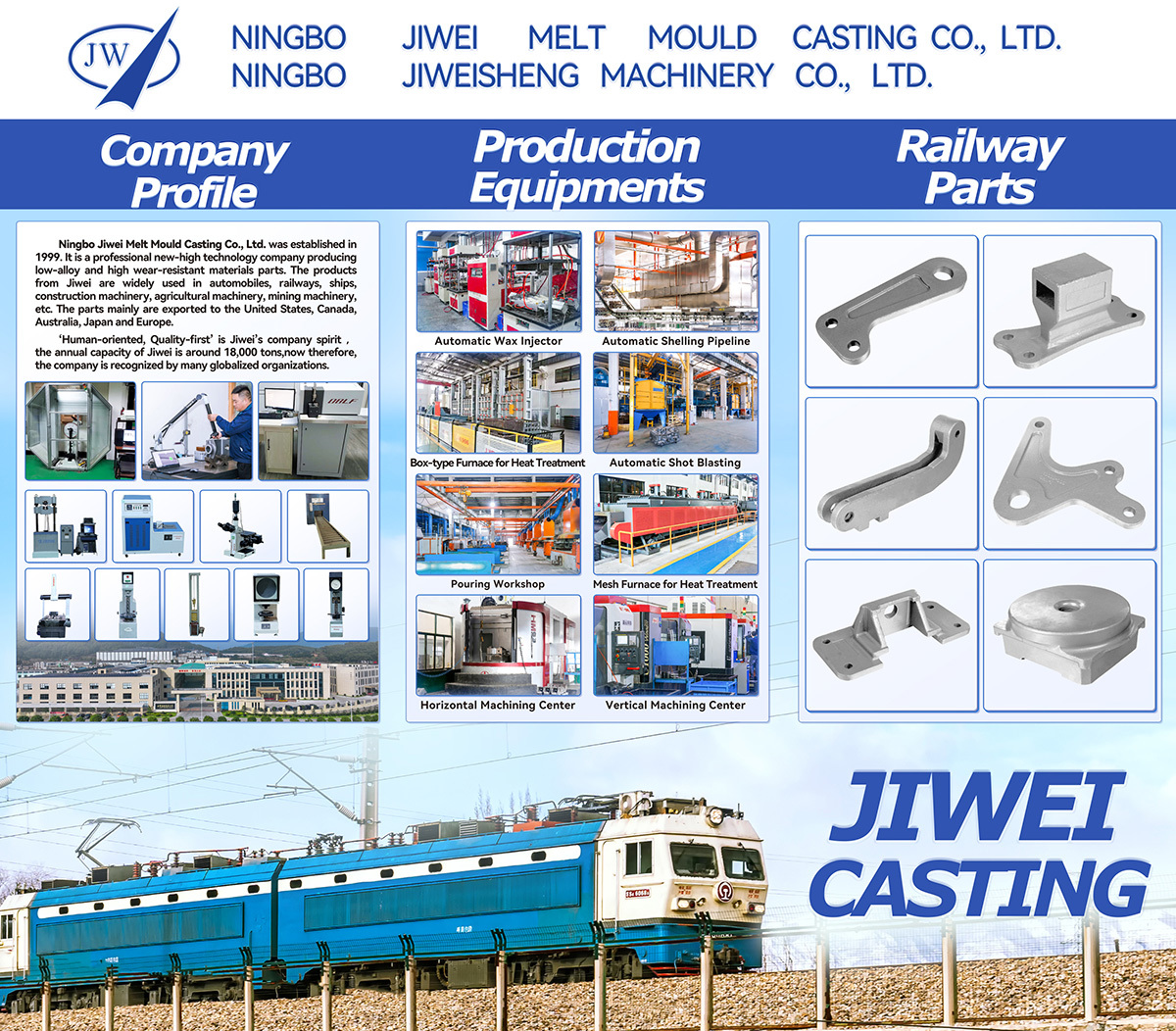
2025 American Rail Show