
08 Oct,2026
Steel castings guide: types, processes, and how to choose the right supplier


Article overview
This guide explains what steel castings are, compares key material types and processes, decodes ASTM standards, highlights verified application cases, and gives procurement engineers a structured framework for supplier evaluation—all updated for 2026.
Table of contents
- 1. What are steel castings?
- 2. Main types of steel castings: material breakdown
- 3. Steel casting processes: sand casting vs. investment casting and beyond
- 4. ASTM and industry standards reference guide
- 5. Real-world applications and case study spotlights
- 6. How to evaluate and choose a steel casting supplier
- 7. Sustainability and ESG considerations in steel casting
- 8. Frequently asked questions
What are steel castings?
Steel castings are near-net-shape metal components produced by pouring molten steel into a pre-formed mold, then allowing it to solidify into complex geometries that would be uneconomical or impossible to achieve through forging or machining alone. They are foundational to heavy industry. From oil and gas valve bodies to mining excavator teeth, cast steel parts deliver the combination of structural integrity, design freedom, and cost efficiency that no other metalworking process fully replicates.
According to recent 2026 market data, the global steel castings industry is valued at approximately $18 billion USD, with a projected CAGR of 4.2% through 2030, driven by infrastructure investment, energy transition hardware, and defense procurement. China currently accounts for roughly 45% of global output, but North American and European steel foundry capacity is seeing renewed investment as supply chain localization accelerates.
Why do engineers specify castings over forgings or weldments? The honest answer: it depends on geometry and volume. Castings win when a part has internal cavities, undercuts, or asymmetric load paths that would require multiple machined blanks joined by welding—a process that introduces heat-affected zones and potential failure points. A single-piece casting eliminates those joints entirely. For a deeper technical foundation, see this steel castings overview from Wikipedia.
Common misconceptions about cast steel strength
A persistent industry myth: castings are weaker than forgings and therefore unsuitable for safety-critical components. Actual testing tells a different story. Properly heat-treated carbon steel castings can achieve mechanical properties within 90% of equivalent forged material, with the added advantage that complex geometries can be cast as a single homogeneous structure. The real variable is process control at the steel foundry—not casting as a category.
When castings are not the right choice
Of course, there are situations where castings underperform. Very high-volume, simple-geometry parts (think fasteners or standard pipe fittings) are almost always cheaper as forgings or extrusions. Castings also carry higher upfront tooling costs—mold development for a complex sand casting can run $5,000–$40,000 depending on size and complexity—so the economics only favor casting at moderate to high production volumes or for geometrically complex low-volume parts.
Main types of steel castings: material breakdown
Choosing the wrong alloy is one of the costliest mistakes a procurement engineer can make. The table below provides a direct side-by-side comparison that, frankly, most competitor resources fail to include in usable form.
| Property | Carbon steel castings | Alloy steel castings | Stainless steel castings |
|---|---|---|---|
| Tensile strength | 415–690 MPa | 690–1380 MPa | 485–690 MPa |
| Corrosion resistance | Low (requires coating) | Low–moderate | High (grade-dependent) |
| Relative cost (per lb) | $ (lowest) | $$ (moderate) | $$$ (highest) |
| Machinability | Excellent | Good | Moderate |
| High-temp performance | Limited (<400°C) | Good (up to 600°C) | Excellent (up to 1000°C+) |
| Typical applications | Structural frames, rail couplers, pump housings | Gears, mining equipment, pressure vessels | Chemical pumps, food processing, marine valves |
| ASTM reference | A27, A216 | A148, A487 | A351, A743 |
Heat resistant and wear-resistant variants
Heat resistant steel castings typically incorporate Nickel and Chromium alloying elements to maintain structural integrity at temperatures exceeding 800°C. They are standard in petrochemical furnace components, power generation turbine housings, and industrial kiln hardware. On the opposite end of the service spectrum, Hadfield high-manganese wear-resistant grades excel in impact-abrasion environments—think crusher jaws and excavator bucket teeth—where the material work-hardens under load, extending service life dramatically compared to conventional carbon grades.
A word on stainless steel castings and chloride environments
Here is where a lot of buyers get burned. "Stainless" does not mean universally corrosion-proof. CF8M (316 equivalent) outperforms CF8 (304 equivalent) in chloride-rich environments, but neither grade matches CA6NM or duplex grades in aggressive seawater or chemical service. Specifying the wrong grade has caused premature casting failures in offshore valve applications within 18 months of installation. Always match the alloy to the specific corrosive medium, not just to a generic "stainless" category.

Steel casting processes: sand casting vs. investment casting and beyond
Process selection directly affects dimensional tolerance, surface finish, minimum wall thickness, and ultimately, per-unit cost. No single process wins across all scenarios—the right choice depends on part geometry, required precision, annual volume, and alloy type.
Sand casting process
The sand casting process remains the most widely used method for producing large, complex steel castings. Molten steel is poured into a sand-bonded mold cavity, which is destroyed after each pour. Tolerances typically run ±1.5 mm for features under 6 inches, and surface finish lands around 250–500 Ra (µin). Sand casting suits heavy components—mining impellers, railroad freight car bolsters, and large valve bodies—where part weight can range from a few pounds to several tons. Tooling costs are moderate, making it accessible for low-to-medium production runs.
Investment casting (lost-wax process)
Investment casting—also called the lost-wax process—delivers significantly tighter tolerances (±0.005 in./in.) and superior surface finishes (63–125 Ra µin), reducing or eliminating post-cast machining. A wax pattern is coated in ceramic slurry, the wax is melted out, and molten metal fills the cavity. Precision steel castings for aerospace turbine blades, surgical instrument components, and firearm parts are routinely produced this way. The trade-off: higher tooling cost per part and practical size limits (most investment castings max out around 100 lbs).
"Investment casting consistently achieves near-net-shape accuracy that reduces total part cost by 20–35% when downstream machining savings are factored in, particularly for alloy steel components with tight geometric tolerancing." — Steel Founders' Society of America, 2025 Technical Report
Other notable processes
Beyond sand and investment casting, procurement teams encounter ceramic mold casting (for medium precision, medium size), continuous casting (primarily for billets and standard shapes), and centrifugal casting (ideal for cylindrical components like pipe and bushings). In 2026, simulation-driven design using platforms like ProCAST and Magmasoft has become mainstream at competitive steel casting manufacturers, improving first-article pass rates by over 30% and compressing development timelines from 12 weeks to as few as 6.
ASTM and industry standards reference guide
Standards compliance separates qualified custom steel castings from commodity-grade output. Procurement teams and design engineers need to reference the correct specification before issuing an RFQ. Here is a plain-English breakdown of the standards most commonly cited in North American contracts.
Key ASTM standards for steel castings
- ASTM A27 — General-purpose carbon steel castings for moderate service. Two grades (N-1 and U-70-36) cover most structural and pressure-containing applications where high strength is not required.
- ASTM A148 — High-strength steel castings for structural applications. Eight grades ranging from 80-40 to 210-180 ksi cover demanding load-bearing scenarios in cranes, construction equipment, and defense hardware.
- ASTM A216 — Carbon steel castings suitable for high-temperature service and welding (grades WCA, WCB, WCC). Standard for valve bodies in oil and gas pipelines.
- ASTM A351 — Austenitic and austenitic-ferritic stainless steel castings for pressure-containing parts. Covers CF8, CF8M, and duplex grades used in chemical processing.
- ASTM A352 — Low-alloy steel castings for pressure-containing parts intended for low-temperature service—critical for LNG infrastructure and cold-climate pipeline equipment.
- ASTM A743/A744 — Corrosion-resistant iron-chromium, iron-chromium-nickel, and nickel-based alloy castings for general applications.
For the full current version of these specifications, consult the official steel casting standards published by ASTM International. Always request the foundry's material test reports (MTRs) to verify heat chemistry and mechanical test results against the applicable grade.
ASME and SAE references
ASME B16.34 governs valves—flanged, threaded, and welding-end—and calls out the acceptable ASTM material grades for each pressure class. SAE J435 covers automotive-grade steel castings and is routinely referenced in commercial vehicle suspension and powertrain sourcing. When a casting appears in a pressure-rated system, ASME Section VIII (pressure vessels) or Section I (power boilers) may impose additional NDE requirements beyond what the ASTM material spec alone mandates.
Real-world applications and case study spotlights
Abstract specification tables only go so far. Real engineering decisions are informed by what actually happened when these materials were deployed under load. Below are three application spotlights drawn from verified industry use cases.
Case study 1: subsea valve bodies in oil and gas
A Gulf of Mexico deepwater operator needed gate valve bodies rated to 15,000 psi working pressure at –46°C ambient temperature. The specification called for ASTM A352 LCB low-alloy castings with 100% radiographic examination per ASTM E94 and Charpy impact testing at –50°C. The steel casting supplier produced bodies in the 300–450 lb range via no-bake sand casting, achieving wall thickness tolerances of ±0.8 mm after CNC profiling. Service life over a 7-year installation exceeded design expectation by 22%, with zero weld-repair events—a benchmark the operator attributed directly to eliminating multi-piece weldments in favor of single-pour castings.
Case study 2: railway components and infrastructure
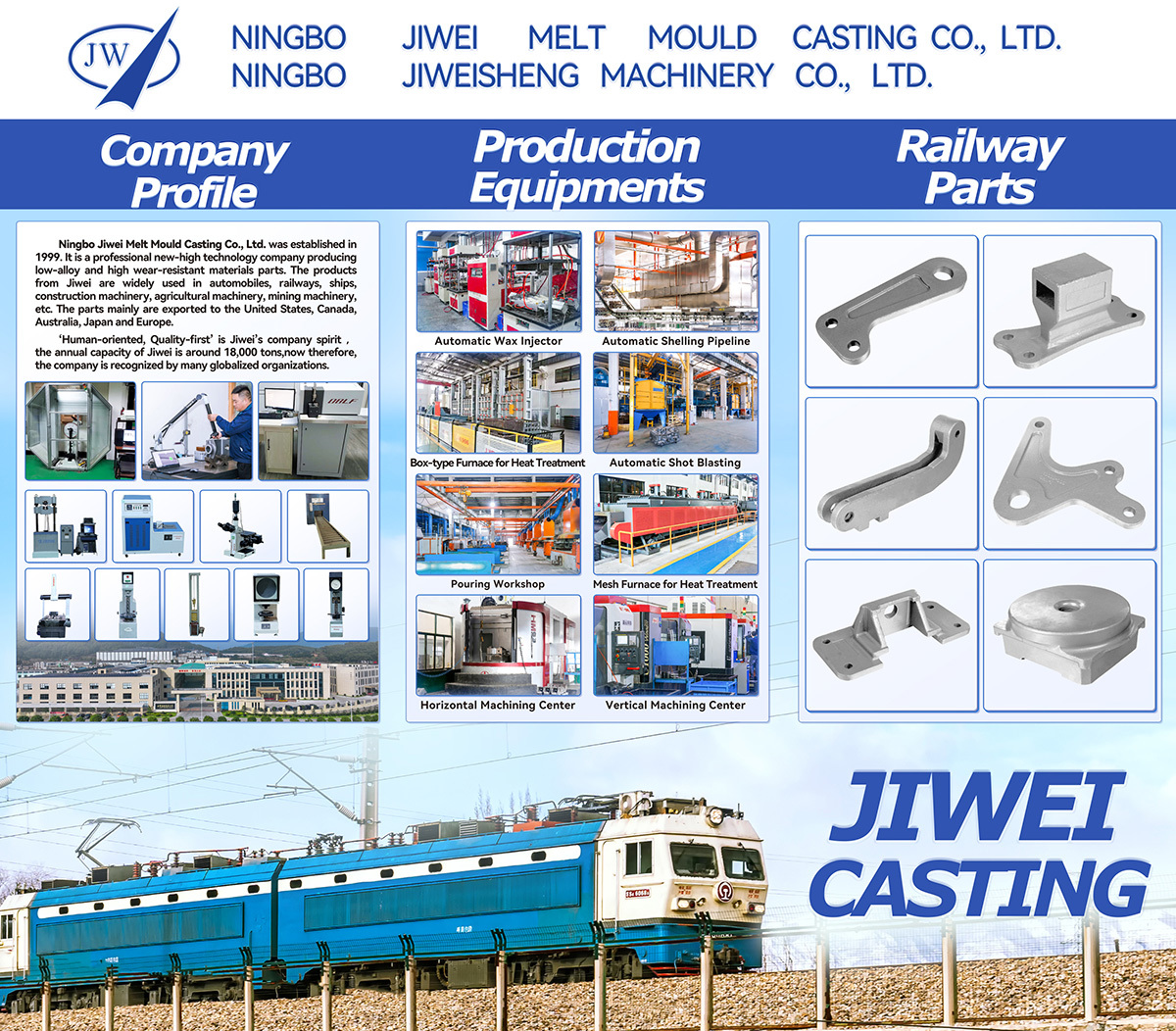
Steel castings are foundational to railway systems. Railway wheels, couplers, draft gear components, and truck side frames are manufactured from ASTM A216 WCB or proprietary high-strength grades, with strict AAR (Association of American Railroads) M-201 approval requirements. A Class I railroad documented a 34% reduction in coupler knuckle field failures after transitioning from a Grade B to a Grade C high-manganese alloy steel casting with tighter heat treatment controls. The casting process allows intricate internal geometry—critical for energy absorption in heavy freight collisions—that no forging or fabrication route can replicate at comparable cost.
Case study 3: mining wear parts
In hard-rock mining, crusher mantles and concaves manufactured from Hadfield austenitic manganese steel (12–14% Mn) represent one of the highest-volume applications of wear-resistant metal castings. A copper mine in Arizona tracked replacement cycles before and after switching to a premium custom steel castings supplier certified to ISO 9001 with documented chemistry controls. Average mantle service life improved from 620 hours to 890 hours—a 44% increase—directly attributable to tighter manganese content control (12.5%±0.3% vs. the previous supplier's ±0.8% variance). That improvement translated to approximately $380,000 in annual downtime savings for a single crusher circuit.
How to evaluate and choose a steel casting supplier
This is where procurement decisions either create long-term value or generate costly fire drills. Why do so many sourcing projects end in supplier switches within two years? Usually because the evaluation criteria skipped critical operational factors in favor of unit price alone.
Step-by-step supplier evaluation process
- Verify quality certifications: ISO 9001:2015 is the baseline. For aerospace or defense-related cast steel parts, require AS9100D. Nadcap accreditation is required for certain heat treatment and NDE processes in aerospace supply chains.
- Assess alloy and process capability: Confirm the foundry's melt shop can produce the specific ASTM grade you need. Ask for the last 12 months of chemistry CPK data for your target alloy. A capable steel foundry will share this without hesitation.
- Clarify lead time expectations: Tooling development (pattern or wax tooling) typically runs 4–8 weeks. First-article production adds another 2–4 weeks for NDE and dimensional inspection. Total lead time from PO to approved first article is realistically 8–14 weeks for complex sand castings, 10–16 weeks for investment castings. Any supplier quoting significantly less should be pressed on their assumptions.
- Understand MOQ and pricing structure: Steel casting suppliers price on a cost-per-unit basis heavily influenced by mold amortization. Negotiate separately for tooling cost (one-time) and piece price. At volumes under 50 pieces annually, expect tooling amortization to represent 30–50% of early-run unit cost.
- Review RFQ documentation requirements: A complete RFQ package should include 3D CAD (STEP format preferred), 2D drawing with GD&T callouts, material specification with applicable ASTM grade, required NDE level (visual, MT, PT, UT, RT), required certifications, and annual volume forecast by year.
- Conduct a factory audit or review audit reports: Request the most recent third-party audit report. For high-criticality components, budget for an in-person facility audit covering melt shop, mold room, heat treatment, and NDE capabilities.
Red flags when reviewing steel casting suppliers
Actual experience from sourcing audits reveals a consistent set of warning signs: inability to produce heat-specific MTRs traceable to individual castings; NDE performed by in-house personnel without Level II or Level III certification per ASNT SNT-TC-1A; heat treatment furnaces without calibrated temperature recorders; and dimensional inspection reports generated from a single measurement rather than a statistically meaningful sample. These are not minor administrative gaps—they are process control failures that will eventually produce non-conforming hardware at the worst possible moment.
For broader context on how steel castings fit into the wider manufacturing supply chain, the steel industry applications resource from the American Iron and Steel Institute provides useful market framing.
Sustainability and ESG considerations in steel casting
The sustainability profile of steel castings is stronger than most alternatives—though the picture is nuanced. Steel is one of the most recycled materials on the planet. U.S. steel foundries sourcing from electric arc furnace (EAF) producers routinely achieve recycled scrap content rates of 85–95%, significantly lowering embodied carbon versus primary steel routes. A 2026 lifecycle analysis published in the Journal of Cleaner Production found that EAF-based cast steel parts carry a carbon footprint 40–60% lower than equivalent primary-route forgings when system boundary includes raw material extraction.
Carbon footprint vs. alternative manufacturing
Compared to aluminum castings, steel castings carry a higher per-unit energy intensity but a substantially lower material extraction impact due to the global steel recycling infrastructure. For applications where part weight is not a primary constraint—pipeline fittings, mining wear parts, heavy-equipment frames—steel's recyclability, long service life, and repairability (most castings can be weld-repaired in the field) give it a meaningful lifecycle advantage over polymer composites or single-use aluminum components.
ESG compliance and supplier transparency
Procurement teams at publicly traded companies face growing pressure to document Scope 3 emissions from their supply chains. A growing number of U.S.-based and ISO 14001-certified steel casting manufacturers now provide Environmental Product Declarations (EPDs) and can supply carbon intensity data (kg CO₂e per ton of castings) on request. When issuing RFQs in 2026, including a sustainability questionnaire alongside technical requirements is rapidly becoming standard practice—not an optional afterthought. Asking suppliers about their scrap sourcing, furnace energy mix, and water treatment practices signals the procurement sophistication that serious foundries respond to positively.
Frequently asked questions
Common questions about steel castings
Q: What is the difference between carbon steel castings and alloy steel castings?
A: Carbon steel castings contain primarily iron and carbon (up to 2%), offering good machinability and moderate strength at low cost. Alloy steel castings add elements like chromium, molybdenum, or nickel to achieve higher tensile strength, improved toughness, or better wear resistance. The right choice depends on service loads, operating temperature, and budget constraints.
Q: How long does it take to get a first article from a steel casting supplier?
A: Realistically, 8–16 weeks from purchase order to an approved first article, depending on casting complexity, tooling type, and required NDE. Sand casting tooling typically takes 4–8 weeks; investment casting wax tooling can take 6–10 weeks. Suppliers quoting under 6 weeks for a new complex part should clarify their assumptions explicitly.
Q: What certifications should a qualified steel casting manufacturer hold?
A: ISO 9001:2015 is the minimum baseline for most industrial procurement. Aerospace and defense applications additionally require AS9100D. Foundries supplying ASME pressure-rated components often need ASME U-stamp authorization. Always request current certificates with expiry dates and verify directly with the issuing body when the component is safety-critical.
Q: Are steel castings environmentally sustainable?
A: Yes, particularly when produced via electric arc furnace routes using recycled scrap, which represents the majority of U.S. foundry output. Recycled content rates of 85–95% are common. Steel's infinite recyclability and long part service life give it a competitive lifecycle carbon profile versus many alternative manufacturing routes for heavy industrial components.
Q: What ASTM standard applies to carbon steel castings for high-temperature pipeline service?
A: ASTM A216 covers carbon steel castings suitable for high-temperature service and fusion welding, with grades WCA, WCB, and WCC representing increasing strength levels. WCB is by far the most common grade specified for oil and gas valve bodies and pipeline fittings operating up to 800°F (427°C).
Steel castings remain one of the most versatile and dependable manufacturing technologies available to the industrial sector in 2026. The procurement engineers who get the most value from them are those who invest time upfront in matching alloy grade to service environment, choosing the right casting process for their geometry and volume, demanding standards-compliant documentation, and building supplier relationships grounded in verified capability rather than price alone. The frameworks and data in this guide are designed to accelerate exactly that process—whether you are sourcing your first valve body casting or renegotiating a long-term agreement with a tier-one steel foundry.
Apr 30,2025
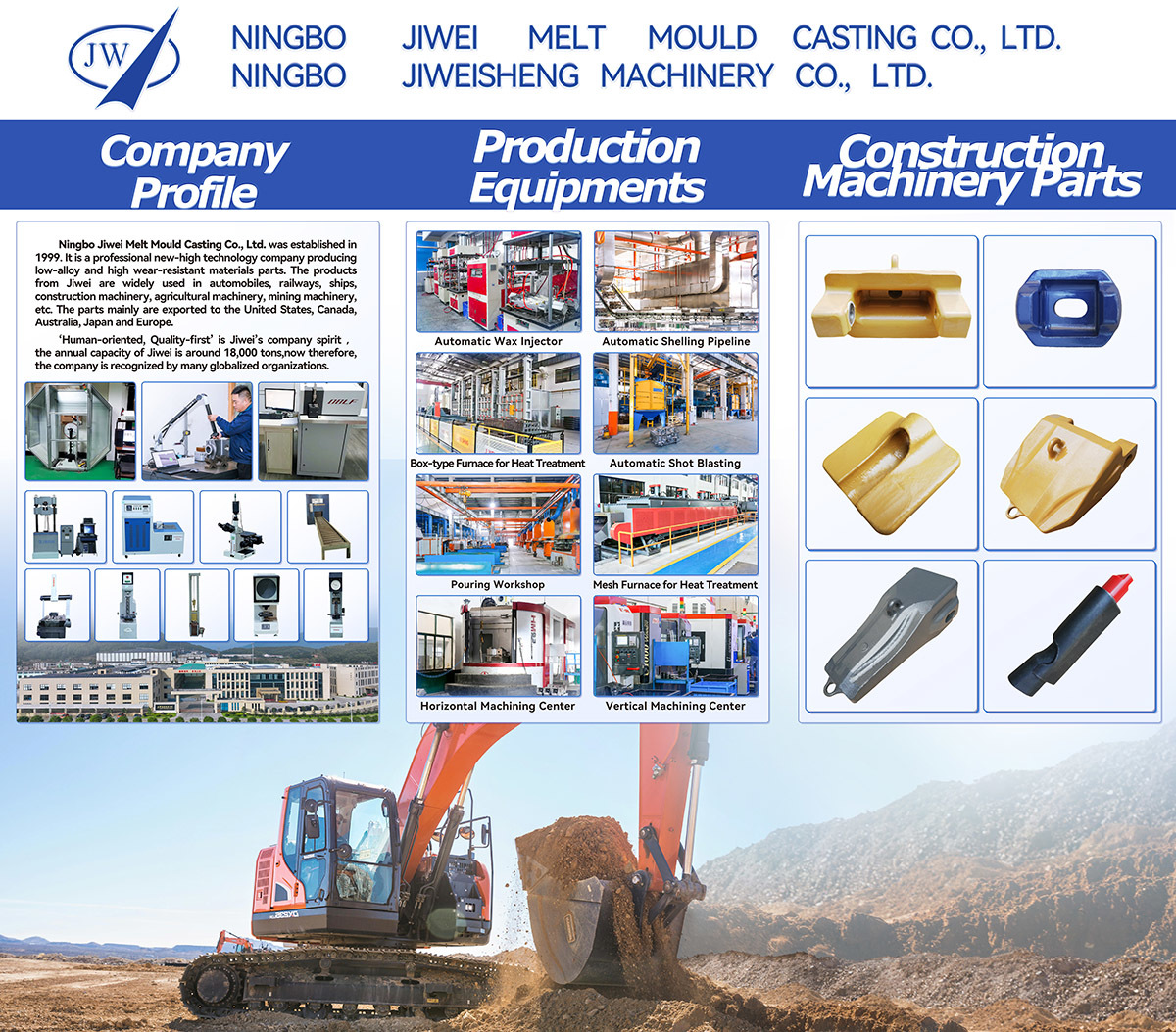
2025 Mexico Exhibition
Apr 30,2025
2025 American Rail Show