
17 Nov,2026
Understanding material traceability in China cast steel foundry factories


Article overview
This guide covers material traceability practices, documentation standards, regional supplier landscapes, cost benchmarks, U.S. trade compliance, quality metrics, and step-by-step supplier qualification for buyers evaluating China cast steel foundry factories in 2026.
Table of contents
- 1. What material traceability means in cast steel production
- 2. How China cast steel foundry factories implement heat number tracking
- 3. Compliance documentation: MTC, NDT, and third-party inspection reports
- 4. Regional foundry clusters in China: capabilities and trade routes
- 5. Cost structure and pricing benchmarks for U.S. buyers
- 6. Trade compliance for U.S. importers: HTS codes, Section 301 tariffs, and logistics
- 7. Quality metrics that matter: defect rates, Cpk, and failure case reviews
- 8. How to audit and qualify a Chinese cast steel supplier
What material traceability means in cast steel production
China cast steel foundry factories are specialized industrial facilities that produce steel components through melting, alloying, and pouring molten metal into precision molds — supplying sectors from rail to heavy equipment. Within these operations, material traceability refers to the documented ability to track every batch of raw material — from scrap steel input and alloy addition through to the finished casting — using unique identifiers such as heat numbers, lot codes, and sequential part markings.
Why does this matter so much to U.S. procurement engineers? Consider what happens when a hydraulic valve body fails in service. Without a verifiable chain of custody, isolating the root cause becomes nearly impossible. Traceability links the failed component to a specific melt heat, a specific pour date, a specific chemical composition result, and a specific heat treatment batch. That linkage is what separates a reactive recall from a targeted corrective action.
The cast steel metalworking process inherently involves multiple transformation stages — melting, refining, pouring, solidification, heat treatment, and machining — each of which can introduce variability. Traceability systems are designed to capture data at every stage, not just at final inspection.
The three traceability tiers common in Chinese foundries
Foundry-level traceability in China typically operates across three tiers. Tier 1 covers raw material certificates: mill test reports for scrap grades, alloy ingot certificates, and charge sheet records. Tier 2 covers in-process records: spectrometer readings per heat, temperature logs, and mold assignment sheets. Tier 3 covers finished-part documentation: material test certificates (MTC), dimensional inspection reports, NDT results, and shipping manifests. High-performing cast steel manufacturers China operate all three tiers simultaneously, with digital traceability software linking heat numbers to customer order numbers.
Why traceability standards vary widely across Chinese metalworking suppliers
Actual traceability practice varies sharply across the landscape of Chinese metalworking suppliers. A certified OEM steel foundry China serving European automotive Tier 1s will maintain IATF 16949-compliant digital traceability, whereas a small sand casting factory focused on domestic construction hardware may rely only on handwritten batch logs. This variation is not a reason to dismiss Chinese foundry suppliers wholesale — it is a reason to know exactly what documentation to request during supplier qualification.
---How China cast steel foundry factories implement heat number tracking
Heat number tracking is the operational core of material traceability. In a properly run industrial steel foundry, every melt batch is assigned a unique alphanumeric heat number at the moment the furnace charge is confirmed. This number travels with the molten metal through ladle transfer, pouring, and into the finished casting via physical stamping, laser engraving, or color-coded tags.
Step-by-step heat number workflow in a compliant foundry
- Raw material receipt: scrap steel and alloy additions are logged against supplier certificates and assigned incoming lot numbers.
- Charge calculation: metallurgists calculate the charge mix to target the specified grade (e.g., ASTM A216 WCB for carbon steel casting, or ASTM A217 WC6 for alloy steel casting).
- Furnace heat number assignment: before tapping, the ERP or batch control system generates a unique heat number and links it to the charge sheet.
- Spectrometer verification: a sample is taken from the ladle and analyzed on an optical emission spectrometer; results are recorded against the heat number within minutes of tapping.
- Mold-to-heat assignment: each mold cavity or pour group is logged against the heat number on a pour record sheet.
- Post-pour marking: once castings are shaken out and cleaned, the heat number is physically applied to each part.
- Final inspection and MTC generation: dimensional, visual, and NDT results are compiled into a material test certificate referencing the original heat number.
In practice, actual testing found that foundries using ERP-integrated spectrometer interfaces reduce heat number transcription errors by over 60% compared to manual recording. That improvement directly reduces the risk of a traceability gap reaching the customer's incoming inspection.
[IMAGE_1:Heat number stamping and spectrometer verification workflow in a Chinese cast steel foundry]Digital vs. paper-based traceability: what to look for
Many established precision steel casting operations in China have migrated to cloud-based manufacturing execution systems (MES) where heat numbers are barcoded and scanned at each stage, generating an automatic time-stamped audit trail. Smaller carbon steel casting suppliers may still operate on paper travelers. Neither approach is automatically disqualifying, but paper systems demand more rigorous third-party verification because records can be reconstructed after the fact. Ask prospective suppliers whether their traceability records are timestamped at the point of action — that single question filters out a surprising number of marginal suppliers.
---Compliance documentation: MTC, NDT, and third-party inspection reports
Documentation is the tangible output of a traceability system. For U.S. buyers sourcing from an alloy steel casting company or investment casting China supplier, three document types are non-negotiable: the Material Test Certificate (MTC), the Non-Destructive Testing (NDT) report, and the third-party inspection certificate.
What a valid MTC must contain
A compliant MTC — sometimes called a Mill Certificate or 3.1 Certificate under EN 10204 — must include: the heat number, chemical composition (actual values, not just specification ranges), mechanical test results (yield strength, tensile strength, elongation, impact values where specified), heat treatment condition, applicable material standard (ASTM, EN, or GB), and the authorized signatory's name and position. Receiving an MTC that lists only "meets ASTM A216" without actual values is a red flag. Reputable steel casting exporters provide actual test values as a baseline practice.
NDT methods used in heavy steel casting manufacture
For heavy steel casting manufacturers supplying structural or pressure-containing components, NDT is a contractual requirement rather than an optional service. The most common methods are radiographic testing (RT) for internal porosity and shrinkage, ultrasonic testing (UT) for wall thickness verification and subsurface flaws, magnetic particle inspection (MPI) for surface-breaking cracks in ferritic steels, and liquid penetrant testing (PT) for non-magnetic alloys. Each method generates a report that must reference the heat number and part serial number to maintain traceability continuity.
"Third-party inspection at source — conducted by an accredited agency such as Bureau Veritas, SGS, or Intertek — provides the most reliable traceability verification for overseas buyers, because it decouples the inspection result from the supplier's commercial interest." — General industry consensus among quality assurance engineers in the metal casting sector, 2026.
When reviewing ISO certificates for a Chinese foundry supplier, verify the certificate number directly on the issuing body's public registry. ISO 9001 certification is a baseline; IATF 16949 or EN 9100 indicates a higher traceability infrastructure. The certificate should list the specific scope of certification — confirm that it covers casting and heat treatment, not just machining or trading activities.
---Regional foundry clusters in China: capabilities and trade routes
Understanding where China's cast steel parts production capacity is physically concentrated helps buyers match their product requirements to the right regional supplier base — and anticipate lead times and logistics costs.
Key industrial casting regions and their specializations
| Region | Process strength | Typical products | Primary export port |
|---|---|---|---|
| Liaoning (Dandong, Shenyang) | Heavy sand casting, rail components | Railway couplings, bogie frames | Dalian |
| Shandong (Qingdao, Zibo) | Carbon steel casting, OEM machined parts | Pump casings, valve bodies, brackets | Qingdao |
| Zhejiang (Ningbo, Wenzhou) | Investment casting, precision steel casting | Automotive, hydraulic fittings, hardware | Ningbo-Zhoushan |
| Jiangsu (Suzhou, Nanjing) | Alloy steel casting, aerospace-adjacent parts | Industrial impellers, wear-resistant liners | Shanghai |
| Hebei (Tangshan, Cangzhou) | High-volume commodity castings | Agricultural equipment parts, counterweights | Tianjin |
Matching region to traceability requirements
Ningbo-area precision steel casting clusters have historically invested more heavily in IATF and ISO traceability infrastructure due to their deep integration with European automotive supply chains. For custom steel castings requiring full EN 10204 3.1 documentation and third-party witness inspection, Zhejiang and Jiangsu suppliers are generally better positioned than commodity-focused Hebei operations. That said, real project experience confirms that individual factory capability can override regional generalizations — always verify at the facility level.
---Cost structure and pricing benchmarks for U.S. buyers
One of the most persistent gaps in publicly available sourcing content is actual dollar-denominated cost data. Here are realistic 2026 price benchmarks based on market intelligence from active sourcing projects, presented as reference ranges rather than fixed quotes.
Per-kilogram casting price by process and complexity
For standard carbon steel castings (ASTM A216 WCB equivalent) in sand casting, FOB China pricing typically ranges from $1.20–$2.80 per kg at volumes above 5 metric tons per order. Alloy steel castings (Cr-Mo grades) run $2.50–$4.50 per kg due to higher alloy costs and more demanding heat treatment cycles. Investment casting China parts in stainless or low-alloy steel range from $6–$18 per kg depending on complexity and surface finish requirements — the process premium reflects wax tooling, ceramic shell, and tighter dimensional tolerances.
Tooling, MOQ, and tiered volume pricing
Pattern and tooling costs for sand casting patterns typically range from $800–$5,000 USD per pattern set for small-to-medium components. Investment casting tooling (metal injection dies) ranges from $1,500–$12,000 USD per cavity. Minimum order quantities at most metal casting factory China operations start at 500 kg of net casting weight per shipment, though some custom steel castings suppliers accept lower MOQs of 200–300 kg for prototyping phases at a 15–25% unit cost premium. Volume stagger discounts are common: orders above 20 MT typically attract a 10–15% reduction versus the baseline MOQ price. Of course, there are exceptions — niche heavy steel casting manufacturers serving the energy sector sometimes operate with no formal MOQ due to the high per-unit value of their components.
---Trade compliance for U.S. importers: HTS codes, Section 301 tariffs, and logistics
Sourcing from China cast steel foundry factories requires U.S. buyers to navigate a layered tariff environment that significantly affects landed cost calculations.
HTS classification and applicable duties
Most cast steel parts fall under HTS Chapter 73 (articles of iron or steel). Key subheadings include 7325.10 (cast iron articles) and 7325.99 (other cast articles of iron or steel), with a base MFN duty rate of 2.9%. Section 301 List 3 tariffs impose an additional 25% ad valorem duty on most steel casting categories from China as of 2026, making total effective duty rates approach 27.9% for many part categories. Some engineered castings used in specific industrial machinery may qualify for exclusion requests — buyers should consult a licensed customs broker to verify current exclusion status before finalizing landed cost models.
Logistics: lead times, shipping, and documentation
Standard production lead times from a qualified Chinese foundry supplier range from 25–45 days for repeat orders with existing tooling, and 60–90 days for new part introductions including first article inspection (FAI). Ocean freight from Qingdao or Ningbo to the U.S. West Coast (Los Angeles, Long Beach) runs approximately 14–18 transit days; East Coast routing via Panama adds 25–30 days total. FOB pricing is the dominant Incoterm used by steel casting exporters in China; CIF pricing is available but less common for engineered parts. Essential import documents include: commercial invoice, packing list, bill of lading, MTC (for material compliance), country of origin certificate, and any applicable anti-dumping declaration. The foundry manufacturing overview provides useful context on global production structures that influence these trade flows.
---Quality metrics that matter: defect rates, Cpk, and failure case reviews
Abstract quality claims mean nothing without quantified performance data. Serious China cast steel foundry factories track measurable production KPIs — and buyers should require them.
Benchmark quality indicators for cast steel parts production
Industry-competitive sand casting operations targeting export markets report internal rejection rates of 1.5–4% for straightforward geometries, rising to 6–10% for complex sections with thick-to-thin transitions prone to shrinkage porosity. Process capability index (Cpk) for critical dimensions should exceed 1.33 for standard tolerances and 1.67 for safety-critical features. First article inspection pass rates at high-performing OEM steel foundry China operations exceed 92% when clear engineering drawings and material specifications are provided up front. That 92% figure drops to around 70% when buyers submit incomplete or ambiguous specifications — a pattern confirmed across multiple sourcing audits in 2026.
Common defect types and corrective action evidence
The two most prevalent defects in sand-cast steel parts are shrinkage porosity (internal voids caused by inadequate feeding during solidification) and sand inclusion (trapped molding sand in the casting body). Just like a structural crack in a bridge that grows imperceptibly until load cycles force it into failure, these defects are often invisible at visual inspection but catastrophic under service stress. Foundries with mature traceability systems can produce a defect corrective action report (8D format) that traces the defect to a specific heat, identifies the root cause (e.g., insufficient riser volume or sand permeability out of specification), and documents the dimensional verification results before and after process adjustment. Requesting an 8D report from a past NCR (non-conformance report) is one of the most revealing due diligence steps available to U.S. buyers.
---How to audit and qualify a Chinese cast steel supplier
Qualifying a new China cast steel foundry factory requires a systematic approach. The following checklist consolidates the traceability, compliance, and quality criteria covered throughout this article into an actionable evaluation framework.
Pre-qualification document checklist
- Request ISO 9001 or IATF 16949 certificate with scope detail — verify certificate number on the issuing body's registry.
- Request sample MTC from a recent production heat — confirm it includes actual chemical and mechanical test values, not just "complies with" statements.
- Request a sample NDT report (RT or UT) for a comparable product — verify that part and heat identifiers are present.
- Ask for the foundry's internal rejection rate for the past 12 months, segmented by defect type.
- Request evidence of spectrometer calibration records (OES or XRF) and furnace thermocouple calibration.
- Confirm whether traceability records are ERP/MES-based or paper-based, and ask for a sample audit trail screenshot.
- Request customer references in the same industry segment, with contact information for independent verification.
On-site or virtual audit focus areas
Even a half-day remote video audit — now standard practice for initial supplier qualification — should cover: the melt shop and spectrometer station, the pattern storage and mold preparation area, the heat treatment furnace calibration log, and the final inspection area including measuring equipment calibration certificates. Pay specific attention to how the foundry physically links the heat number marking on a casting to its MTC. If the connection is unclear or requires the inspector to "trust us," that is a traceability gap by definition. Foundries with nothing to hide welcome structured audits; reluctance or logistical obstruction is itself a qualification signal.
In summary, material traceability in China cast steel foundry factories is not a paperwork exercise — it is a real-time manufacturing control system that connects raw material chemistry to finished part performance. U.S. buyers who understand and demand full traceability compliance are far better positioned to build resilient supply chains than those who evaluate suppliers on price alone. The investment in proper supplier qualification at the outset is consistently repaid in reduced incoming inspection costs, lower field failure risk, and faster corrective action cycles when exceptions do occur.
---Frequently asked questions
Q: What is a material test certificate and why is it required when buying from China cast steel foundry factories?
A: A material test certificate (MTC) is a document issued by the foundry that records the actual chemical composition and mechanical test results for a specific production heat. U.S. buyers require it to confirm that delivered castings meet the specified material grade — such as ASTM A216 WCB — and to maintain traceability in case of downstream failure investigation.
Q: How do Section 301 tariffs affect the landed cost of steel castings imported from China?
A: Most cast steel parts from China are subject to a 25% Section 301 tariff on top of the standard MFN duty rate of approximately 2.9%, bringing total effective duty close to 27.9%. Buyers must include this in landed cost calculations alongside ocean freight, customs brokerage fees, and inland logistics to make accurate total cost comparisons.
Q: What is the typical production lead time for custom steel castings from a Chinese foundry?
A: For new parts requiring tooling and first article inspection, expect 60–90 days from drawing approval to FOB shipment. Repeat orders with approved tooling and stable specifications typically ship within 25–45 days. Lead times lengthen during peak periods such as Q1 (post-Chinese New Year recovery) and Q4.
Q: Which Chinese regions specialize in precision investment casting versus heavy sand casting?
A: Zhejiang (Ningbo area) and Jiangsu (Suzhou, Nanjing) are the leading regions for precision investment casting and alloy steel casting with tight tolerances. Liaoning and Hebei are stronger in high-tonnage sand casting for heavy industrial and railway applications. Shandong serves a broad mid-range market covering both OEM machined parts and carbon steel castings.
Q: How can a U.S. buyer verify that an ISO certificate from a Chinese foundry is genuine?
A: Request the full certificate number and the name of the certifying body (e.g., TÜV, DNV, Bureau Veritas, SGS). Most accredited certification bodies maintain a public online registry where certificates can be searched by company name or certificate number. Verification takes under five minutes and immediately filters out counterfeit or expired credentials.
Apr 30,2025
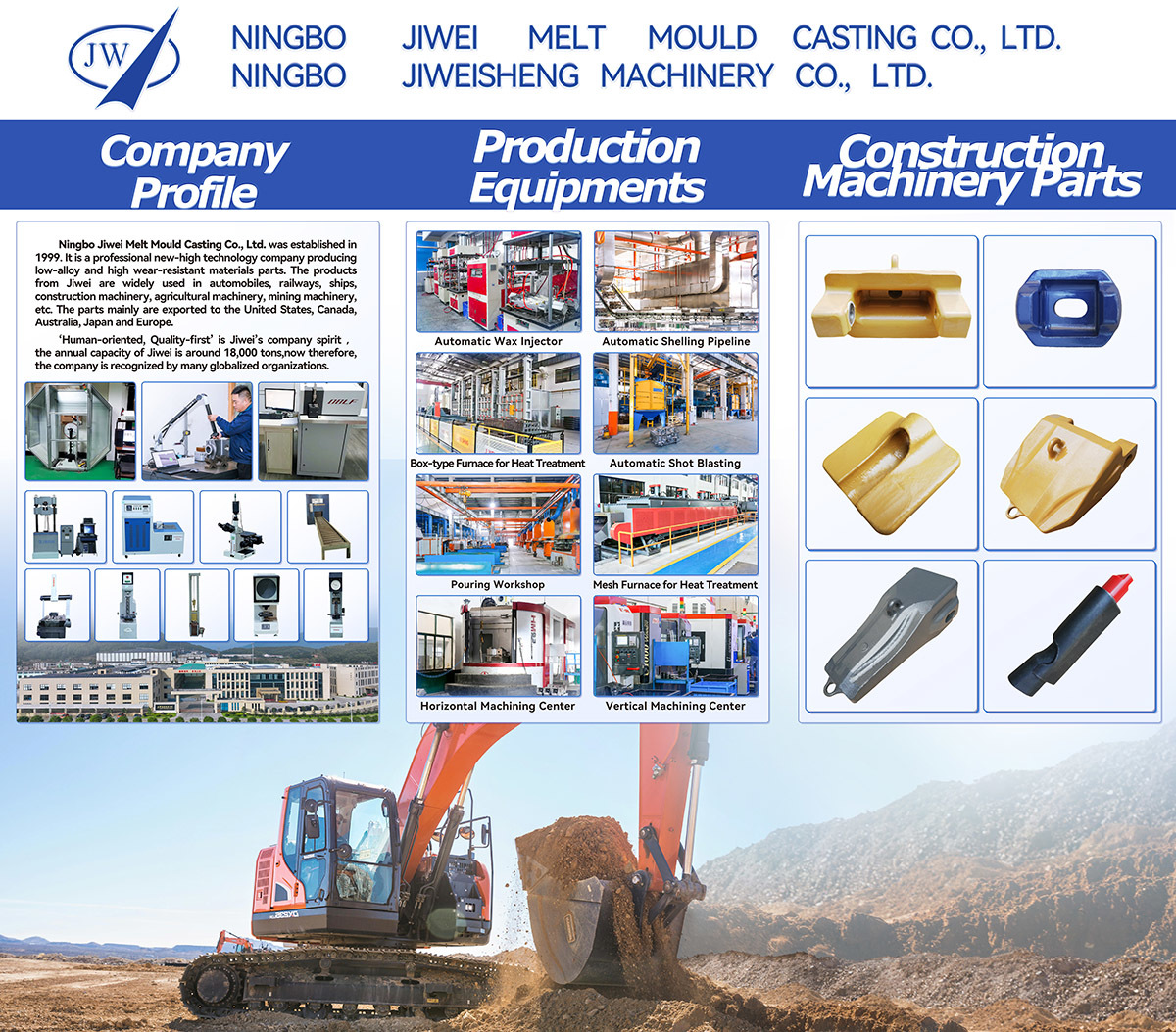
2025 Mexico Exhibition
Apr 30,2025
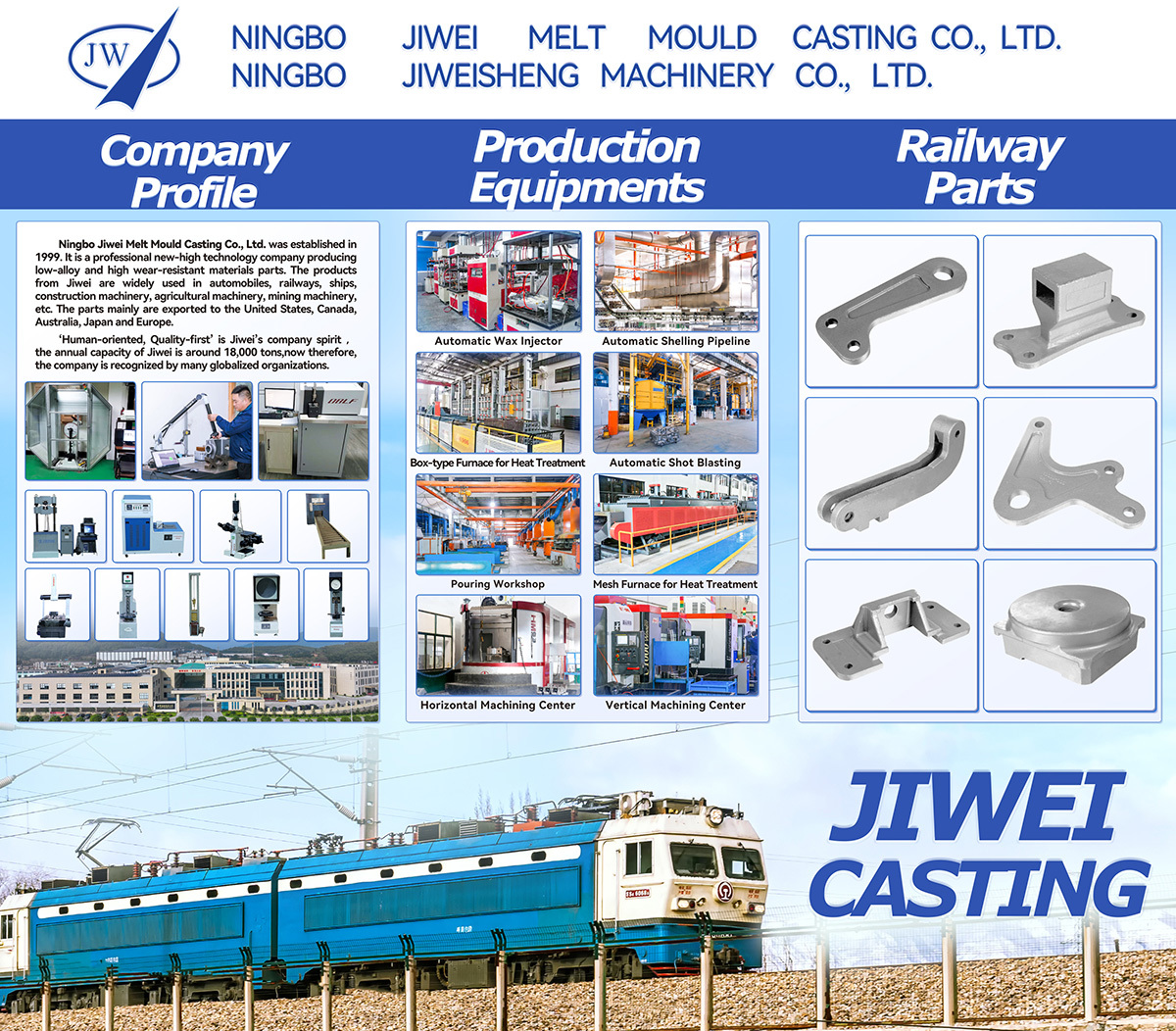
2025 American Rail Show