
18 Nov,2026
Working with Chinese cast steel suppliers for offshore and marine applications


Article overview
This guide walks U.S. procurement professionals and marine engineers through every critical stage of sourcing from China cast steel foundry suppliers — from initial cost modeling and tariff planning through material certification, NDT acceptance, and factory auditing. Each section delivers actionable tools: grade-conversion tables, a supplier scorecard, an RFQ checklist, and defect-acceptance criteria aligned with ASTM and DNV standards.
Table of contents
- 1. Why U.S. buyers are turning to Chinese foundries for offshore steel castings
- 2. Understanding landed costs: FOB, DDP, tariffs, and freight for cast steel imports
- 3. Material grade cross-reference: GB vs. ASTM, AISI, and EN standards
- 4. Supplier qualification checklist and RFQ documentation requirements
- 5. Casting defects, NDT inspection standards, and acceptance criteria
- 6. Factory capability benchmarks: what hard data to demand before you order
- 7. Frequently asked questions
Why U.S. buyers are turning to Chinese foundries for offshore steel castings
China cast steel foundry suppliers are specialist manufacturers that produce carbon steel, alloy steel, and stainless steel castings through sand casting, investment casting, and lost-foam processes for safety-critical industries including offshore oil and gas, subsea infrastructure, and commercial marine vessels. As of 2026, they remain the dominant global source for large-volume, cost-competitive structural castings — but working with them effectively requires far more than simply accepting the lowest FOB quote.
The offshore and marine sector demands casting components that endure saltwater corrosion, high dynamic loading, and sub-zero temperatures simultaneously. Anchor chain swivels, mooring bollards, valve bodies for subsea trees, and structural node castings for semi-submersible platforms all fall into this category. Why do many U.S. engineering procurement contractors (EPCs) still route these orders through Chinese steel casting manufacturers rather than domestic foundries? The answer is primarily cost — but also increasingly capacity.
Cost and capacity advantages that drive sourcing decisions
According to 2026 industry procurement benchmarks, comparable alloy steel casting parts sourced from Chinese foundry exporters typically carry a unit cost 35–55% lower than equivalent North American production, even after accounting for freight and current Section 301 tariffs. Beyond price, several leading Chinese steel foundry exporters operate arc furnaces with individual heat capacities exceeding 50 metric tons, enabling single-piece weights that few U.S. foundries can match without specialized equipment.
The practical implication: for a subsea manifold body weighing 8–12 metric tons, a U.S. EPC may have only two or three domestic options — and lead times of 40–60 weeks. A qualified Chinese alloy steel casting manufacturer with offshore certifications (DNV, BV, ABS) can routinely deliver comparable components in 18–28 weeks at substantially lower cost. That said, the qualification process is non-trivial, and shortcutting it creates serious downstream risk.
What makes offshore and marine applications uniquely demanding
Offshore castings are not interchangeable with general industrial castings. Classification society rules — DNV-ST-0378, ABS Rules for Materials and Welding, Bureau Veritas NR216 — mandate witnessed heat treatment, traceable chemistry reports, Charpy impact testing at −40°F (−40°C), and in many cases mandatory third-party NDT before shipment. Any custom steel castings supplier bidding on this work must demonstrate that they have previously produced certified marine-grade castings, not merely that they hold ISO 9001. This distinction is where many buyers make their first mistake.

Understanding landed costs: FOB, DDP, tariffs, and freight for cast steel imports
The true procurement cost of steel castings from China is not the FOB price on the supplier's quotation. For U.S. buyers, the total landed cost calculation must layer in ocean freight, U.S. Customs duties under the standard HTS schedule, any applicable Section 301 tariff, inland drayage, and port handling. Ignoring any one of these elements routinely produces budget overruns of 20–30%.
Tariff and HS code framework in 2026
As of 2026, most steel castings imported from China fall under HTS Chapter 73. Specifically:
- HTS 7325.10 — Non-malleable cast iron articles (not typically offshore-grade)
- HTS 7325.99 — Other cast articles of iron or steel (covers most structural carbon and alloy steel castings)
- HTS 8481.80 — Industrial valves and valve bodies (investment casting foundry products frequently fall here)
The standard MFN duty rate on HTS 7325.99 is 2.9%. Section 301 List 3 tariffs, however, add an additional 25% on most steel casting parts originating from China, bringing the effective combined duty rate to approximately 27.9% on the declared customs value. Buyers structuring large OEM steel foundry China programs should consult a licensed customs broker to verify the precise HTS classification for each part number, since misclassification is a common and costly compliance error.
FOB vs. DDP: choosing the right incoterm
| Incoterm | Who pays freight | Who pays duty | Risk transfer point | Best for |
|---|---|---|---|---|
| FOB | Buyer | Buyer | Loading port (China) | Experienced importers with freight forwarders |
| CIF | Supplier | Buyer | Destination port | Buyers without established freight relationships |
| DDP | Supplier | Supplier | Buyer's facility | First-time importers; reduces customs complexity |
For heavy offshore castings shipped via LCL (less-than-container load) consolidation, ocean freight from major Chinese ports (Tianjin, Shanghai, Ningbo) to Houston or Los Angeles typically runs $180–$320 per cubic meter in 2026, though bulk steel casting wholesale shipments filling a full 20-foot container can reduce per-unit freight costs significantly. Transit times average 18–25 days to U.S. West Coast ports and 28–35 days to Gulf Coast ports.
"The landed cost of a Chinese casting is never the FOB price. When we model a full procurement budget for offshore valve bodies, we add approximately 32–38% on top of FOB to arrive at the delivered-to-fabrication-yard cost. That number is what should be compared against domestic alternatives — not the FOB figure alone." — Senior procurement engineer, offshore EPC contractor (Gulf of Mexico operations, 2025 industry roundtable)
Material grade cross-reference: GB vs. ASTM, AISI, and EN standards
One of the most persistent sources of specification errors when working with Chinese steel casting manufacturers is grade translation. Chinese foundries work natively with GB (Guobiao) standard designations, while U.S. offshore and marine specifications call out ASTM or AISI grades. These are not always direct equivalents, and the differences in permitted chemistry ranges and mechanical property floors can be meaningful in structural applications.
Key grade equivalents for offshore and marine castings
| ASTM/AISI grade | GB equivalent | Min. YS (ksi) | Min. UTS (ksi) | Charpy @ −40°F (ft-lb) | Typical offshore use |
|---|---|---|---|---|---|
| ASTM A216 WCB | ZG 230-450 | 30 | 65 | Not required | Topside valve bodies |
| ASTM A352 LCC | ZG20SiMn (modified) | 40 | 70 | 13.5 min | Subsea/low-temp valves |
| ASTM A890 Gr 4A (Duplex SS) | ZG022Cr22Ni5Mo3N | 65 | 90 | 27 min | Seawater pump casings |
| ASTM A148 Gr 90-60 | ZG40Mn | 60 | 90 | Not standard | Structural brackets, mooring hardware |
| EN 10283 GX5CrNi13-4 | ZG06Cr13Ni4Mo | 80 | 100 | 27 @ 32°F | Propeller hubs, rudder castings |
When specifying to a carbon steel casting manufacturer in China, always state both the ASTM grade designation and the required mechanical property minimums explicitly in your drawing package. Do not assume GB equivalency is sufficient for classification society approval — the certifying surveyor will verify chemistry and mechanical test reports against the ASTM standard, not the GB equivalent. Any carbon steel casting manufacturer or precision steel casting supplier bidding on classified work must be able to produce MTRs (Material Test Reports) traceable to a witnessed heat and conforming to ASTM A370 test procedures.
Why grade translation errors happen and how to prevent them
The most common failure mode is a purchasing department accepting a Chinese supplier's declaration that "our ZG230-450 meets ASTM A216 WCB" without requesting the actual chemistry cert and mechanical test data for the specific heat being poured. Slight differences in allowable sulfur, phosphorus, or silicon content between GB and ASTM can disqualify a casting from NACE MR0175 service. The fix is straightforward: include a material specification datasheet as part of every RFQ package, and require heat-specific chemical analysis and mechanical test reports as hold points before casting commences.
Supplier qualification checklist and RFQ documentation requirements
Qualifying a new China cast steel foundry supplier for offshore work is not a one-email process. It requires a structured audit framework that evaluates technical capability, quality system integrity, and financial stability in parallel. The following checklist reflects current best practice among U.S. EPCs with established China sourcing programs in 2026.
Step-by-step supplier qualification process
- Document request: Obtain ISO 9001:2015 certificate, any classification society approvals (DNV GL, ABS, BV), ITAR/export compliance statement, and business license. Verify certificate validity dates independently via the issuing body's online registry.
- Capability questionnaire: Request maximum single-piece casting weight, furnace type and heat capacity (EAF vs. induction), available sand casting and investment casting process lines, in-house heat treatment equipment (specification and furnace load capacity), and dimensional inspection equipment (CMM, laser tracker).
- Third-party audit: Commission a facility audit through SGS, Bureau Veritas Industrial Services, or Intertek. The audit scope should cover process controls, traceability systems, calibration records, and NDT operator qualifications (ASNT Level II minimum).
- Sample casting order: Place a prototype order for one or two non-critical parts using the same alloy grade as your planned offshore components. Require full MTR, dimensional inspection report, and at minimum magnetic particle testing (MT) on the sample parts.
- Commercial terms review: Negotiate mold/tooling fee ownership, payment milestones (typically 30% with order, 70% against inspection release), MOQ, warranty period (12 months from delivery is industry standard for OEM steel foundry China programs), and defect liability/claims procedure in writing before production orders are placed.
- Approved vendor list entry: After successful sample validation, formally add the supplier to your AVL with documented scope of supply, quality plan number, and inspection level classification.
RFQ package contents for offshore steel castings
An incomplete RFQ is the single most common cause of non-conforming deliveries from steel casting fabrication companies. At minimum, your RFQ package must include: a 3D CAD model (STEP format preferred) and 2D engineering drawing with GD&T callouts; material specification with explicit ASTM grade and supplementary requirements (e.g., S2 for radiographic testing per ASTM A703); weight and quantity per release; required certifications and country-of-origin documentation; packaging and marking requirements; and target delivery port with Incoterm. When working with any bulk steel casting wholesale supplier for offshore applications, also specify whether witnessing by a third-party inspector is required at heat treatment and NDT stages — this affects the supplier's scheduling and your inspection travel budget.
Casting defects, NDT inspection standards, and acceptance criteria
Even the best sand casting steel supplier produces castings with internal discontinuities. The question is not whether defects exist, but whether they fall within the acceptance limits defined by your applicable standard. Understanding defect origins and inspection methodology lets you write a quality plan that catches problems before parts ship — not after they fail on a platform.
Common defect types and their causes
Porosity (gas porosity and shrinkage porosity) is the most frequently encountered defect in steel castings. Gas porosity arises from dissolved hydrogen or nitrogen in the melt, often caused by wet molding sand or inadequate degassing practice. Shrinkage porosity develops during solidification when liquid feeding is insufficient — a function of riser design. In offshore valve bodies and pressure-retaining castings, even Level 2 shrinkage per ASTM E186 may be unacceptable in certain critical zones.
Hot tears occur when thermal stresses during solidification exceed the casting's nascent strength. They appear as irregular, branching cracks, most commonly at section changes or sharp internal corners. For marine structural castings, hot tears near load-bearing sections are cause for rejection regardless of size, since they propagate under cyclic loading.
NDT methods, applicable standards, and acceptance levels
| NDT method | Applicable ASTM standard | Defects detected | Typical acceptance level (offshore) |
|---|---|---|---|
| Radiographic Testing (RT) | ASTM E94 / E186 / E446 | Internal porosity, shrinkage, cracks | Level 1–2 (ASTM E186 ref. radiographs) |
| Ultrasonic Testing (UT) | ASTM A609 | Internal voids, inclusions, planar defects | Class 1 (most critical zones) |
| Magnetic Particle Testing (MT) | ASTM E709 | Surface and near-surface cracks, laps | No linear indications; rounded per ASTM E125 Level 2 |
| Liquid Penetrant Testing (PT) | ASTM E165 | Surface-open defects (non-magnetic alloys) | No linear indications; Type I Method C |
When a casting fails NDT acceptance, the most common dispute between buyer and supplier centers on whether repair welding is permissible and, if so, under what procedure. Industry standard practice — and the requirement under ASTM A488 — is that repair welding must be performed using a qualified WPS (Welding Procedure Specification), documented in a repair record, and re-inspected by the same NDT method that identified the original discontinuity. Repaired areas of pressure-retaining castings should additionally undergo post-weld heat treatment unless a written materials engineering disposition waives this requirement.
Factory capability benchmarks: what hard data to demand before you order
How do you distinguish a genuinely capable Chinese steel foundry exporter from one that overstates its capacity in marketing materials? The answer is specific, verifiable numbers — not vague claims about "advanced equipment" or "strict quality control." Here is what experienced offshore procurement teams ask for when evaluating any industrial steel castings supplier in China.
Minimum capability thresholds for offshore-grade work
For structural and pressure-containing marine castings, a credible alloy steel casting manufacturer should be able to demonstrate: an electric arc furnace (EAF) or medium-frequency induction furnace with per-heat capacity of at least 10 metric tons (enabling single-piece castings up to approximately 8 MT with normal yield factors); a fully enclosed heat treatment furnace with calibrated temperature uniformity survey (TUS) per AMS 2750 or equivalent, covering the full load volume; and an in-house spectrometer (OES) for ladle chemistry verification before pouring. Foundries relying on subcontracted heat treatment or third-party chemistry analysis introduce traceability gaps that classification surveyors consistently flag.
Production capacity, lead time, and dimensional tolerance expectations
Monthly production capacity for a mid-tier Chinese steel casting parts manufacturer serving offshore customers typically ranges from 300 to 800 metric tons of poured steel per month across all grades. For planning purposes, offshore buyers should build in the following lead time expectations: prototype/first article — 8 to 14 weeks from approved drawing; production release — 12 to 20 weeks per lot depending on complexity and NDT scope; expedited production (premium cost, limited availability) — 10 to 16 weeks.
Dimensional tolerances for sand-cast steel parts generally follow ISO 8062-3 Grade CT10–CT12 for as-cast surfaces, with machined surfaces achievable to CT7–CT8. For precision steel casting supplier work via investment casting, CT5–CT7 as-cast is achievable on features below 10 inches. Critically, any casting with weld-end preparation dimensions must have those features machined and verified against the applicable piping specification (e.g., ASME B16.25 weld bevel tolerances) before shipping.
Is this level of documentation standard among all Chinese foundry exporters? Absolutely not. Many smaller facilities — particularly those marketing to general construction or agricultural machinery sectors — lack the traceability infrastructure offshore work requires. This is precisely why a physical third-party audit, not just a document review, is non-negotiable before awarding classified offshore castings to any new China metal casting company.
Frequently asked questions
Q: What certifications should I require from China cast steel foundry suppliers before approving them for offshore applications?
A: At minimum, require ISO 9001:2015, a valid classification society approval (DNV, ABS, or Bureau Veritas) covering the specific steel grades and casting processes you need, ASNT-certified NDT operators (Level II), and a third-party facility audit report from SGS, Intertek, or Bureau Veritas Industrial Services issued within the past 24 months. For NACE-service components, also require documented compliance with NACE MR0175/ISO 15156 chemistry limits.
Q: How much do Section 301 tariffs add to the landed cost of steel castings imported from China?
A: For most structural and pressure-containing steel castings under HTS 7325.99, Section 301 List 3 tariffs add 25% on top of the standard 2.9% MFN duty, resulting in an effective duty rate of approximately 27.9% on the declared customs value. Exact rates depend on the precise HTS classification, so verify each part number with a licensed customs broker before budgeting.
Q: What is the typical MOQ and tooling fee structure when working with a Chinese alloy steel casting manufacturer?
A: MOQ varies significantly by part size and complexity. Sand casting tooling (patterns and core boxes) typically costs $1,500–$8,000 per part number and is usually amortized over the first production order or owned outright by the buyer. For investment casting foundry work, ceramic shell tooling runs $3,000–$15,000. Minimum order quantities for offshore-grade alloy steel castings are typically 1–5 pieces per release for large structural parts and 10–50 pieces for smaller valve and fitting castings.
Q: Can Chinese foundries produce castings that meet ASTM A352 LCC for low-temperature subsea service?
A: Yes, qualified Chinese steel casting manufacturers can produce LCC-grade castings meeting Charpy impact requirements at −40°F, provided the foundry has demonstrated this capability under witnessed classification society testing. The key is to specify ASTM A352 LCC explicitly — including Supplementary Requirement S5 for additional heat treatment if required — and require heat-specific test reports, not generic material certificates.
Q: How should disputes over casting defects and rejections be handled with Chinese suppliers?
A: Establish a written defect liability clause in the purchase order before production. Best practice includes pre-agreed acceptance criteria referencing specific ASTM standards, a defined timeframe for the supplier to respond to rejection notices (typically 15 business days), clear protocols for repair welding approval (buyer-authorized WPS required), and financial responsibility assignment for re-inspection costs. For high-value offshore components, requiring a performance bond or letter of credit tied to inspection release provides additional financial protection.
Summary: Working effectively with China cast steel foundry suppliers for offshore and marine applications in 2026 demands a structured approach that goes well beyond price comparison. From calculating true landed costs with current tariffs, to translating GB grades into ASTM equivalents, to building a verifiable NDT acceptance program, the buyers who consistently source compliant offshore castings from Chinese steel casting manufacturers are those who invest in qualification rigor upfront. The cost savings are real — but they are only realized when the qualification, documentation, and inspection infrastructure are in place to protect them.
Apr 30,2025
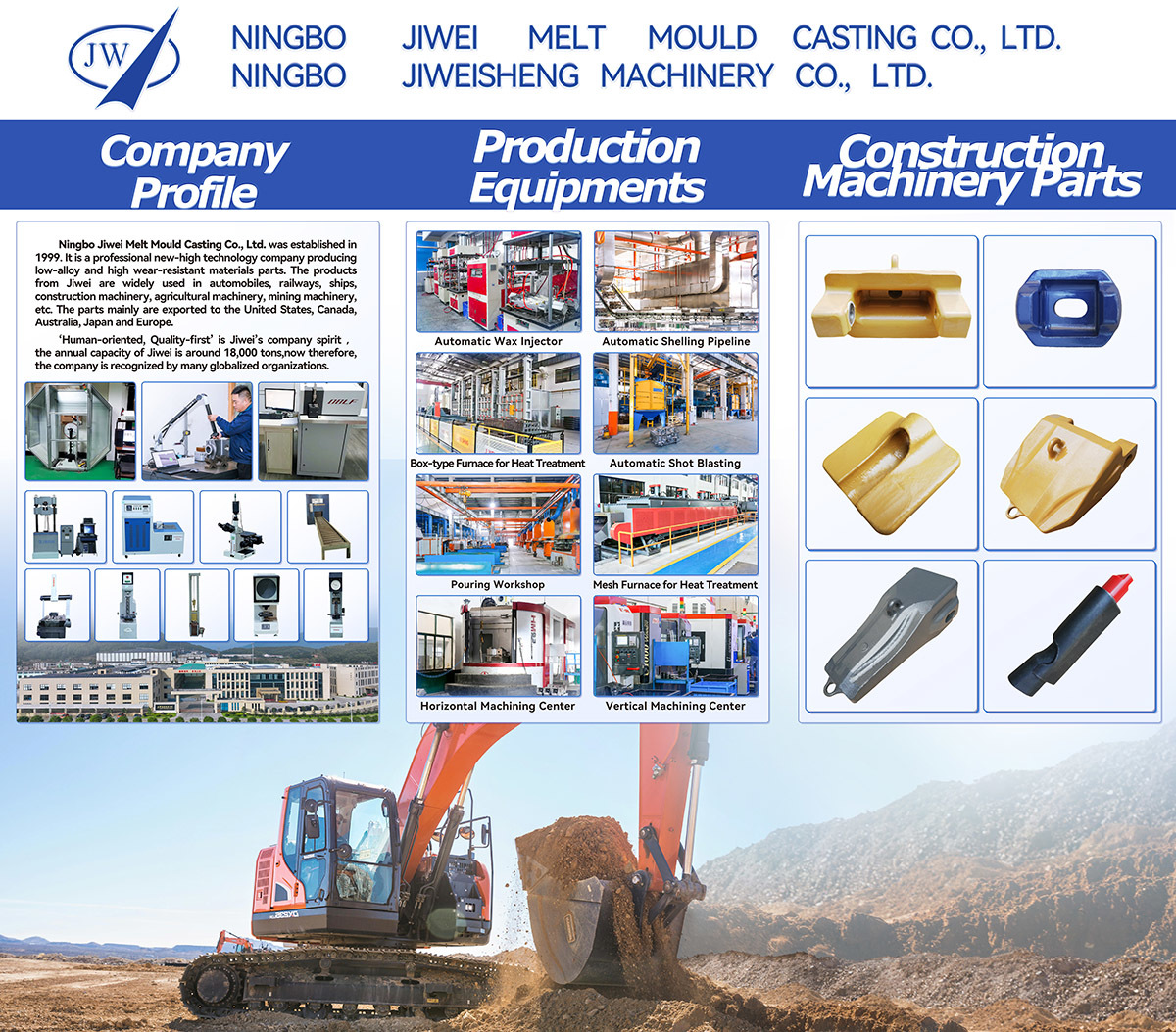
2025 Mexico Exhibition
Apr 30,2025
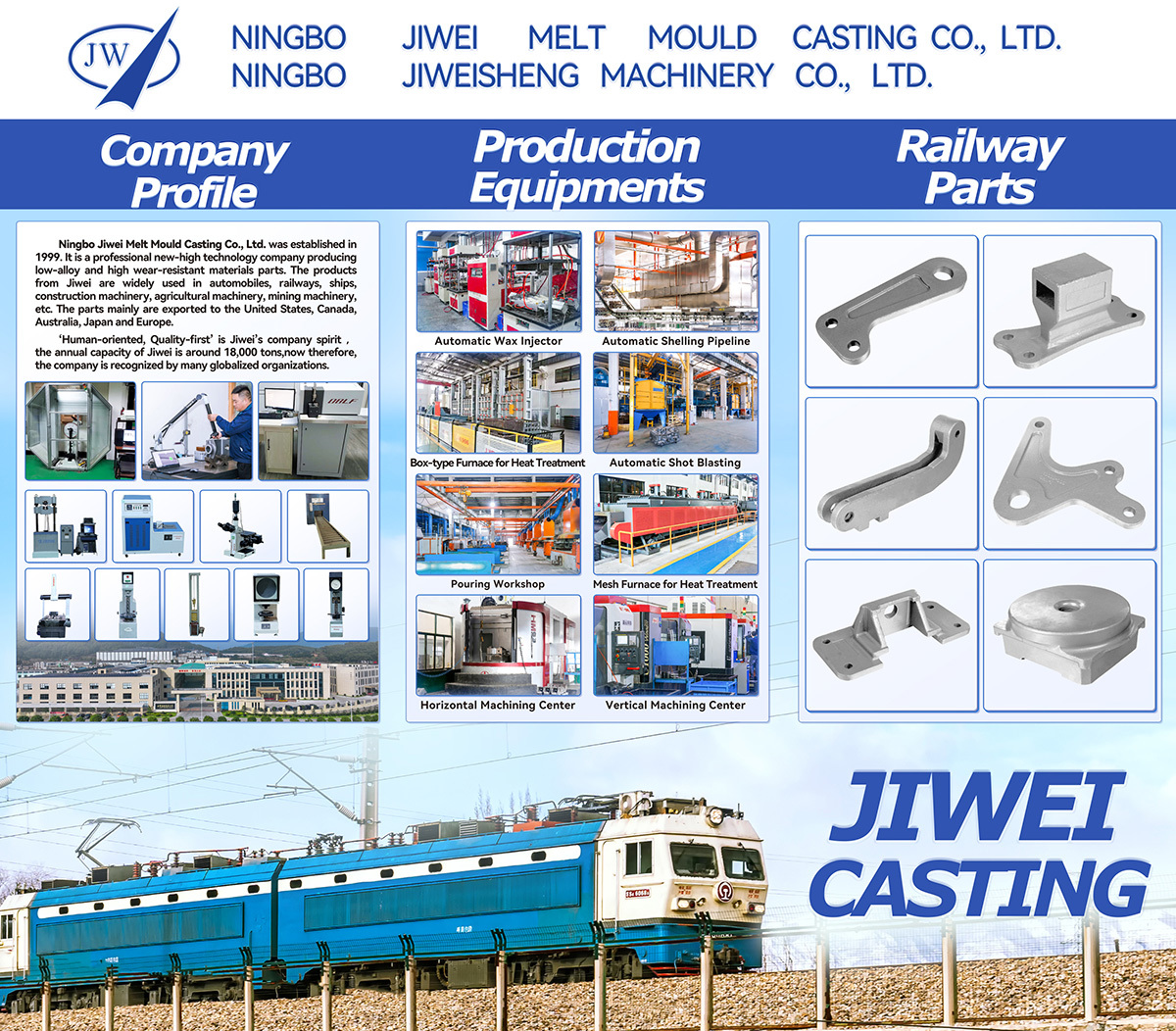
2025 American Rail Show